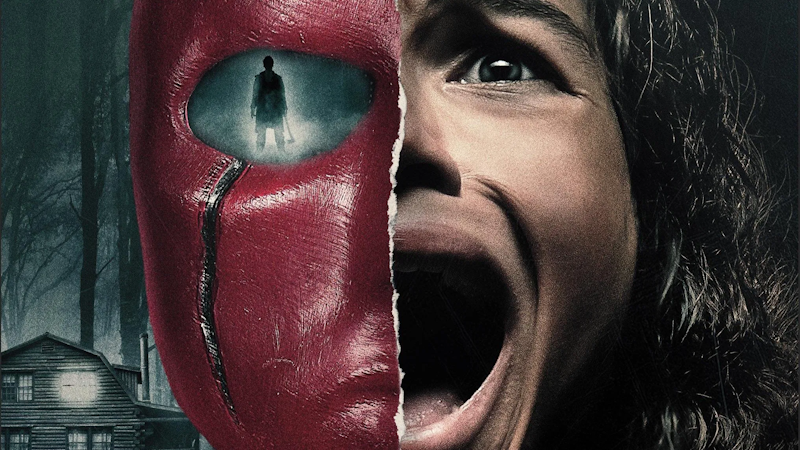
After his previous film, Good Boy, got such a great reception at Frightfest in 2023, Viljar Bøe returns with his latest film – a story that once again explores the dark psychological depths that the human mind can fall into. Amir (played by Freddy Singh, who also worked on the story with Bøe), is affected by intrusive thoughts, with one particular fixation being that his left leg is rotting and needs to be amputated. As he tries to wrestle with these ideas, he’s pulled between his stable life with his partner, Kim, and his new job – his plans to remove his leg looming ominously over the film with an onscreen countdown until “The Accident”.
The story was inspired by Bøe after he learned about Body Integrity Dysphoria (BID), and wanted to tell an empathetic story about it, in contrast to the voyeurism of Good Boy. The film treads the line well between treating this real condition with sensitivity, and exploring the storytelling possibilities it opens up without feeling exploitative. This is helped by Amir’s experiences being contrasted by Rikke (Louise Waage Anda), who also has BID (in her case, wishing to become blind), but she’s reluctant to physically alter herself as Amir does.
This relationship proves to be a crucial lifeline for Amir as he struggles to overcome the shame attached to his condition, and although he wants to present his best self, and be a good partner and worker, he’s unable to let go of his fixation. Above The Knee explores the complex feelings around disclosure with nuance, highlighting this difficulty in bitter ironies – like Kim (Julie Abrahamsen), encouraging Amir to take up a hobby (in this case, painting), but because he uses his art as an outlet for his dysphoria, he has to hide his works from her.
Above the Knee is an engrossing psychological thriller that stands out as it uses disability as a theme to explore, rather than as an abstract thing to be gawked at.
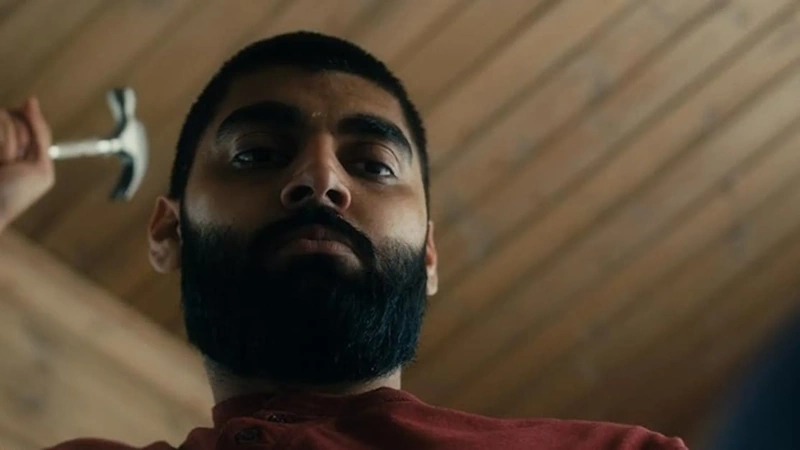
This increasing internal and external pressure on Amir builds painfully, making the seventy-six minute runtime feel longer than it is. The sound design, full of creaking and cracking as Amir lives his day-to-day life, is well used – especially when paired with imagery of rocks breaking apart that’s inspired by a climbing trip Amir takes with his friend/boss. These images are some of many in Amir’s subconscious that are scattered throughout the film, and as his life starts to fall apart, his memories and fantasies become indistinguishable. As a psychological portrait of an individual struggling alone with his mental health, it’s a devastating and excruciating experience.
It’s a shame then that, despite its short runtime, Above the Knee runs out of steam by its final act, and as the countdown nears completion, it’s inevitably faced with actually resolving the central conflict it set up – will Amir actually go through with removing his own leg? This is where the film struggles to balance its cruel farce with its good intentions, Rikke’s character being most short-changed by this as she becomes strangely antagonistic, and it feels like an attempt to build up more dramatic stakes rather than part of her character development. Furthermore, by adding to what’s already a compelling premise, the film doesn’t leave room for a satisfying pay off which leaves the ending feeling (ironically), cut short – as if any exploration of the consequences of Amir’s decision was considered an afterthought.
Nonetheless, Above the Knee is an engrossing psychological thriller that stands out as it uses disability as a theme to explore, rather than as an abstract thing to be gawked at. Amir’s concerns are given real weight and we’re firmly placed inside his tormented mind, not knowing how to handle his condition. At its best it feels as stressful as something like The Coffee Table, by firmly putting you into someone else’s shoes as they experience intense torment. While Above the Knee plays it safer in comparison to the depravity of that film, it further showcases Bøe’s talents, and he remains a director whose work I’m always excited to see.