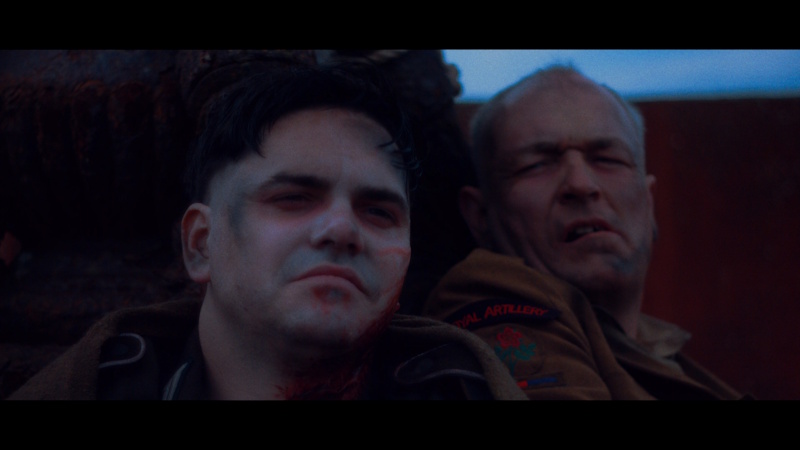
From 30th October to the 9th November, Imagine Film Festival invites you to reconsider John Boorman’s much maligned horror sequel to 1973’s record-breaking success The Exorcist – the ill-fated film Exorcist II: The Heretic (1977). William Friedkin, who directed the original, held nothing back in his verdict of Boorman’s film, stating that it was “the worst piece of crap I’ve ever seen”, “a freaking disgrace” and “made by a demented mind”. Yet Boorman’s film had everything, but only if “everything” means events, illnesses, and production problems that occurred behind the camera.
Jon Voight was the first choice for the role of Father Lamont, but after backing out because of his religious beliefs, he was replaced by Richard Burton – who was famously so inebriated in the afternoons, filming grew to be impossible. Lee J. Cobb was set to reprise his role as Lieutenant Kinderman from the first movie, but died of a heart attack on the day he received the script. Boorman himself contracted the respiratory fungal infection San Joaquin Valley Fever from breathing in particles of sand that were being whipped up in the studio for the sequences set in Africa, closing the shoot down for several weeks, and two of the film’s stars (Kitty Winn and Louise Fletcher), were hospitalised with gall bladder infections. Aside from those problems the film, particularly the ending, was constantly being rewritten by Boorman and his collaborator Rospo Pallenberg – who the majority of the crew mistrusted and despised. Indeed, Exorcist II: The Heretic was so derided upon its release, Boorman had to try and salvage its reputation by turning a new cut with that emphasised the finale, only to find Warner Brothers were reluctant to stump up any more cash for new prints.
With all of that going on, it’s no wonder that many believed that the film was cursed.
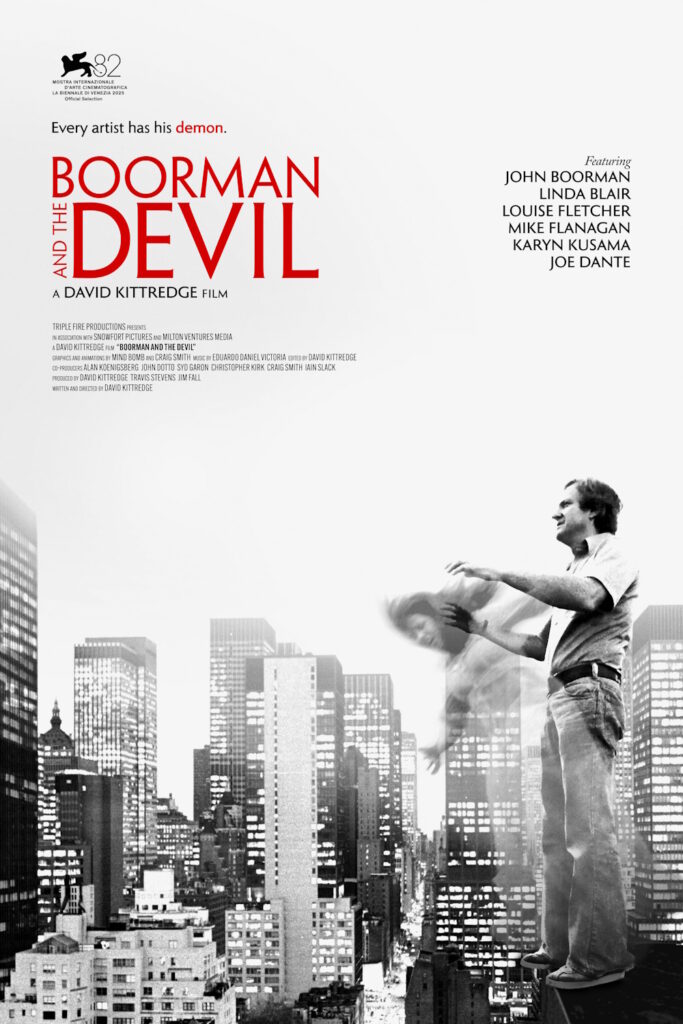
In Boorman and the Devil, director David Kittredge performs his own exorcism on the much maligned sequel by asking if it’s been misjudged all these years. Kittredge returns us to a time when cinema wasn’t averse to taking risks by gaining valuable access to the now ninety-two-year-old Boorman along with stars Linda Blair and Louise Fletcher, several of the crew, and some of Exorcist II: The Heretic’s unabashed admirers (including Life of Chuck and Doctor Sleep director Mike Flanagan and Gremlins director Joe Dante). The documentary tells of how British director John Boorman found a rewarding home in a Hollywood that encouraged creatives to dream big, subsequently achieved great success with films like Point Blank (1967) and Deliverance (1972).
It’s an eye opening and enlightening experience that, some twenty years after my one and only viewing, made me want to check out The Heretic again – and I think Kettridge would agree that’s a job well done.
FOR MORE ON BOORMAN AND THE DEVIL CLICK ON THE POSTER AT THE BOTTOM OF THE SCREEN
Boorman turned down the opportunity to direct The Exorcist in 1973 as he believed it to be a disturbing, misogynistic and exploitative film, and instead chose to follow his ambitions and make the sci-fi fantasy Zardoz. Upon its release in 1974, Zardoz was met with confusion and sometimes outright hatred, but none of this diminished Boorman’s reputation in an industry that believed in the role of the artist and their creative vision. The success of The Exorcist saw various knock-offs follow in its wake and Warner Brothers, wanting to cash-in on audiences with an appetite for demonic possession, clamoured for a sequel, and this time they wanted John Boorman.
When presented with this opportunity, Boorman saw a chance to deliver a riposte to Friedkin’s film instead of a continuation. His take would explore good rather than evil and, despite his own reservations about the exploitative nature of the first film, the idea would see Max Von Sydow reprise his role as Father Lankester Merrin. Encouraged by the metaphysical and intellectual approach of William Goodhart’s original screenplay, Boorman decided to leave the spinning heads and projectile vomiting of the original film behind, and instead create a more humanist film. Unfortunately, audiences had certain “more of the same” expectations for the sequel to this new and commercial cinematic beast – a factor that Boorman didn’t reckon on.
Boorman and the Devil argues that The Heretic (Boorman’s preferred title as he loathed the studio’s decision to front load it with the Exorcist II moniker), along with Michael Cimino’s Heaven’s Gate, are films that were victims of circumstance, releasing at a time when Hollywood was beginning to change. Tales about how Hollywood, when faced with costly films that didn’t make their money back decided to trade auteurs for accountants, are well-known. However that wasn’t the whole story as, intriguingly, the concept of blind bidding rears its head several times throughout the documentary.
This was a practice where cinemas were required to licence films from distributors without having seen them first, often with non-refundable advances and several conditions in place regarding how long films were to run and such like. Production of The Heretic was heavily tied into this practice, which blew up in everyone’s faces when it broke box office records in its opening weekend, only for word of mouth to cause audiences drop off alarmingly. Following its release new rules were put in place to curtail the practice, Kittredge stating in the documentary that The Heretic was so notorious that it effectively changed legislation!
The documentary also notes that Star Wars was released around the same time as The Heretic, but went on to gross over $775m. Boorman ruefully recalls how the success of what he dismissed as “kids stuff” effectively pointed the way forward in a new, less risk-averse Hollywood. With a new way of financing movies and, perhaps crucially, a clearer design on what sequels (and ultimately franchises), should be, the days of an auteur like Boorman coming along to challenge audience expectations were never to be repeated.
Whatever your views on The Heretic, what consistently comes through in Boorman and the Devil is that it remains a remarkable technical accomplishment. Faced with the challenge of a globetrotting screenplay and taking inspiration from Powell and Pressburger’s famous recreation of the Himalayas for the 1947 film Black Narcissus, Boorman chose to film almost everything on the vast sound stages of LA’s Burbank studios. He believed that this artifice would create a sense of unreality for audiences and allow them to step inside a world that was unique to the story, and with the examples given here I’d say that this stylised production design can create something truly distinctive.
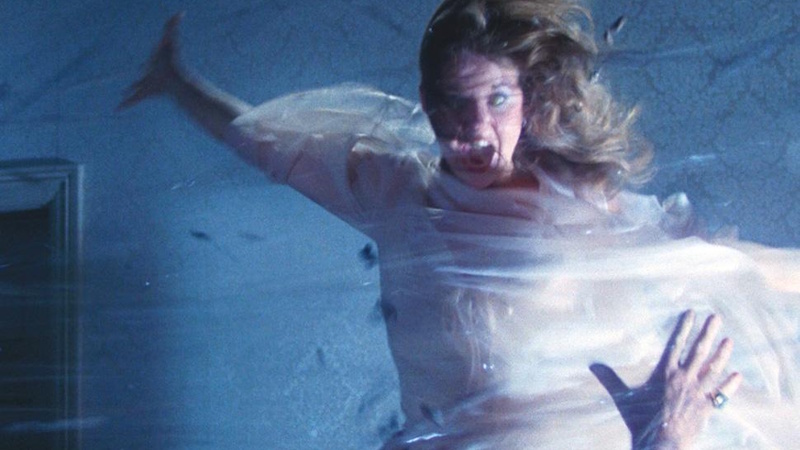
Then there’s Boorman’s use of ghost glass effects, and the frisson you still feel when Father Merrin and the possessed Regan appear in the synchronizer hypnosis scene. The beautiful cinematography from William A. Fraker skilfully matches the natural light of the Ethiopian plains, and Garrett Brown’s pioneering use of Steadicam impressed Stanley Kubrick so much, he decided to call on Brown when he made The Shining a couple of years later. Kettridge appreciates that for film lovers, it’s sometimes hard to swim against the tide of popular opinion and notice the remarkable qualities of a flop.
The documentary is beautifully edited and put together, with lots of choice clips from The Heretic and many other films in Boorman’s incredible career. It’s also choc-full of interesting insights about the making of Exorcist II (many of which I wasn’t aware of), such as the original casting choices for Father Lamont and Dr Tuskin. The invaluable testimonies from the director, actors, crew, and others who were there during the making of the film are presented well, without resorting to tongue-in-cheek animation and lazy library muzak. It’s an eye opening and enlightening experience that, some twenty years after my one and only viewing, made me want to check out The Heretic again – and I think Kettridge would agree that’s a job well done.
Boorman and the Devil is a catnip of a proposition for film fans – a love letter to cinema and the opportunity films provide for both creators and audiences to become lost in the possibilities. The documentary reminds us of a time when such opportunities were more frequent and richer, while also serving as a tribute to the talent and vision of John Boorman.
BOORMAN AND THE DEVIL IS PLAYING AT IMAGINE FANTASTIC FILM FESTIVAL 2025