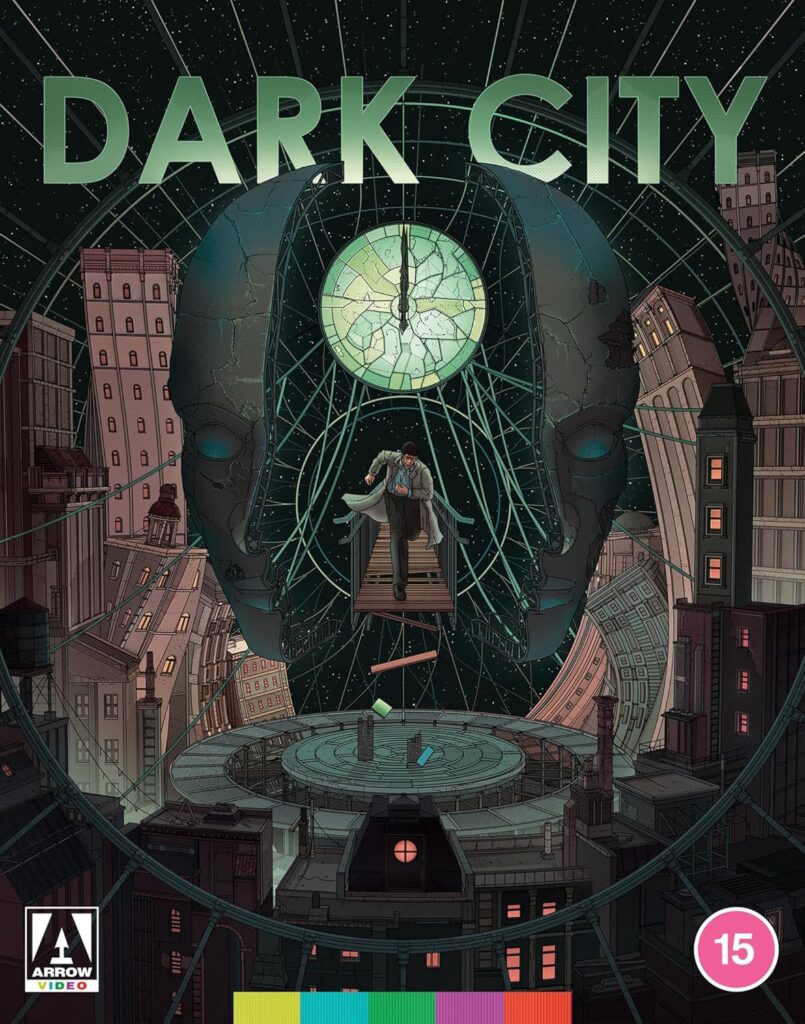
Picture this: you wake up naked and vulnerable in a bathtub, in a room that you swear you’ve never entered in your life. You don’t know where you are, how you got there, or even your own name, and absolutely everything about your life is a total mystery to you. Then, once you’ve gathered yourself and put on the clothes you find neatly arranged on a chair, you step into the bedroom to find the corpse of a woman who’s been ritualistically murdered, with the weapon just inches away. You run out into the hallway in fear and shock, only to find yourself pursued by the police who think you’re responsible for the woman’s death. Alone, confused and afraid, you’ve got to find out who you are and what the hell is going on so you can prove your innocence, all while evading the police.
Now, imagine all that, except you’re also being pursued by pale, bald men in leather coats who can change the very fabric of reality with merely a thought or a gesture.
This is the premise of Dark City – Alex Proyas’ 1998 sci-fi thriller that starred Rufus Sewell, Jennifer Connelly, Keifer Sutherland, William Hurt and Richard O’Brien, and it’s arguably one of the most influential films of its genre from the late 20th century. The main theme is identity: are our memories what shape us; can we be something of our very own regardless; do our memories form our nature; and if we have no memories, how does that affect our perception of our very reality?
These themes are strongly explored in later films (most notably Christopher Nolan’s Memento), but parallels can’t help but be drawn to The Matrix, which released just one year later. Now a year is a very short period to watch a film, be inspired by it, write your own piece using it as inspiration, and go through the process of casting, shooting, and editing, so there’s no direct evidence that the Wachowskis were inspired by Dark City, but it’s a fascinating coincidence, isn’t it?
The 1998 theatrical cut was unfortunately the victim of studio intervention (the kind that fans of Blade Runner will be all too familiar with), so there’s a ham-fisted narration voiceover forced in by studio executives, who clearly believed audiences to be too foolish to draw their own conclusions. Thanks to that our protagonist, John Murdoch (Rufus Sewell), ends up directly explaining almost the entire plot (including the ending), within the first 10 minutes of Dark City. This is the film’s greatest detriment, and may be partially responsible for its failure at the box office, and its subsequent pop culture burial for the next decade.
Director of photography Dariusz Wolski and production designer Patrick Tatopoulos’ skills are clearly on display, and with the tight, claustrophobic cinematography and clear homages to 1927’s Metropolis creating an uneasy environment that literally feels alive
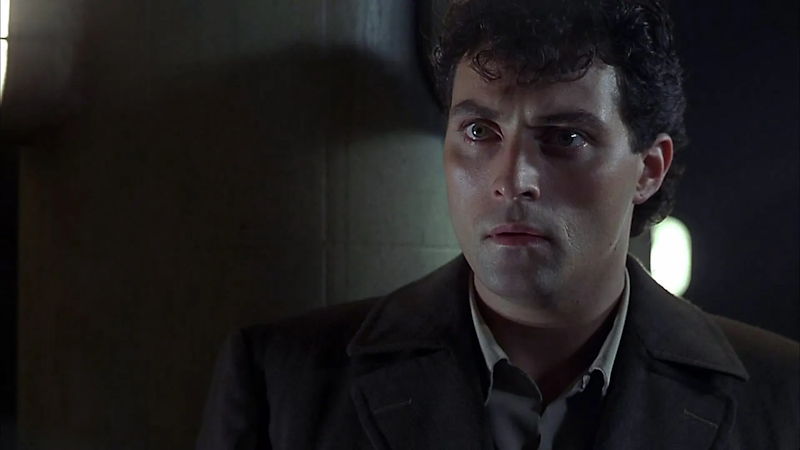
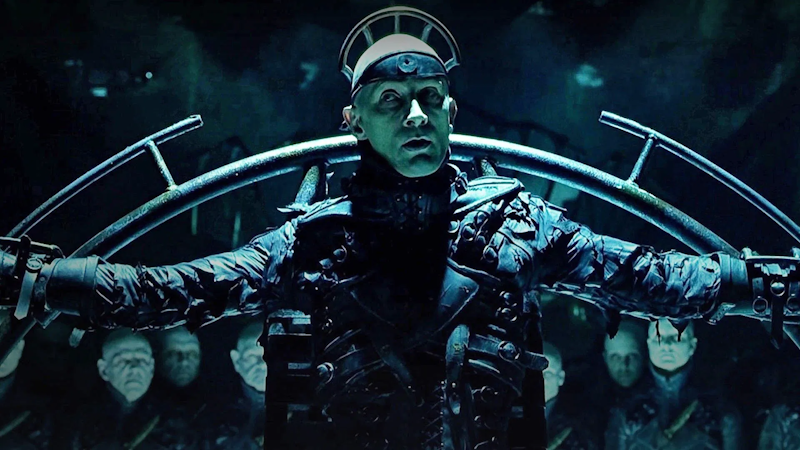
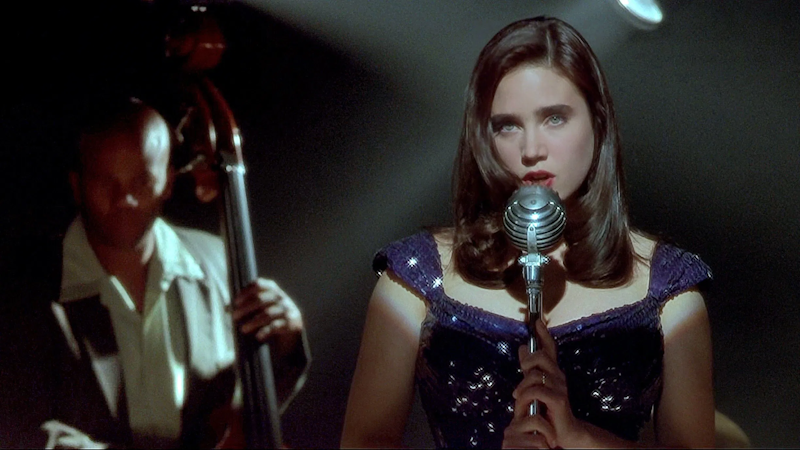
The 2008 Director’s Cut is a different story as the presentation is completely altered and improved with 10 minutes of extra runtime, reordered scenes and, most importantly, the voiceover narration entirely removed. The audience, now placed firmly into John’s experiences of disorientation, confusion, and uncertainty, are constantly kept guessing about the mystery behind the titular city, which undoubtedly makes this the definitive version of this film, and the one I recommend everyone should watch first. You may be hesitant to watch the theatrical cut afterwards though (and rightfully so), as it doesn’t compare to the fresh, refined version that truly aligns with Proyas’ original vision, and the story is much more coherent without key information being spoon-fed to the audience from the very beginning. The voiceover is so intrusive and distracting that if it weren’t for the incredible set designs and timeless practical effects, I would honestly wonder how the theatrical cut gained such admiration from filmmakers like Nolan during the decade before the Director’s Cut’s release, .
Speaking of set design and visual effects, the titular city truly feels like its own character that, unlike most other fictional cities that are generally copies of New York, feels like a place of its very own that’s incomparable to any known location on Earth. It’s a place where the sun never, ever shines, and it’s unrecognisable from any time period, forever shifting, changing and bending. Director of photography Dariusz Wolski and production designer Patrick Tatopoulos’ skills are clearly on display, and with the tight, claustrophobic cinematography and clear homages to 1927’s Metropolis creating an uneasy environment that literally feels alive, the influence on Nolan’s Inception cannot be overstated.
If I were to give any one criticism to both versions of the film it would be that the characters feel very hollow, and despite the assertion that John is a special person (even without his memories), he’s quite indiscernible from most conventional straight white male protagonists with not much depth to them other than their plight in the story. His wife Emma (Jennifer Connelly), is frequently treated as an inconvenient afterthought to the narrative who’s quite literally tossed aside towards the end, while Bumstead (William Hurt), is very much the stereotypical older male detective demanding answers.
Now given the fact that all the characters could be excused for being blank slates that are constantly having their lives and memories erased, swapped or modified, the film’s conclusion that we’re all inherently who we are, and that no amount of memory swapping could ever change that wouldn’t be too much of an issue. It is, however, one that I vehemently disagree with as it’s basically a direct contradiction, but as the premise was so original and innovative at the time and the presentation in other areas is so powerful, it’s relatively easy to push these concerns aside to enjoy the overarching narrative rather than the individual characters.
With a brand new 4k and Blu-ray release, I highly recommend any film fans out there with a passion for sci-fi, thrillers, and even dystopian media, get their hands on this for their collection and give the Director’s Cut of Dark City the appreciation it so vigorously deserves.
Dark City is out now on 4K Arrow Video Blu-Ray