Daughters of Darkness is forever associated with Mark Gatiss’s exceptional 2012 documentary Horror Europa – say what you will about his lacklustre attempts to keep A Ghost Story for Christmas alive. The programmes he made in the early 2010s about the history of cinematic horror are essential viewing for anyone interested in the genre. They are, after all, the place where “Folk Horror” became a household term, and the first film he discusses in Horror Europa is also the one that left the greatest impression on me.
Part of a brief wave of softcore vampire cinema that appeared in the early 1970s, Daughters of Darkness is often associated with the works of Jean Rollin and the Hammer Karnstein trilogy. Yet while those films are obviously voyeuristic, trading on the cinematic tradition of watching beautiful women caressing each other, Kümel’s film cleaves closer to Roger Vadim’s earlier Blood and Roses. Both are indebted to the French tradition of the fantastique which, above all, is a heavily symbolic register embodied by the art of Félicien Rops or the writings of Jean Ray – whose novel “Malpertuis” would be adapted by Kümel a year later. In the fantastique, the supernatural intrudes on the realistic in manners both whimsical and sinister, but also ambiguous as we’re never sure if we’ve met a vampire or a neurotic consumed with longing for someone they can’t have.
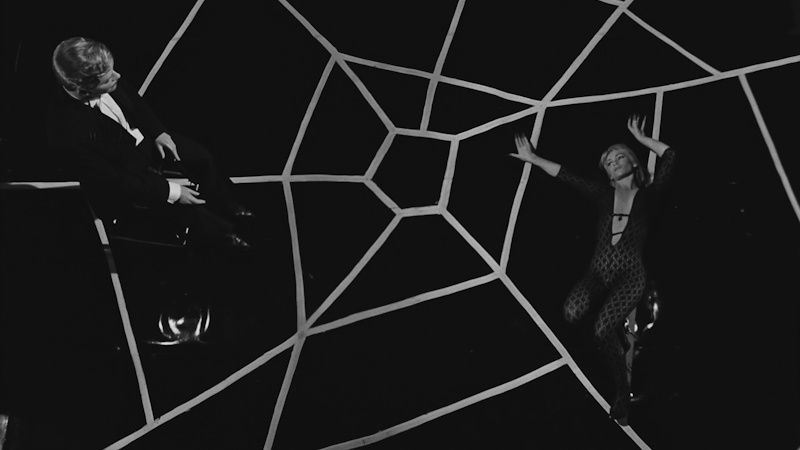
The grand power of Daughters of Darkness comes from the richness of its fantastique symbolism – an ambiguous collage of references from the visual arts and literature that lightly brush against each other to create both a profound sense of mood, and a rich breeding ground for interpretation. It’s a deeply queer film, not just for the lesbian vampires at its centre, but also in its critiques of heteronormativity and its undermining of gender roles. Another reading however, very much informed by the climate of 2025, unearths Kümel’s film as a disturbingly powerful text about emotional manipulation and toxic power dynamics.
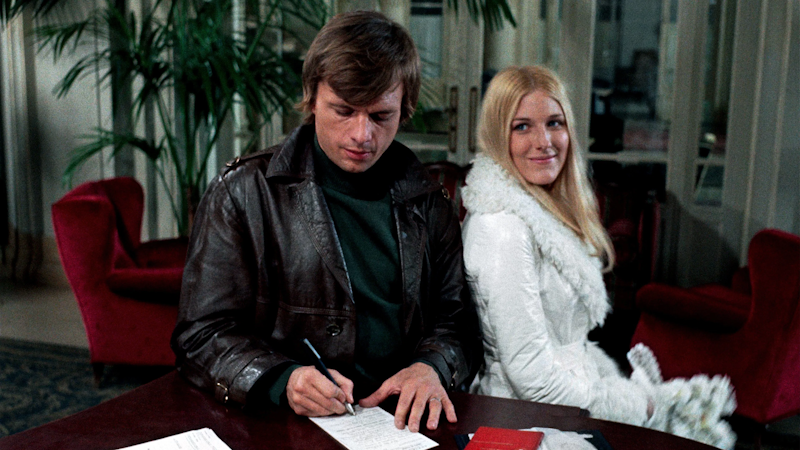
The film opens on a couple (Stefan and Valerie), seemingly making passionate love on a train bound for England, but their intensity is undermined by the fragmented framing of their coupling. This suggests that all is not well with the newlyweds, which is immediately confirmed when, during their post-coital conversation, Valerie’s cautious question of “do you love me?” receives a negatively noncommittal response from Stefan. A sad dynamic is immediately established, suggesting that this is a couple bound by obligation, dressing it up as affection.
The result is a film that, while gaspingly cynical, is an incredibly beautiful and extremely intelligent piece about how emotional manipulation and co-dependency can appear vampiric.
CLICK THE BOXART AT THE BOTTOM OF THE PAGE TO BUY DAUGHTERS OF DARKNESS AND SUPPORT THE GEEK SHOW
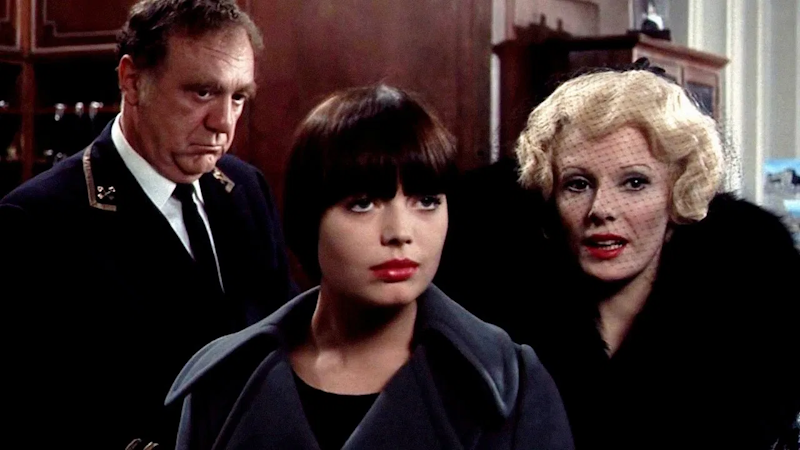
When their flight to Blighty is cancelled they hole up in Ostend, the Belgian seaside city now known for its Winter in the Park event (but that’s a few decades away). Stefan and Valerie are stuck in an empty hotel out of season until the arrival of a Bristol 403, a hand-built sign of old luxury that carries an even older symbol of nobility – a countess, and not just any countess either. That enigmatic doyenne of European arthouse (to quote Gatiss), Delphine Seyrig appears in the guise of Countess Elizabeth Báthory, and she plays her smiling, soft-toned vampire with the complete confidence that everything will fall her way. She is, after all, of aristocratic bearing, and that allows her a certain authority and privilege that’s evident in her every motion.
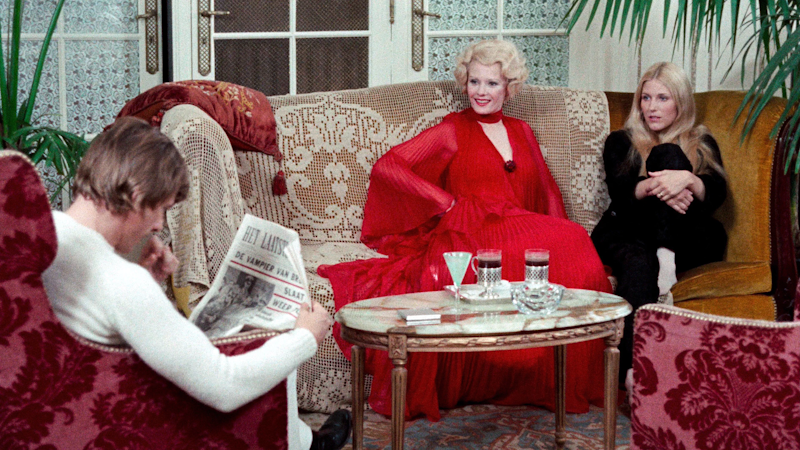
It’s inferred that noblesse oblige has destroyed her morality and allowed her to do appalling things in her desire to appear young. Through a dazed recitation that, much to Valerie’s horror, arouses both participants, the Countess and Stefan detail the various tortures the Countess’s “ancestor” inflicted on young women. Valerie (played by Canadian actor Danielle Ouimet), is a somnambulistic innocent whose purity symbolised by pale skin and long blonde hair. In this moment, shrinking into the sofa, she rejects not only the hideous mutilations described, but also the desire the descriptions provoke until it’s too much to bear – her morality, it seems, is still strong enough to disavow the Countess’s cruelty.
Alas, she’s no match for the manipulations of the permanently smiling evil in the chair opposite her, and Daughters of Darkness traps Valerie between two romantic forces – both of whom treat her as an object to be claimed. Beyond the act of possession, the Countess clearly has little regard for either Valerie or Illona, the fourth character in this tale who functions as the Countess’s dutiful servant and thrall who performs every task with a demure compliance. She’s been completely hollowed out by her dependence on the Countess and her mind games – an emptiness that Valerie succumbs to after appalling treatment from the deeply closeted Stefan, but that she seems to actively revel in by the film’s end. Faced with patriarchal repression through violence, it’s understandable that she would be lured by the seductive entreaties of a black widow like Báthory.
You’d be forgiven for assuming Daughters of Darkness was tremendously sombre, but Kümel offsets the bleakness with a jaunty black humour that’s strangely appealing. Along with Seyrig’s softly spoken smile and some truly inventive ways of murdering a man (never has a frosted dish cover been so lethal), there’s a fabulously offbeat score by François de Roubaix that features a Wurlitzer waltz for the Countess’s seductions. The result is a film that, while gaspingly cynical, is an incredibly beautiful and extremely intelligent piece about how emotional manipulation and co-dependency can appear vampiric. Now if only we could only get Gatiss to do more documentaries on the history of horror as who knows what else he may dislodge from the annals of history.
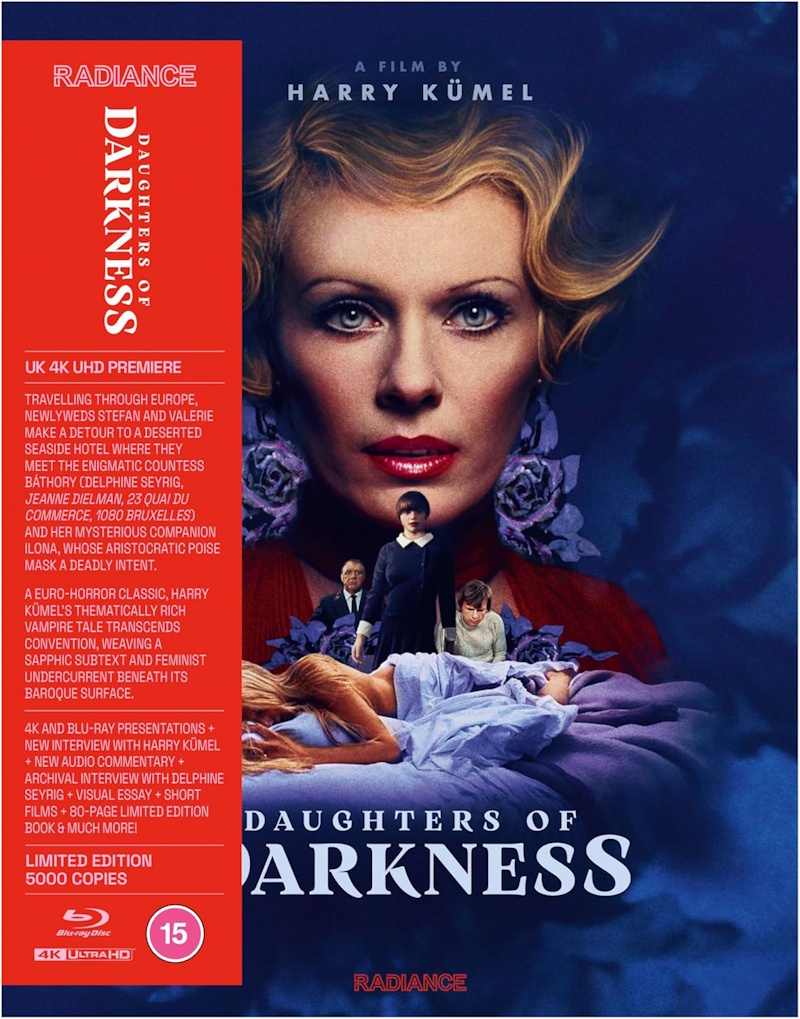
DAUGHTERS OF DARKNESS IS OUT NOW ON RADIANCE FILMS BLU-RAY