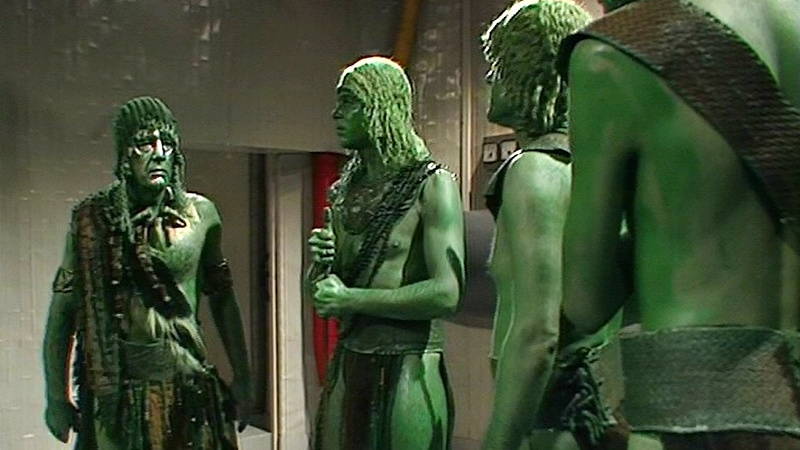
It can be hard to evaluate the years Graham Williams spent as Doctor Who‘s producer. Part of the problem is having to follow up Philip Hinchcliffe, under whom the show’s median production values and script quality skyrocketed; the fact that Williams could not maintain this led some fans to write him off straight away. But it’s not really his fault. When Hinchcliffe took over the show in Tom Baker’s first year as Doctor, it had relied for three years on the same stable of writers, many of whom dated back to the Hartnell or Troughton years. By the last season of Jon Pertwee’s tenure, you can see the strain of this approach beginning to show, with many of these writers penning scripts that are either consciously valedictory (Invasion of the Dinosaurs, Planet of the Spiders) or simply tired and unoriginal (Death to the Daleks, The Monster of Peladon).
Despite this, for the three years Hinchcliffe ran the show precisely three new writers were commissioned, and one of them – Lewis Griefer – turned in a script so poor that the script editor Robert Holmes had to do one of his frequent page-one rewrites. A huge amount of the improvement in script quality during Hinchcliffe’s tenure is attributable to Holmes, revitalising flagging writers with original ideas and performing an astonishing amount of rewrites. There’s no arguing against the results artistically, so most fans don’t bother. From a production standpoint, though, this “leave it to Bob” attitude seems like an accident waiting to happen. Sure enough, once both producer and script editor were forcibly moved on after complaints about the violence and horror content in their episodes, their replacements Graham Williams and Anthony Read were left with a stable of veteran writers approaching burn-out and a big question-mark over what a non-horror-oriented Doctor Who was supposed to look like.
The Androids of Tara comes from Williams and Read’s only full series together, and is the second script by one of their new writers, David Fisher. Fisher joins a very select club – just him, Ian Stuart Black, Chris Boucher and Jamie Matheson – in making his writing debut on the show with two back-to-back stories. Like those other examples, Fisher’s first two stories suggest a mind bursting with ideas for the series. His prior story, The Stones of Blood, might have been a Holmes-era horror throwback, but that can be attributed to its position as the series 100th story: a little nostalgia is acceptable under such circumstances. The Androids of Tara sets out Fisher’s vision for what the series can be, prompted by Read’s suggestion to write a Doctor Who take on The Prisoner of Zenda. The result is fascinating. If the series can no longer be capital-G Gothic, The Androids of Tara makes a good case for it becoming capital-R Romantic.
…is this how Doctor Who responded to Star Wars? Well, yes and no.
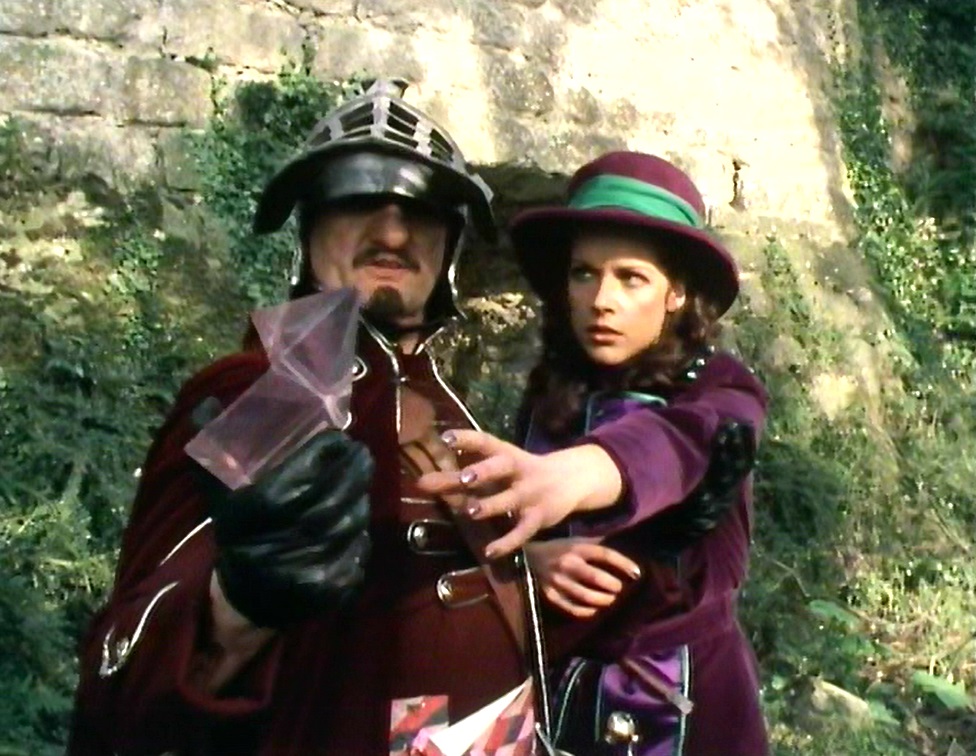
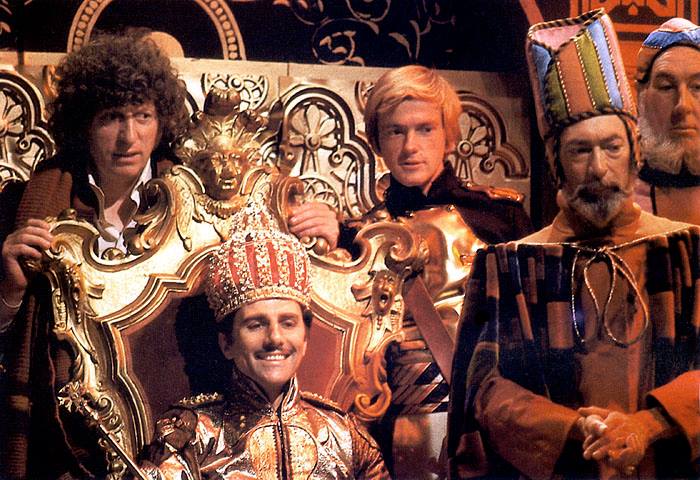
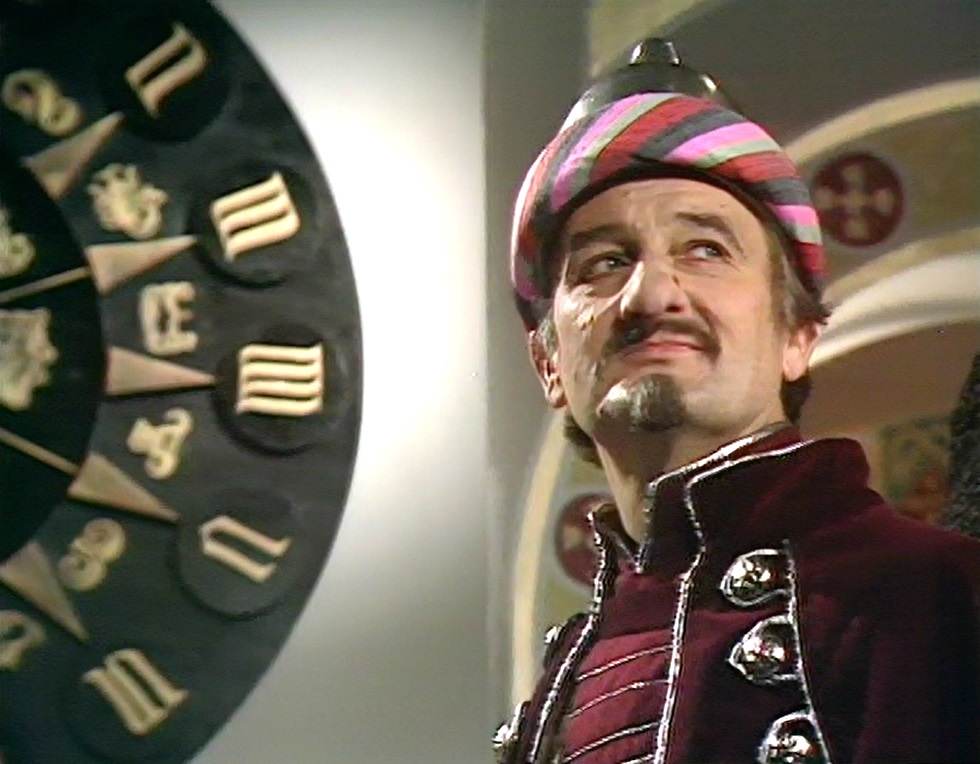
Most series guides introduce the story by mentioning Read’s literary model, which is presumably because actually summarising The Androids of Tara would take up most of a book on its own. After a leisurely, atmospheric start (which is remarkably close to Douglas Adams’s rejected “the Doctor retires” story), Fisher appears to be aiming to cram at least two plot twists into every scene. It’s the kind of story which almost isn’t worth following: it’s confusing, and there would no doubt be some plot holes in there. Better to sit back and marvel at the sheer activity of it all, and let the sheer atmosphere wash over you. There’s plenty to enjoy: Dudley Simpson’s rich, jazzy score, the location shoot at Leeds Castle (nearly derailed when it was chosen as the setting for top-level Middle East peace talks!) and the terrifically accomplished sword-fight in episode four, leading to an ending that’s unusually inconclusive by Doctor Who standards but is perfectly in keeping with the Saturday-morning serial vibe of the whole story. Tune in next week for more adventures with Count Grendel!
The attentive reader may have clocked the year “1978”, heard all this talk about sci-fi sword-fights and Saturday-morning serials and wondered: is this how Doctor Who responded to Star Wars? Well, yes and no. We’d get the show’s attempts to respond to Star Wars’s state-of-the-art production techniques and epic scope in the 1980s, but The Androids of Tara is refreshingly small-scale. With the running Key to Time plot dispatched early on, nothing is at stake other than the throne of one planet and, of course, the Doctor and Romana’s safety. But there is a pleasing serendipity to Anthony Read deciding the future of Doctor Who lay in SF takes on classic adventure stories and myths at exactly the point when George Lucas made this combination the biggest deal in the world.
This isn’t quite how it shook out. When Read vacated the script editor’s chair at the end of the season, Graham Williams replaced him with a new writer from the Key to Time saga, but it wasn’t David Fisher – it was Douglas Adams, who’d come on board prior to the first radio run of The Hitch-Hiker’s Guide to the Galaxy. It’s easy to see why Williams was dazzled by Adams, who was a certified genius, but the post of script editor requires more than genius. It requires certain talents Adams never really had, such as sticking to workable story structures, or meeting deadlines. Fisher, despite proving his versatility with two strong debut stories, was overlooked.
It is possible to go too far down this road. The Stones of Blood and The Androids of Tara both have their flaws, and indeed the former is the closest Fisher ever got to the kind of consensus classic that usually propels people into the script editor or showrunner’s chair. But it is worth wondering what Doctor Who would be like if Fisher had more control over the show’s direction, especially since Doctor Who as tongue-in-cheek Ruritarian saga sounds better than what we got for most of the next ten years. Let’s stretch it further and say Fisher stays on after Baker’s departure, and perhaps makes the same casting choice to replace him. Peter Davison as a Romantic, perhaps Byronic, swashbuckling Doctor – right at the moment Raiders of the Lost Ark is released? It makes you wonder why the series spent so long farting about trying to mimic James Cameron. But that’s a matter for later.
Next: The Power of Kroll.