Early in the first episode of City of Death, Romana asks the Doctor where they’re going. “Do you mean philosophically or geographically?”, he replies. It’s one of an overwhelming number of great lines in the script by “David Agnew” (essentially, Douglas Adams doing a page-one rewrite on a David Fisher script, with contributions from Graham Williams). It also gets to something at the heart of City of Death‘s appeal: it is all about movement. There’s often a lot of running around in Doctor Who, but rarely in this quantity, part of which can be ascribed to it being the show’s first overseas location shoot. I’ve argued before that stories shot on location will always have at least one advantage over stories shot in a studio, which is that they can take Doctor Who‘s usual scenes of people running through corridors and turn them into scenes of people running through interesting locations. That’s never been truer than it is in City of Death, with its iconic shots of Tom Baker and Lalla Ward racing through Paris.
These scenes don’t really further the plot, and indeed it’s easy to imagine a new series version of City of Death getting some way towards stuffing it into a 45-minute slot just by having the Doctor use the TARDIS when he needs to get somewhere. It would only be a slight adjustment to the way Adams’s script treats the ship, which is unusually functional here. Just two stories ago, the Doctor fitted a “randomiser” to his TARDIS, a device whose in-universe function was to shake off the Black Guardian, but which seems to promise the audience a return to the Hartnell-era ethos of the Doctor as wanderer.
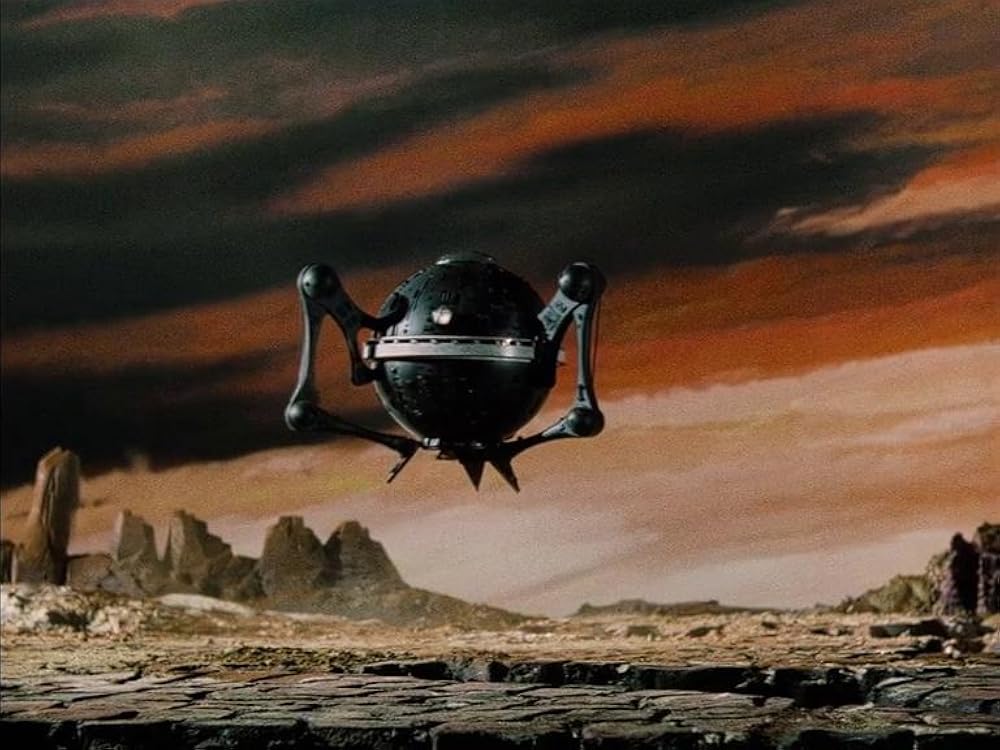
Fans often joke about the absurdity of the randomiser immediately taking the Doctor to Skaro and 20th-century Earth, two locations which he always visits anyway. Less is made, though, of how strangely the Doctor uses the TARDIS while he’s on 20th-century Earth. Faced with an enemy – Count Scarlioni – who is performing time-travel experiments, the Doctor junks the randomiser and pilots the TARDIS very purposely to locations where he knows Scarlioni is active. This is really the death knell for the idea of the TARDIS as a chaotic machine that the Doctor can barely steer: it’ll be treated as such in the future, on and off, but Adams has invented a whole new role in the plot for the machine here, one which continues to define the modern series. So what’s going on here? Why has the show gone back on what seemed to be a subtly changed format so quickly?
I’m tempted to say we should take as read the fact that City of Death is absolutely brilliant.
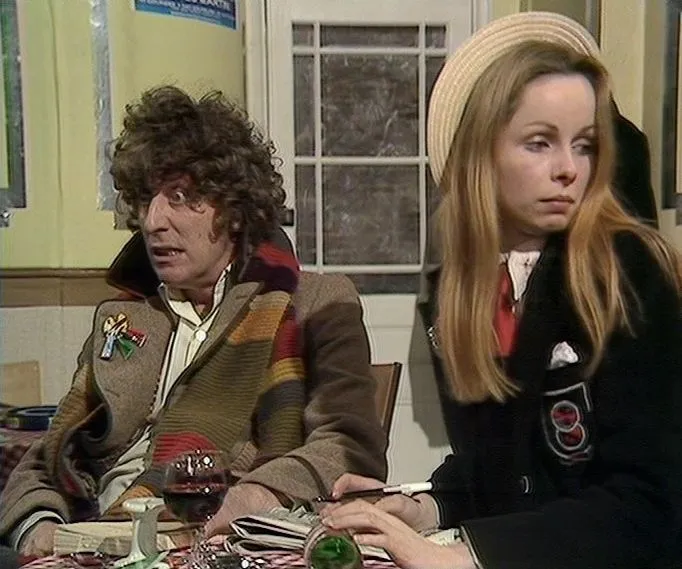
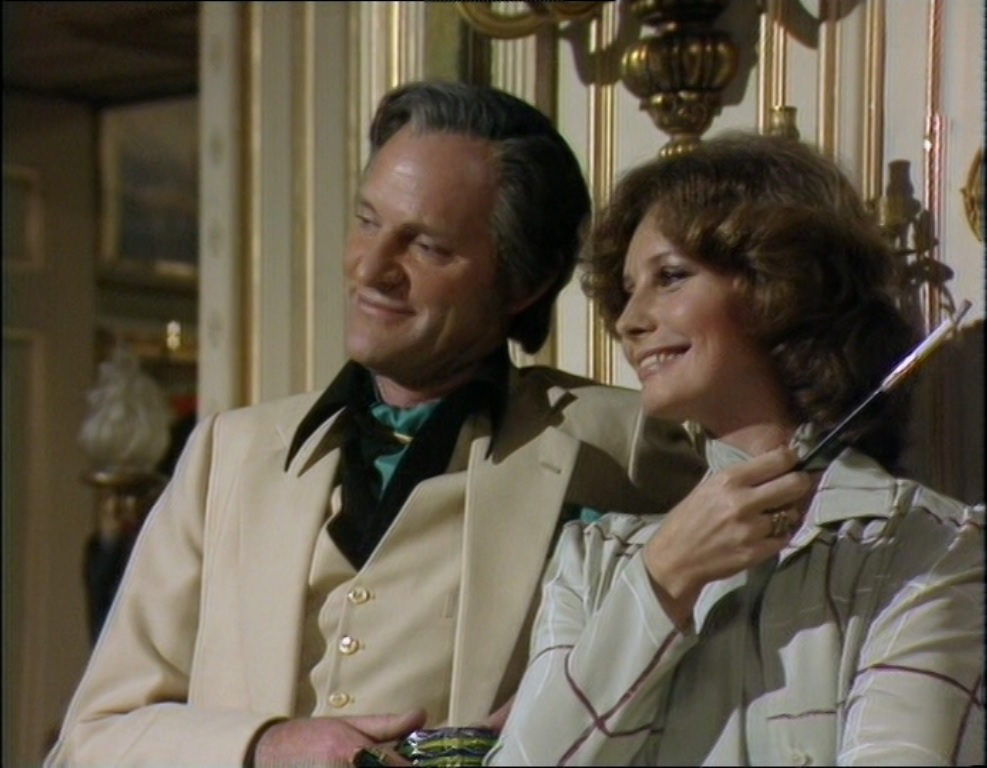
I find this question fascinating – so fascinating, in fact, that I’m tempted to say we should take as read the fact that City of Death is absolutely brilliant. Let’s just accept that this is Tom Baker’s greatest 100 minutes as the Doctor, that he and Lalla Ward already have incredible chemistry that hasn’t been equalled by any other Doctor-companion pairing before or since, that Dudley Simpson’s score is fantastic and the script has at least four devastatingly good lines in each scene. Unfair as it may seem, we will have to skate over the fact that Julian Glover is giving one of the show’s best-ever guest performances as the louche villain Scarlioni. There is not enough space, alas, to talk about how eloquently and intelligently the film explores its themes of time and art, and how wonderfully right it is for the Fourth Doctor – whose costume was, remember, designed to evoke 19th-century French Bohemians – to be such a Wildean aesthete that he objects to an act of violence on the grounds that it might damage an antique chair. This is all just wonderful. The serial is great right down to tiny, tiny details like Duggan smashing a bottle open in the background of a shot of Romana, or the tiny, thoughtful nod John Cleese gives at the end of Doctor Who‘s most wonderful cameo.
All of this is true, and has been written about in the volumes that a story like this deserves. But I’m concerned with how the story moves around. Why has the Doctor apparently disconnected the Randomiser? Well, for one thing, it’s hard to imagine how the show could successfully re-introduce that First Doctor concept of the hero as gentleman tourist at this point. The Fourth Doctor might be scatterbrained, but he’s far from aimless: indeed, one of the striking things about Graham Williams’s time as producer is how often the Doctor seems to be actively looking for trouble. He might arrive in Paris by random chance, and he might initially view this as an opportunity for a (romantic?) break with Romana. But as soon as he spots a piece of alien technology on the wrist of Countess Scarlioni, he steals it, actively forcing himself into the action rather than stumbling into it like any previous Doctor would have.
So all that running is a pretty good representation of where the series is right now: when the Doctor isn’t running through Paris, he’s running through time, and he always knows where he’s going. The scene where the Doctor is first brought before Scarlioni ends, famously, with the Count declaring that “nobody can be as stupid as he seems”, and part of the reason why the comedy works here and not in the “try climbing up after us” scene in the last story is that, here, the Doctor is purposefully using his wit to misdirect and stall for time. In Fisher’s initial draft, Scarlioni was a top gambler at a Monte Carlo casino, which Williams felt was inappropriate for a children’s show. Despite completely removing the gambling aspect, the finished script still depicts Scarlioni and the Doctor as expert bluffers. The scene where Scarlioni gives the Doctor a series of maddening one-syllable answers is the most hilarious example of this, but he’s already overplayed his hand: asked where his wife’s alien bracelet came from, Scarlioni declares “it didn’t come from anywhere. It’s mine.” But Scarlioni is too learned, even in his pretence of a life as a Count, to think things just spring from nowhere. His ultimate plan involves a very, very profound knowledge of causality.
Scarlioni is something akin to a time-travelling Goldfinger, and had he met the Doctor’s more Bondian previous incarnation the match between hero and villain might have been too neat. But Tom Baker, by this point, has shifted the Doctor’s persona from Pertwee’s camp Bond to a kind of weird Superman, casually demonstrating completely bizarre powers like skim-reading a book in a second and apparently flying down from the Eiffel Tower. The charm of this, certainly compared to the similarly powerful but more braggadocious Tenth and Eleventh Doctors, is that Baker plays it all so casually, a man bored of his own genius. And maybe that’s why he runs, too. He could use an unprecedentedly powerful space-time machine to get to any point in Paris in less than a second, but it’s too easy for him. There is very little charm in being perfect all the time, but when we see the Doctor and Romana haring through real Paris locations, coats and scarves trailing behind us, Dudley Simpson blasting on the soundtrack – there is real atmosphere, real magic there. The irony is that this hymn to messiness, where the Doctor becomes an early AI refusenik by scorning Romana’s advocacy for machine-produced art in favour of the idiosyncrasy of the human hand and eye, comes as part of a story which is, itself, perfect.
Next: The Creature from the Pit (1979)