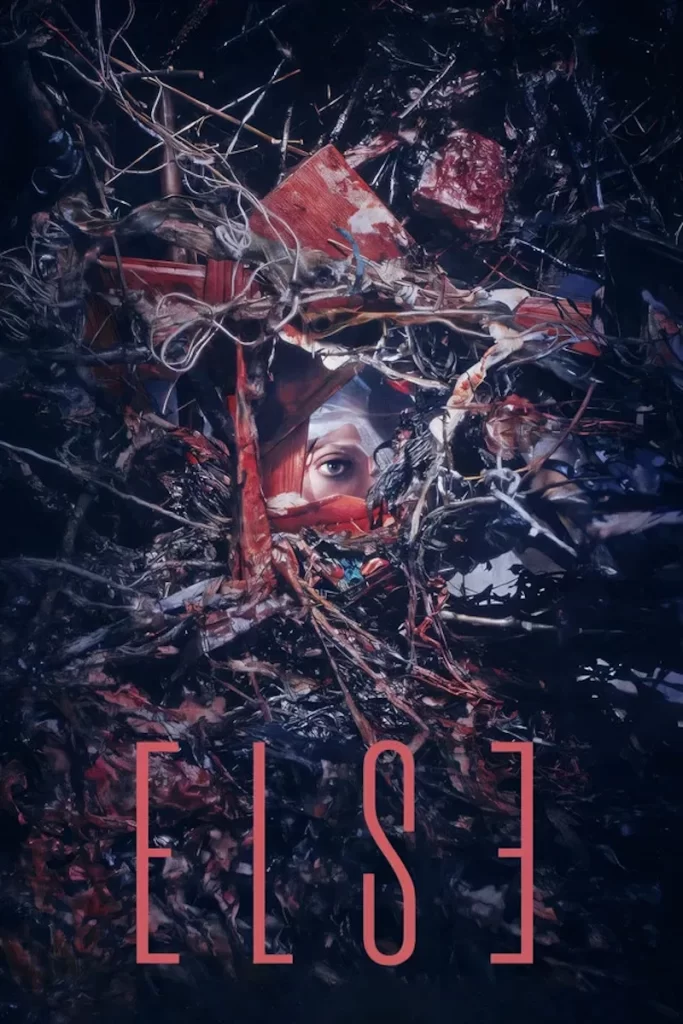
Not that it needs explaining, but there’s a marked difference between a traditional horror movie and one that deals in body horror. A traditional movie would feature an external threat hunting down our heroes, and although there are exceptions, it’s as close to a hard-and-fast rule as you are likely to get in horror. Body horror is different, in that it doesn’t even need to belong to the genre. As astutely and horrifyingly showcased by “Big Dave” Cronenberg, the body attacking itself. So in comes a pretender that ignores all of those rules: Thibault Emin’s Else – fresh from a festival run that no doubt confounded and bewildered those who laid eyes upon it, and it’s out now on UK digital platforms.
Emin previously tackled the material of Else in a 2007 short film, but with a decent budget he can now approach it with the gusto he always desired.
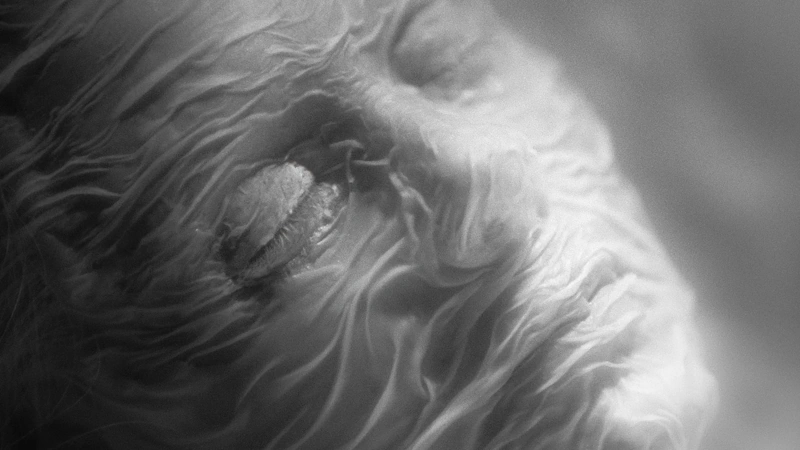
In a movie that is incredibly pandemic-coded in its ancillary world-building, we are introduced to a France where a new virus has emerged that fuses people to their belongings, and upon seeing that in festival press materials, it painted an image in my head of consumerism and how a person becomes their possessions. A basic reading, for sure, but the reality of what Emin has cooked up is far more haunting as this disease causes people to fuse with their immediate surroundings – the external attacking the internal, body horror operating by the rules of a traditional piece. The first time we see it is when an erratic homeless man that lives outside of Anx’s flat fuses with the concrete floor he sleeps on, and emergency services have to physically pull him away. Flesh and man-made materials become one, you could say “long live the new flesh”, but that would be too obvious.
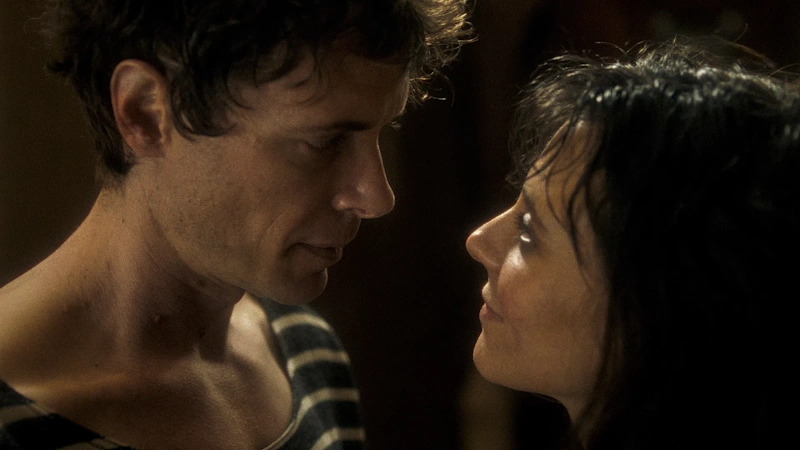
Our way into this nightmarish scenario is Anx (Matthieu Sampeur), a graphic designer and shut-in who is introduced whilst having sex with the brazen Cass (Edith Proust), after a house party. He is riddled with anxieties, hence the name, and she is amused by his lack of prowess – jokingly calling him tiny and soft – she sticks around nonetheless. Upon her second visit the disease has spread so far that a lockdown is instigated which forces the pair to live with each other, and it’s in Anx’s lovingly designed flat that we spend the rest of the movie. There are other cast members, but all we experience with them are conversations shouted through the building’s vents, and for much – probably too much – of the movie, we spend time with the couple as modern life’s trappings fall away. As we open, Anx’s abode is shot with expansive wide angles and vibrant colour, but as the situation becomes more hopeless, that colour fades, and the cinematography becomes increasingly hemmed in by a boxy aspect ratio, and the colour fades – becoming near black and white by the climax. The world truly closes in on Anx and Cass as the illness doesn’t just affect the flesh, the building completely changes face too, merging doors shut (a dog also gets infected, as reported through the vents).
Else has a similar ambition, opaque nature and tone, one that will reward those willing to investigate the obscure, uneasy recesses of world cinema…
CLICK THE LINK AT THE BOTTOM OF THE PAGE TO WATCH ELSE, DOING SO SUPPORTS THE GEEK SHOW
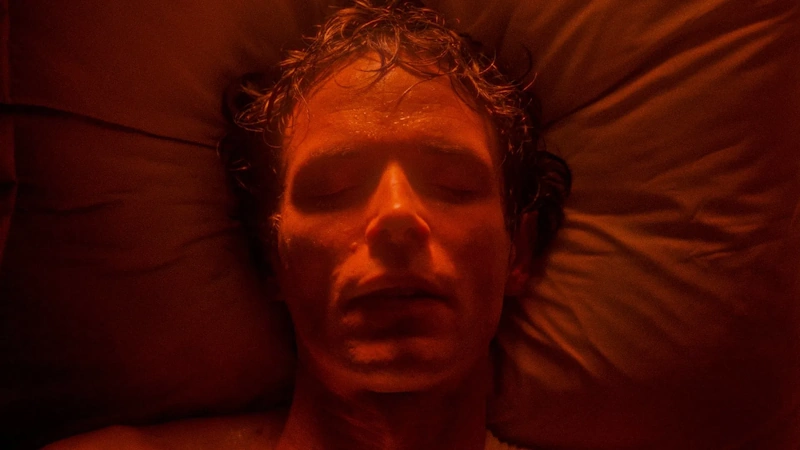
A visitor turns up around the midpoint – someone who has merged with concrete, and on a visual level the practical effects of people becoming these materials are stunning and unlike anything I’ve ever seen. Then there’s the reveal that this infection spreads when the unaffected look into the eyes of the afflicted, and when one of our heroes looks this concrete beast in the eye, and we experience the horror first-hand. Seeing flesh fuse with bedsheets is a nightmarish image that showcases the conflicting terror and beauty inherent in Emin’s concept as you realise the virus is spread by empathy.
Body horror is always about something, and Else is no exception. From the way events unfold, it becomes apparent that Emin is working through grief – specifically that of watching a loved one changed completely by illness, becoming something else before eventually succumbing. Having been through it myself, I recognise the hallmarks, but even that common experience isn’t necessary as Emin is far from subtle. Which is a net positive as, in more nihilistic hands, this would be a bleak watch. Emin plays things out with the understanding of someone who has come through trauma and landed on the idea that a loved one’s mutation into something else isn’t to be feared. The afflicted have become something else, both natural and beautiful, but you could interpret the ending as hopeless – that would require substantial mental gymnastics given the beautifully climactic visuals.
France is doing fascinating things with body horror, but instead of reciting the hits I’ll leave you with a reference: Lucile Hadžihalilović’s Evolution (2015) is a film that does wonderfully inexplicable things with a seaside town, from eyebrow-free nurses to peculiar boys with the uncanny ability to swim. Else has a similar ambition, opaque nature and tone, one that will reward those willing to investigate the obscure, uneasy recesses of world cinema, but for everyone else it’s probably best to look somewhere else.
ELSE IS AVAILABLE TO WATCH ON DIGITAL PLATFORMS