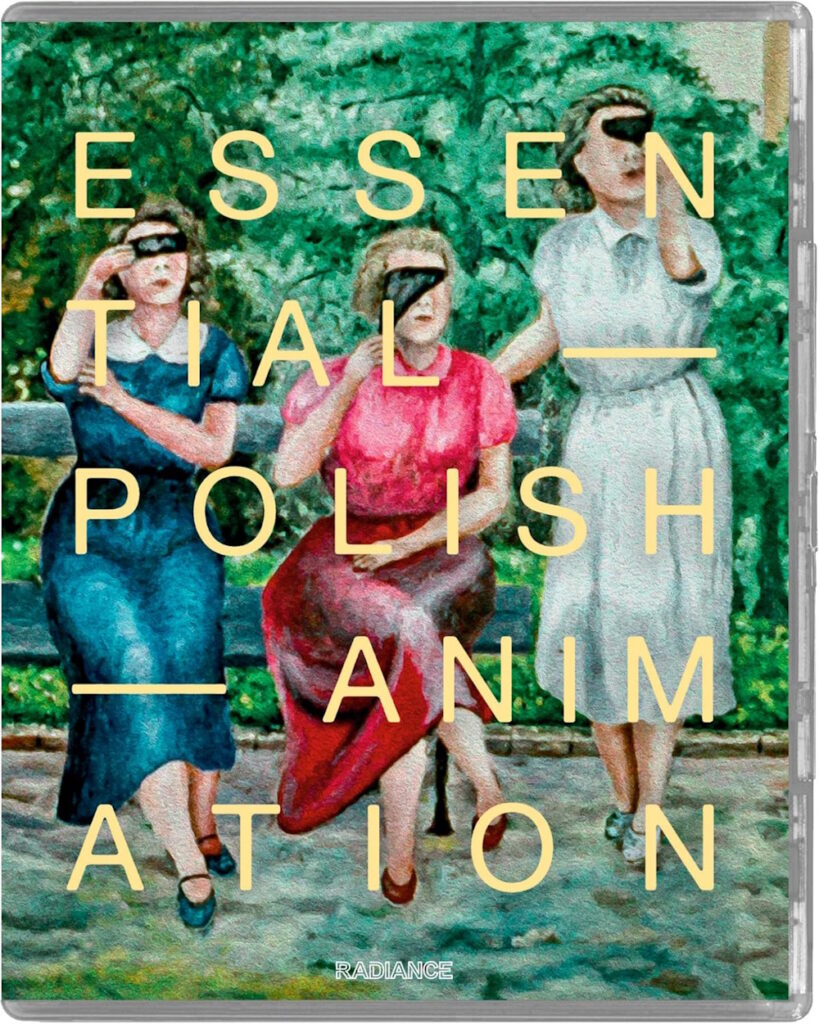
The reappraisal of animation as an art form, one capable of tackling adult themes and topics beyond its cereal-box public image, could be seen as the result of contemporary animated offerings. Adult Swim’s foul-mouthed comedies or the hyper-violence, sexuality and general intensity of anime (a subgenre rapidly entering the Western mainstream), could be mistaken for the ground zero of mature animation. However, this new collection of 27 Essential Polish Animations from Radiance evidences that keyframes have grappled with adult themes from early in the medium’s long history.
This horde of animated goodies takes the viewer on a journey from the infancy of Polish animation in the late ‘50s, where directors like Jan Lenica instituted the defining collaged style, to the gritty, Kafka-esque shorts produced at the end of Communist rule in late ‘80s Poland. This is no means an exhaustive list, yet Radiance have provided a rich tapestry of this national niche, ranging from painted follies to experimental, anti-authoritarian mood exercises. Auteurs such as Lenica, Ryszard Czekała and Jerzy Kucia make themselves known as cornerstones as viewers move through the years, each a vital waypoint through an expansive micro-moment of Polish national film history.
This collection begins where many good things do, with the death of Stalin in 1956. As the tyrant fell, the leashes holding back Polish artists were cut, among them two animators who would come to define the subgenre – Walerian Borowczyk and Jan Lenica. Their early cut-and-stick collaborations, such as Banner of Youth (1957) and Love Requited (1958), promised opportunity and personal freedoms to young Polish viewers, utilising avant-garde animation to celebrate the decay of authoritarianism following Stalin’s demise.
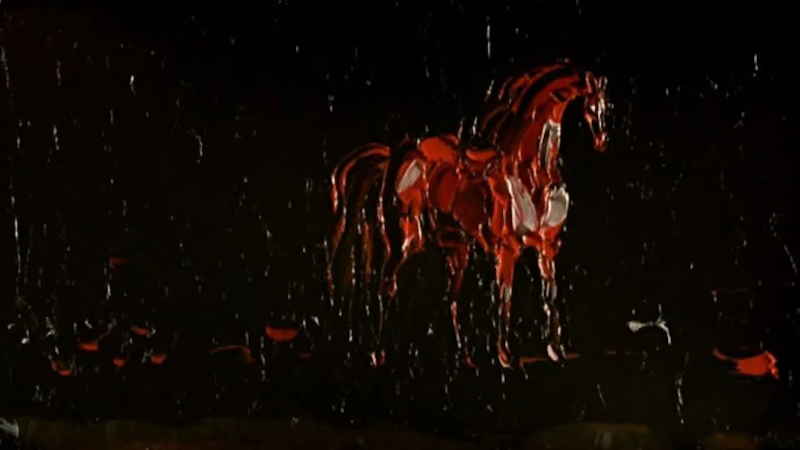
These early innovators paved the way for the ‘60s golden age. New techniques flourished, such as Witold Giersz’s method of painting directly onto celluloid in his acclaimed ditties A Little Western (1961), The Red and the Black (1964), and his most elegantly rendered ode to the Western, Horse (1967). Meanwhile, a strand of philosophy, perceptible in Lencia’s early work Labyrinth (1963), runs through the geometrically-drafted cartoons from Stefan Schabenbeck and Mirosław Kijowicz. These philosophical retaliations against the tedium of Communist Polish rule are executed with humble simplicity, akin to a well-told fable.
This collection is a testament to art made under difficult regimes and is an intellectual and entertaining pleasure throughout.
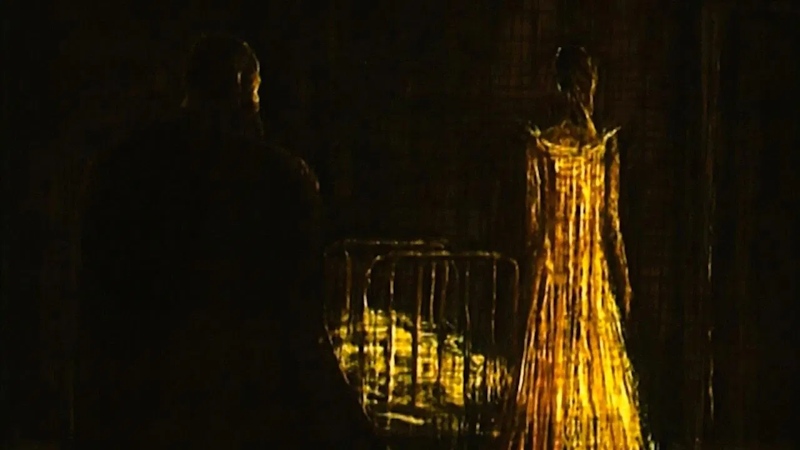
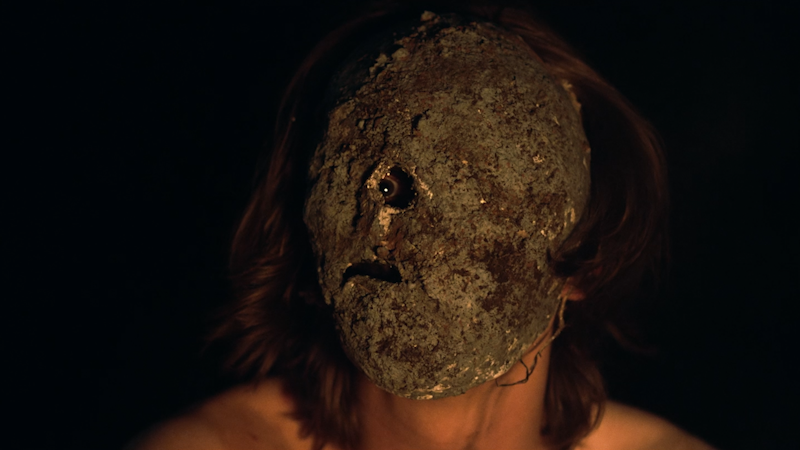
The silver age that would later run through the ‘70s worked charcoal into the liminal zones from Schabenbeck and Kijowicz, making for some sobering reckonings with labour under Authoritarian rule and the heavy legacy of the Holocaust in Poland. Ryszard Czekała’s chunky, monochromatic style is most indicative of this period, memorably in his brutal The Roll-Call, a stark realisation of an exercise in a Nazi prison camp. Nothing following this hits as hard, especially as the ‘80s heralded in a headier strand of experimental works, many in dialogue with writers like Kafka and Dostoevsky, most pointedly in Piotr Dumała’s painterly adaptation of the latter, A Gentle Spirit (1985).
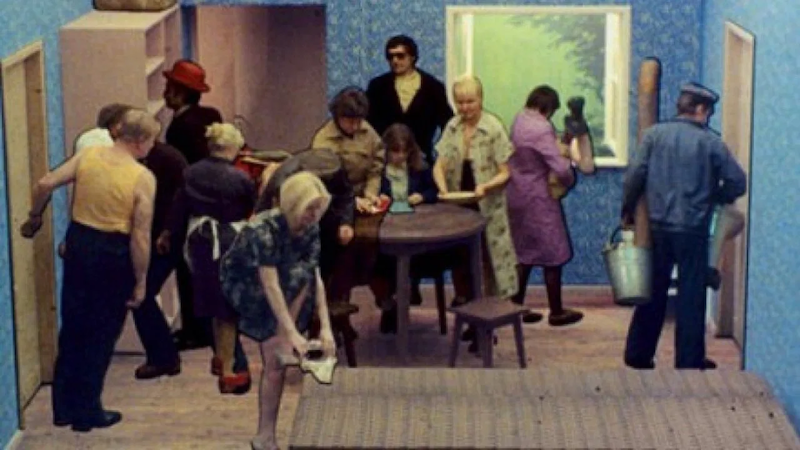
While Radiance provides brief bios on the golden, silver, and surrounding ages, the works themselves reward an overview of the cultural, political and societal shifts in Poland throughout the decades, at the expense of historical specificity. Look to films like Zbigniew Rybczyński’s Oscar-winning Tango, which evokes an overwhelming sense of isolation. The palimpsestic loop of collage characters weaving through the compact room depicted in the film never explicitly refers to the martial law enforced in Poland from 1981 to ‘83, yet this event’s impact bleeds into the keyframes and is felt by the viewer.
Upon viewing every entry in this collection, there is a broad feeling of clarity. Although extra materials filling in the historical blanks, obscuring some of the films, would have been appreciated, beyond the commentaries which are provided for a handful of the shorts, the scope of artistry on display regularly encourages a child-like wonder, which quashes bookish inquiries. This collection is a testament to art made under difficult regimes and is an intellectual and entertaining pleasure throughout.
ESSENTIAL POLISH ANIMATION IS OUT NOW ON RADIANCE FILMS BLU-RAY