Koji Shiraishi may be best recognised in the West for his contributions to the found footage genre with films like Noroi and the Senritsu Kaiki File series, but a closer look at his filmography shows a reluctance to be pigeonholed. The general unavailability of his work outside of Japan makes Kinki of particular interest as its produced by Warner Brothers Japan suggesting a likely wider release. As with his last feature, House of Sayuri, Kinki is an adaptation of a book, About a Place in the Kinki Region, with its opening chapters first available online, a format that perfectly suits the creepypasta-like tale of an editor collecting strange stories centring around the Kinki region.
Adapting this style of storytelling to cinema is a challenge, risking the film seeming episodic or too much like an anthology rather than a singular narrative. Such a challenge plays to Shiraishi’s strengths as a filmmaker continually fascinated in how stories are passed on from person to person. The film frames its narrative via it’s two leads Chihiro (Miho Kanno, best known for playing the title role in Tomie) and Ozawa (Eiji Akaso), who work at the publishing house for Ultra-Mystery Mag where its chief editor has mysteriously disappeared. The pair attempt to complete the feature article that he had been working on by assembling the archive of material left behind.
Kinki is an unmissable new entry to Shiraishi’s eclectic filmography, with an enthusiastic, child-like earnestness in its storytelling.

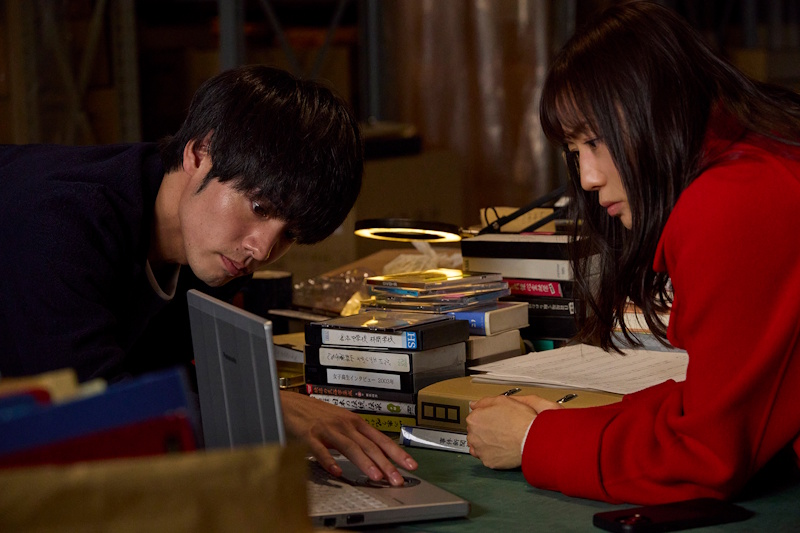
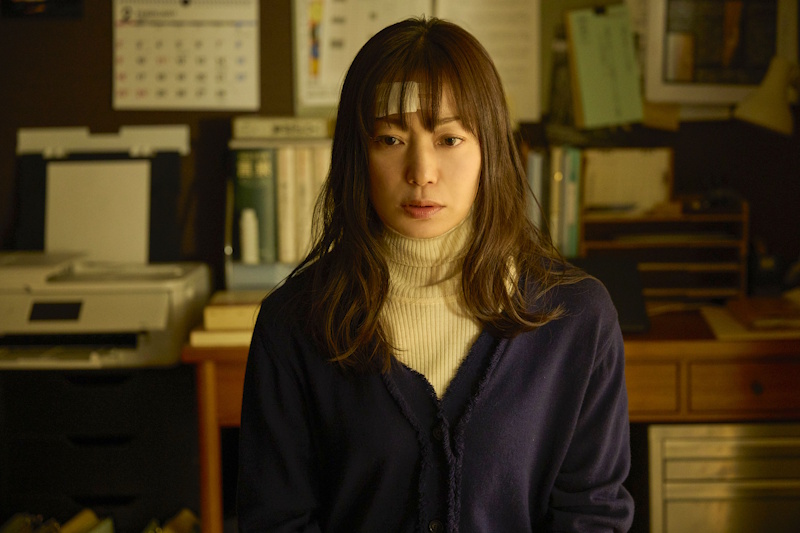
For more on Kinki, click on the poster at the bottom of the article
Compared to the recent Shelby Oaks which similarly attempted to mix found footage with a third person narrative, Kinki is far more successful, not least because Shiraishi has almost thirty years of filmmaking experience to draw upon. He thus has complete confidence intertwining the two styles of horror filmmaking into a coherent narrative. The videos in themselves are unnerving varying from livestreaming to new reports, each dread-inducing in different ways. While a similar style to Noroi, the framing narrative highlights how we are watching these videos being watched making this a more eerily alienating experience compared to the immersive terrors of Noroi.
It also helps that the film uses a similar procedural narrative as Ring that builds its mystery gradually. Repetition of phrases and names allow us to notice connections early and build a sense of dread while keeping enough mystery hidden to avoid the characters seeming too idiotic. It shows a confidence in its audience to put the pieces together, reflected in a recent showing of the film where audience members had to complete a scavenger hunt to find the screening. The mysterious presence at the centre of Kinki becoming the subject of a children’s game further emphasises this theme; there is an enthusiastic child-like earnestness in the storytelling as we dive deeper and deeper into the mystery resulting in a climax that is confounding, and yet somewhat satisfying, cementing Kinki as an unmissable new entry to Shiraishi’s eclectic filmography.
KINKI PLAYED AT THE IMAGINE FANTASTIC FILM FESTIVAL 2025 IN AMSTERDAM