Giallo is known by its directors – Fulci, Bava, Argento, maybe Sergio Martino if you do some digging, but someone just as important is screenwriter Ernesto Gastaldi. Active for nearly thirty years in Italian cinema, he penned the scripts for some of the most iconic gialli, his many credits including The Strange Vice of Mrs. Wardh, Forbidden Photos of a Lady Above Suspicion, The Sweet Body of Deborah and The Case of the Bloody Iris. He also wrote Gothic shockers like The Whip and the Body, spaghetti Western’s like Day of Anger, and the ultraviolent polizotteschi Almost Human. While they may not reach the delirium of Argento or Bava’s beautiful sense-fests, Gastaldi’s sharp eye for plotting and incisive characterisation provide an equal, but different sort of pleasure. What’s less well known is his directorial career, and presented on Blu-Ray by Radiance, Libido is a fascinating halfway house between the Italian Gothics of the early ’60s, and the gialli that would make Gastaldi’s name.
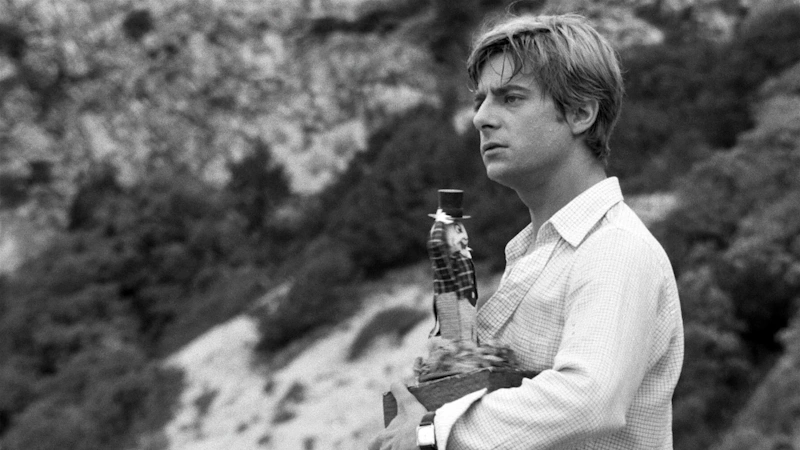
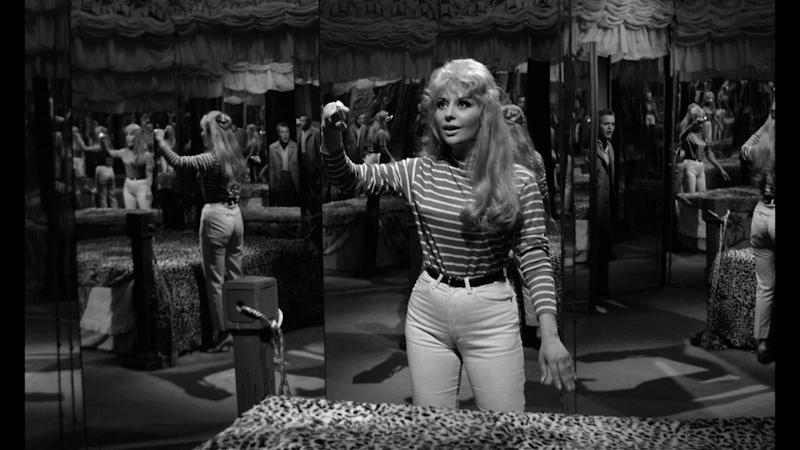
The Gothic elements are clear from the title credits, opening with a huge stinger chord that evokes Hammer productions (courtesy of the great Carlo Rustichelli). After a scrolling explanation of the titular concept (taken from Freud), we’re transported to the cliffside mansion for our story, and like any Gothic haunt, it’s a suffocating location with a dark secret at its heart. In this case it’s an octagonal mirrored room where young Christian Coreau’s father conducts his sadomasochistic sex games – but as the five-year-old witnesses, things goes badly wrong. Argento would reference this scene at the start of Deep Red, but it also echoes the beginning of Buñuel’s Criminal Life of Archibaldo de la Cruz, both of which involve young boys who grow up while hanging their frail psyches onto an object from their childhood. For Christian it’s a Jiminy Cricket toy, its eerie tune playing several times during the film as he struggles with the unhealed scars of his father’s proclivities.
Twenty years later, Christian (Giancarlo Giannini), returns to the scene of his trauma alongside his wife Helene (Dominique Boschero), his attorney Paul (Luciano Pigozzi), and Paul’s wife – the effervescent Brigitte (played by Gastaldi’s actual wife Mara Maryl). Bleach blonde and bubbly, Brigitte is the absolute star of the show, spending her time wandering around the house in various eye-popping outfits and flirting outrageously with the neurotic Christian. Chief amongst Brigitte’s crazy couture is a “cat bikini” that, according to the extras, was designed and made by Maryl herself – the actress behaving very much like her character offscreen, which may be why she feels so natural and unaffected in comparison to the rather stagey Giancarlo Giannini. Her matter-of-fact responses to the oppressive mansion and its atmosphere of inevitable gloom are hilarious, which is a refreshingly detached perspective as everyone slowly begins to believe that Christian is going mad (in the manner of Taste of Fear).
According to Gastaldi, Libido was written as a piece for his wife to express his gratitude for her choosing him over a career as a new Bardot.
CLICK THE BOXART AT THE BOTTOM OF THE REVIEW TO BUY LIBIDO, SUPPORT RADIANCE FILMS DIRECTLY
The process is the same as you’d expect from a film in this sub-genre: mysterious noises in the night; the inexplicable appearance of objects belonging to Christian’s father; and Helene’s accusation that he violently assaulted her. All of these serve to isolate Christian and threaten the inheritance he’ll get from his father’s very lucrative will as if he’s insane, he gets nothing. Anyone familiar with this type of story may likely guess the twist long before it turns up, which does somewhat spoil the first seventy-five minutes or so. The final fifteen minutes however, are delightfully filled with double crosses, and as a showcase for Maryl’s kitty-with-claws attitude, it more than makes up for the all the dull and self-serious psychobabble. According to Gastaldi, Libido was written as a piece for his wife to express his gratitude for her choosing him over a career as a new Bardot, and considering how exceptional she is, I’d say it was a job well done.
As befitting Radiance’s reputation, the film and its transfer are of high quality, but what makes this release worth your money are the extras – specifically the extended interview with Gastaldi himself. He has an astonishing memory and, sitting upright in his office at 91 years of age, he’s able to recall the smallest details about making the film, right down to the ultimate fate of the location. They only had three days to film in the castle which, at the time was a Baroness but has since become a series of luxury apartments. The interview frequently tangents, but this reveals how deeply caring and reflective Gastaldi is, and in particular, how much he loved his wife. “Our love was a fairytale” he says, and talks about her in glowing terms,- openly expressing how lonely he’s been since her death four years before. When you’ve been loved dearly and been married to one person for two-thirds of your life, the idea of being without them must be unbearable.
Gastaldi also has some wonderful details about Libido‘s production, from Franco Nero almost getting the lead role and the cinematographer who’d had “forgotten” how to shoot in black and white. To Dominique Boschero’s (Helene), insatiability as she pursued both a very shy Giannini and Maryl! The tangents are without doubt worth your time, and rarely has an interview with a director or writer made me warm up to them and motivated me to check out more of their work.
Argento may be The Artist, but Gastaldi is The Man.
Beauty is in the eye of the beholder, but it’s generally determined by the standards of society, and when that society is patriarchal, women suffer. It’s a fairly trite observation that’s the subject of a fascinating exploration in The Ugly Stepsister – a version of Cinderella that’s dark and malevolent […]
To provide the best experiences, we use technologies like cookies to store and/or access device information. Consenting to these technologies will allow us to process data such as browsing behavior or unique IDs on this site. Not consenting or withdrawing consent, may adversely affect certain features and functions.
Functional
Always active
The technical storage or access is strictly necessary for the legitimate purpose of enabling the use of a specific service explicitly requested by the subscriber or user, or for the sole purpose of carrying out the transmission of a communication over an electronic communications network.
Preferences
The technical storage or access is necessary for the legitimate purpose of storing preferences that are not requested by the subscriber or user.
Statistics
The technical storage or access that is used exclusively for statistical purposes.The technical storage or access that is used exclusively for anonymous statistical purposes. Without a subpoena, voluntary compliance on the part of your Internet Service Provider, or additional records from a third party, information stored or retrieved for this purpose alone cannot usually be used to identify you.
Marketing
The technical storage or access is required to create user profiles to send advertising, or to track the user on a website or across several websites for similar marketing purposes.