WARNING: This article contains spoilers for the Doctor Who Series 15 two-part finale ‘Wish World / The Reality War’.
Picture this: the year is 1970, and Hammer Films – at one point, the most iconic and beloved horror film studio in the world – are in a state of turmoil.
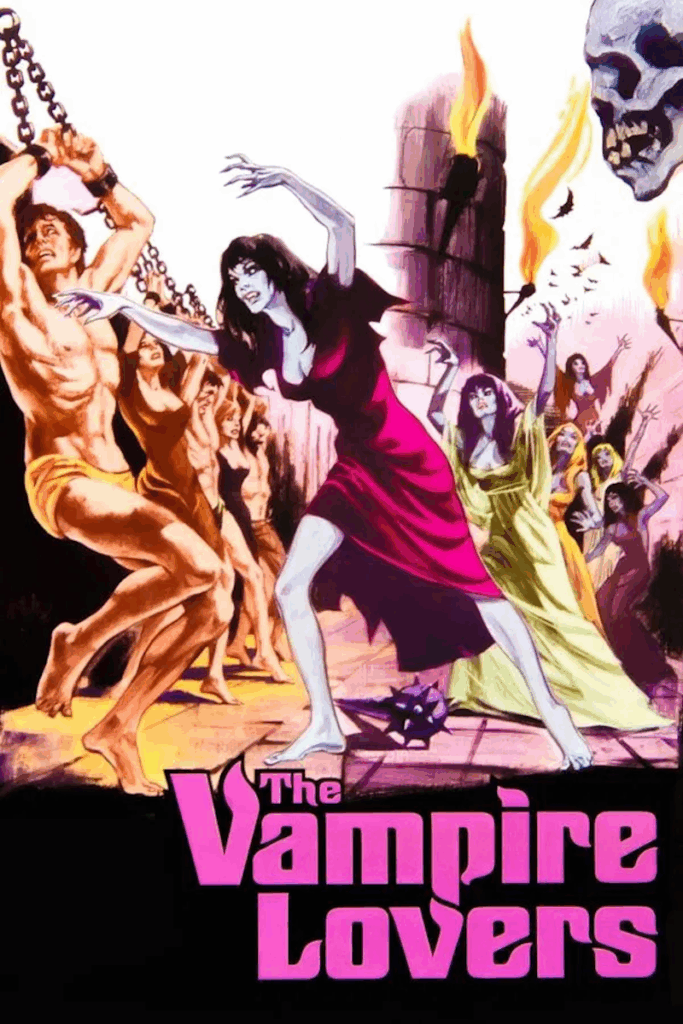
Anthony Hinds, the veteran producer who had consistently been with the studio since 1946, had resigned from Hammer’s board of directors the previous year, the latest in a series of blows dealt to a studio already struggling from an identity crisis; cinema audiences in the late ‘60s and early ‘70s were seemingly beginning to lose interest in Hammer’s traditional, theatrical gothic fare in favour of fresher, edgier offerings, offerings that were less – with absolutely no offence intended towards Hammer – quaintly English. Hoping to revitalise their image, Hammer’s next cinematic venture would be a slightly bloodier, boobier, and more salacious take on the kind of films that had made them a household name – The Vampire Lovers (1970), directed by Roy Ward Baker.
So, yeah – let’s talk about the elephant in the room. There are numerous reasons why I’ve decided to write about The Vampire Lovers for this month’s ‘Outside the Blue Box’ offering, and all of them are directly connected to the recent finale of Who’s 15th revived season – a finale which could, to put it lightly, be described as “controversial”. The most obvious of those reasons is that The Vampire Lovers stars the wonderful Kate O’Mara, best known for playing the Rani, a villainous “Time Lady” scientist and beloved ‘80s Who baddie, in some less-beloved Colin Baker and Sylvester McCoy serials. Towards the end of Who’s Series 15 (with all due respect, Russell, I’m not calling it Season 2), it was revealed that the enigmatic recurring figure of “Mrs. Flood” (Anita Dobson) was, in fact, an incarnation of the Rani who had been tracking the Doctor throughout space and time as part of an extended and elaborate plot to resurrect the ancient and fearsome Time Lord patriarch, Omega, and free him from a nebulous realm known as “the Underverse”. It was also during this season that we were introduced to another new incarnation of the Rani, with Mrs. Flood “bi-generating” (don’t ask, I have as much of a clue as you do) into two separate Ranis, one of whom was played by Archie Panjabi – who, material aside, actually did a pretty great job in the role.
If that last paragraph was nigh-impenetrable to you as a reader, it’s only scratching the surface of how exhausting this latest Who finale was to experience as a viewer. In fact, it’s hard to think about said recent finale was without feeling more than a little nervous for the future of the show – because Doctor Who has been struggling for a while now, and the concerning lack of any game plan or solution to the show’s problems from the creative forces behind it leaves me incredibly worried in regards to Who’s survival in this current hostile climate of streaming-service wars and the gradual death of long-form, “monster-of-the-week” genre television. Like Hammer’s brand of technicolour gothic, Doctor Who’s brand of TV sci-fi is a rare beast in this day and age, and one which is all the more appealing for that fact; so, by taking a look at Hammer’s attempt to go “back to basics” whilst injecting their formula with some new life – an attempt which, at least for a short while, was somewhat successful – I hope that we can perhaps find a way for Who to survive in spite of the odds facing it. Also, this one’s got lesbian vampires in it, which is always a plus.
Adapted from Irish author Sheridan Le Fanu’s classic tale of the sapphic gothic, ‘Carmilla’, The Vampire Lovers follows the blood-sucking antics of Hammer’s totally original and legally distinct vampire countess, Mircalla Karnstein (who also goes, interchangeably, by both “Marcilla” and “Carmilla”), played by Polish-British horror icon and scream queen Ingrid Pitt. In traditional fashion for an undead bisexual countess, Mircalla seduces and slays her way through 1700s Austria – although when I say “seduces”, most of said “seduction” seems to be more of a case of Ingrid Pitt being so undeniably beautiful that ample-bosomed Styrian women can’t help but throw themselves at her without her needing to use any of her vampiric charms. One of said women is the Governess Perrodot, played by the aforementioned Kate O’Mara, and the two share several of the film’s most memorably sensual (albeit still fairly tasteful – this is a British studio production from the early ‘70s, after all) sequences.
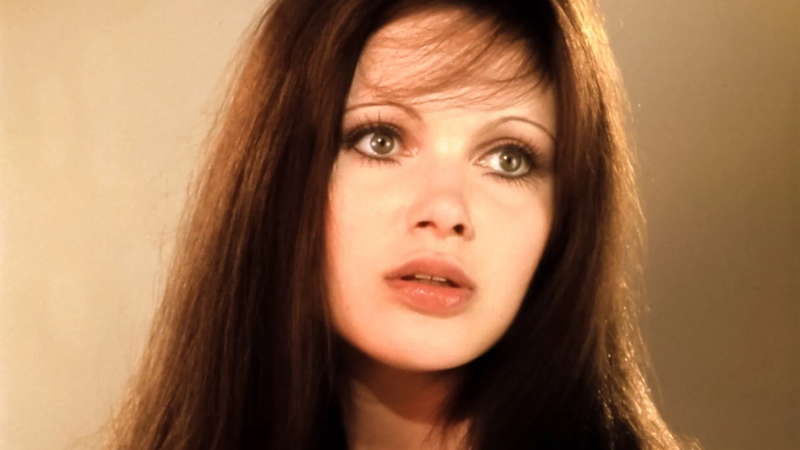
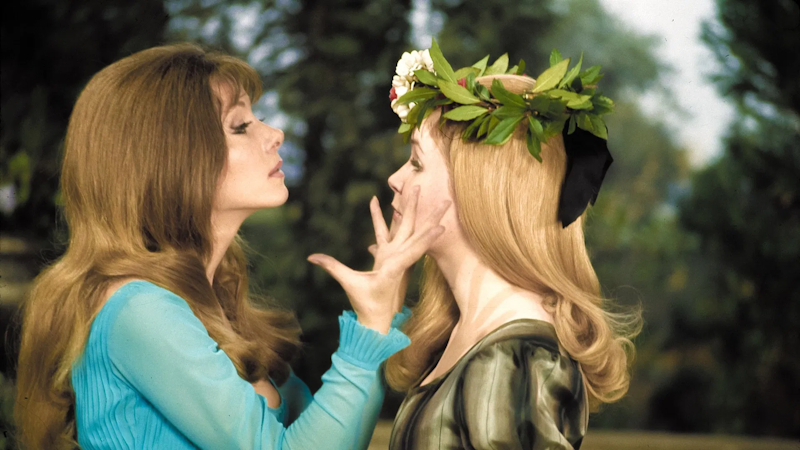
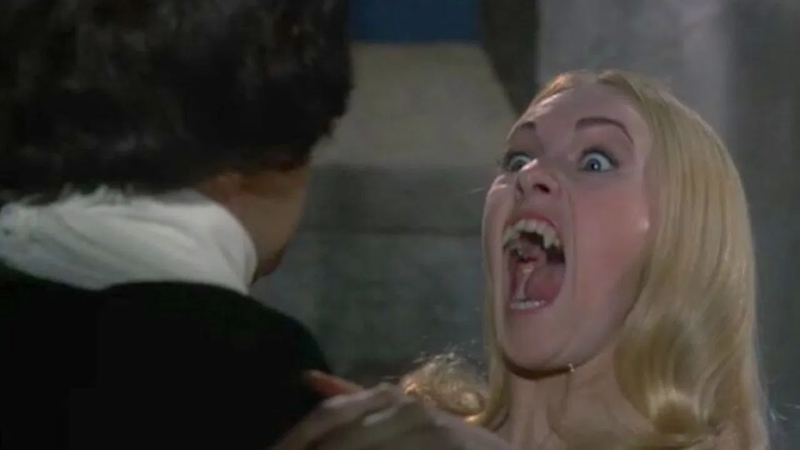
For all the blood-sucking, predation, and occasional decapitation going on, Pitt’s strangely cute chemistry with her female co-stars ends up giving the film a more wholesome vibe than one might otherwise think; though undeniably just envisioned as a means of showing straight male cinema punters footage of boobs, blood, and women making out. The film’s portrayal of women in love often feels oddly earnest and quite sweet in ways which make the film’s reappraisal as a key work of queer horror cinema feel earned and justified. Of course, this being the ‘70s and adapted very closely from an older gothic source material, the picture ends with the evil vampire being defeated (in rather gruesome fashion, I might add), and her surviving female love interest being freed from the countess’s curse (Emma – played by Madeline Smith) thanks to the heroic efforts of conservative men who urgently need to find a different barber, but Pitt’s oddly sympathetic performance gives the villainess at the heart of The Vampire Lovers some welcome and unexpected nuance, particularly in our (allegedly) more progressive modern day and age.
Fans of classic Who will undoubtedly know that Pitt made a couple of appearances on the show, playing Galleia, the Queen of Atlantis, in Pertwee-era serial ‘The Time Monster’, and futuristic seabase doctor Solow in the production nightmare of a Davison-era story that was ‘Warriors of the Deep’. She also, notably, wrote an unproduced script for Who with her husband, Tony Rudlin, back in 1984, which was eventually adapted for audio by Big Finish as ‘The Macros’ in June 2010, shortly before Pitt’s unfortunate passing later that year. In addition to O’Mara and Pitt, the cast of The Vampire Lovers features another famous name with a Who connection; naturally, with this being a Hammer vampire picture, the Doctor (or should I say “Dr.”?) himself – Peter Cushing – is here on vamp-staking duties. His appearance here as loving father turned grieving vampire-hunter General von Spielsdorf is disappointingly brief but nonetheless welcome.
The Vampire Lovers was, in many ways, a much-needed success for Hammer, spawning two sequels – Lust for a Vampire and Twins of Evil, both released in 1971 – and playing a key role in kickstarting the wave of lesbian vampire films that would sweep across mainland Europe throughout the rest of the decade. Of course, Doctor Who is no stranger to vampire stories, though it wouldn’t be until late 1980 that the blood-sucking undead would make their Who debut in ‘State of Decay’, a serial which features a predatory, vaguely-queer vampire countess named “Camilla”. The making-of documentary contained on the DVD for said serial is, funnily enough, titled ‘The Vampire Lovers’.
So, are there any lessons that Russell T. Davies and the crew at Bad Wolf Studios can take from The Vampire Lovers to revitalise Doctor Who following a poorly-received season finale and dubious sense of direction? The Vampire Lovers went back to basics with Hammer’s familiar formula and style, all whilst adding fresh and original new elements to intrigue and engage the tastes of contemporary audiences, accompanied by a much-welcome queer element – but Russell already did all of that back in 2005, so the only thing I can suggest is that Russell put some lesbian vampires in the next season. I’m all for it.
The Vampire Lovers is available on Blu-Ray in the UK from Final Cut Entertainment, and in the US from Scream Factory. At the time of writing, it is available to stream in the UK via Amazon Prime Video.