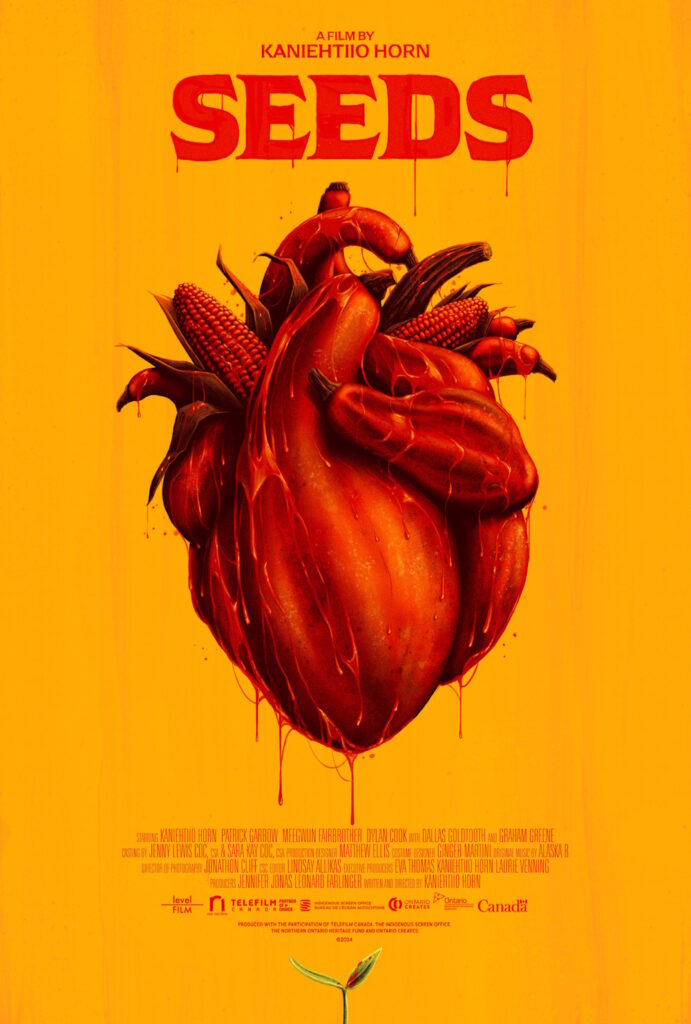
How many indigenous actors can you name? Whether Australian, Canadian or American, I assume it will be a handful at most. More often than not, they are consigned to the sidelines, limited to a specific type of story — a range which has become more limited with the western fading from cultural relevance. This fate isn’t as aggressive with Australia as it is with Canada and America, but it’s something at the very least, even if there’s only so many times an Aboriginal actor can play the deadpan, sarcastic best friend. On an even more limited note, the number of movies with a cast made exclusively of indigenous actors paints an even grimmer picture. However, there is a new one on the festival circuit — having just played Imagine in Amsterdam — written and directed by Kaniehtiio Horn (of the Mohawk people), titled Seeds.
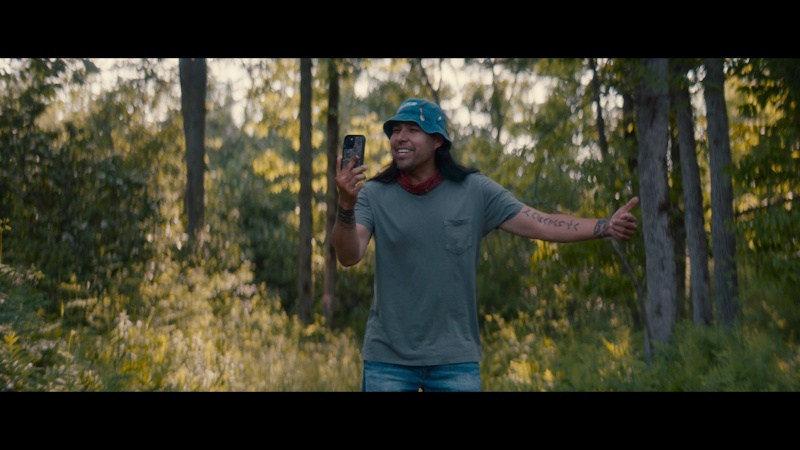
Seeds is a fluid beast, which some may accuse of tonal whiplash, but they all feed into and off of one another. Horn pulls triple duty as the lead character, Ziggy. She lives in the big city, where she is trying to make a name for herself as a social media influencer. The influence in question sees her doing videos holding hyper-capitalist businesses with bad track records to account, whilst also showcasing her green fingers with gardening videos. It’s going so well; she just got a new high-paying advertising gig with a company that may or may not have a duplicitous business strategy despite their attempts to suggest otherwise in their marketing.
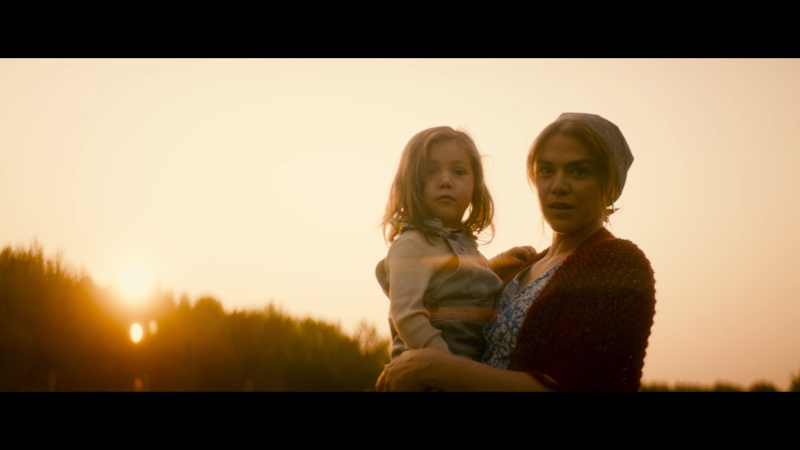
Only she’s called by her cousin, who needs her to return home to the reserve to keep an eye on the seeds that are vitally important to her family and community while he goes off on a fishing trip — the aunt who usually does this is on holiday. This introduces us to the community she calls home, and a mysterious white man called Drake Bondsman (Patrick Garrow) who is hanging around the mechanics garage; you can see where this is going, right? With a comedic streak showcasing the personalities, and dream sequences featuring one of those famous indigenous actors, Graham Greene, things break down into a home invasion in the third act with a level of violence that will take most by surprise.
a warning to the curious, (the ending) strays into the realm of pretty extreme violence. A violent streak that ends with a iconic final image for the ages.

FOR MORE ON SEEDS, CLICK ON THE POSTER AT THE BOTTOM OF THE REVIEW
The political heart of the movie sees Seeds present a critique on colonialism that many will appreciate. Horn’s script rebels against the financial elite who don’t just want their companies to be profitable; with their avarice, they want their companies to have everything as part of a concerted consolidation of power. This discourse on late-stage capitalism is spreading through pop culture, and the heart with which Horn talks about it will surely see it elevated far beyond the ethnicity and culture of the people involved. Of course, the culture and ethnicity of the cast are vitally important, but any would-be writer has to ensure they aren’t writing “local stories for local people.” They have to ensure that their representation makes the marginalized or overlooked group visible. That is the core of why representation matters: people need to feel seen. And nothing will make a movie about the familial struggles of a native “kanata” town more potent than being part of the most prevalent movement of our time — the growing class consciousness sweeping through the West. This is not to say that this is a cynical ploy, but rather that all the streams are crossing in unison.
Looking at the comedy chops of Seeds is largely a fruitless exercise, as humour is one of the most subjective experiences there is. It did make me laugh, but similarly I’ve read accounts that claim the movie falls flat and lacks character development (we’ll get to that later). However, the stoner vibe of Horn’s writing does give you a pleasant entry into the dynamics of the reserve and, vitally, passes the challenge that any scriptwriter struggles with: making their characters likeable enough that viewers want to spend time with them and care about their fates.
This all leads up to the climactic third act, which is less a home invasion and more of a one-on-one battle, mano a mano, between Ziggy and those seeking to steal her family’s legacy: the seeds. The movie flips between the jovial and self-effacing, kicked off by a surprisingly violent case of assault by feline, and from there it becomes harder and progressively violent. It starts initially as a bog-standard kidnapping under threat of violence, only to escalate as Ziggy reclaims the identity and righteous indignation of her people (so much for those claims of no character development) — which, a warning to the curious, strays into the realm of pretty extreme violence. A violent streak that ends with a iconic final image for the ages.
There’s plenty to recommend in Seeds, from its broader style of indigenous representation down to its minute-to-minute storytelling, making it a strong recommendation whenever (or if) it lands a broader release. However, for many there is one issue that will trump all others: Horn has produced a movie that feels like two shorter movies — Seeds is only 1 hour and 22 minutes long — stuck together. Sure, they are excellent “shorts”, but that sort of structure will always be too much for some to contend with.
SEEDS PLAYED AT THE IMAGINE FANTASTIC FILM FESTIVAL 2025