William Shakespeare asked “what’s in a name?” in one of his most famous works. Takashi Ishii asked “what’s in a Nami?” in four of his. Between 1992 and 1994, one of Japanese cinema’s greatest lovers of neon wove this name through a streak of subversive and sleazy films, making his mark on the yakuza and pinku genres decisively and with personality that would see him through another two decades of underrated moviemaking. Yet while Ishii’s rainslicked style and thorny gender politics are the most eye-catching elements of his early work, the beating heart is the Nami’s themselves, introduced in Original Sin, complicated in A Night in Nude, terrorised in Angel Guts: Red Flash and punished in Alone in the Night. Third Window’s fantastically-assembled new boxset, 4 Tales of Nami, brings these troubling and heartbreaking works together, posing that very question about Ishii’s muse by name: “what’s in a Nami?”
Starting at the beginning of this quartet, Original Sin sees Shinobu Ôtake’s Nami as the younger wife of a middle-aged estate agent (Hideo Murota) whose mediocre existence is torn to shreds by the unchecked lust of Makoto (Masatoshi Nagase, seen most recently in Gakuryu Ishii’s The Box Man), a younger-still drifter whose wiles see him charm his way into a job at Nami’s husband’s firm. A multi-faceted and deeply toxic relationship blooms between Nami and Makoto that ends up wrapping its sordid tendrils beyond the two, perfectly mirroring Nami’s predicament in A Night in Nude; here, Kimiko Yo’s Nami is a mysterious figure who pays her way into the life of Jiro (Naoto Takenaka), a for-hire bod who specialises in, well, anything. After a night showing her the bars of Roppongi, Jiro finds himself in hot water when Nami shoots off and leaves him with a bloody corpse of a former lover. His situation is mirrored at a different angle in the Nami of Angel Guts: Red Flash, a photographer with upsetting sexual trauma who wakes up in a love hotel with the dead body of her rapist and a videotape of mysterious evidence that could damn her or exonerate her, leaving her in a tricky balance between a cast of suspicious characters who may or may not be harbouring ulterior motives. The series is then capped off with the hardest and most pitiless of all the Nami stories with Alone in the Night, which sees Nami as a widow of an undercover cop, gunned down in his prime. Her quest for vengeance lands her in the net of despicable yakuza boss Ikejima (Minori Terada), and her own deep cover mission begins under the watchful eye of sworn brother Kozo (Jinpachi Nezu), whose status as a guardian angel and unethical enabler becomes dangerously twisted as time goes by.
Navigating the politics of punishment in Ishii’s films is a Herculean struggle for any viewer, but looking closer at the humanity of each story shows them built on foundations of resilience against cruelty. His stories start with each Nami having already lived a life previous to this, having endured much and now enduring more. Whether this comes to the fore in trigger point violent reactions in Angel Guts: Red Flash or a meticulous scheme to burn her old life to the ground in A Night in Nude, each Nami is the driving force of her own story, taking increasingly high-stakes gambles for salvation.
The hardest to read in those terms is Shinobu Ôtake’s Nami in Original Sin, who is perhaps the most inscrutable; her desire to live the youth that she never had is tainted with the slippery and unreliable presence of her illicit lover, whose initial courtship of her is less charming and more straight-up assaultive. From scene to scene, their dynamic shifts and alters from terrifying duress to tender romance, oscillating back and forth until the needle finally lands on horrific tragedy. Nami’s allegiances to her husband and her bit on the side are split authentically; she feels great regret and sympathy for her ageing spouse, yet also tremendous fear and lust for her inamorato. The drama takes place in strange liminal spaces; soulless offices, new-build properties and hotel rooms, suggesting Nami’s life is stuck in between an advancing future and a lost past, having no real footing in one or the other. A particularly horrifying moment sees a desperate male hand reach through a letterbox (an image so evocative that there’s no way Alex Garland didn’t lift it for Men) for one last grab at her body and soul, and that sense of dread permeates through each of the subsequent films in the set.
Alone in the Night coming at the end of this cycle feels like an uncomfortable culmination of Ishii’s struggle to rationalise the hurt faced by many women under the horrible grip of male oppression, so it’s perhaps appropriate that viewers will complete this set with a hollow feeling of despair and depression.
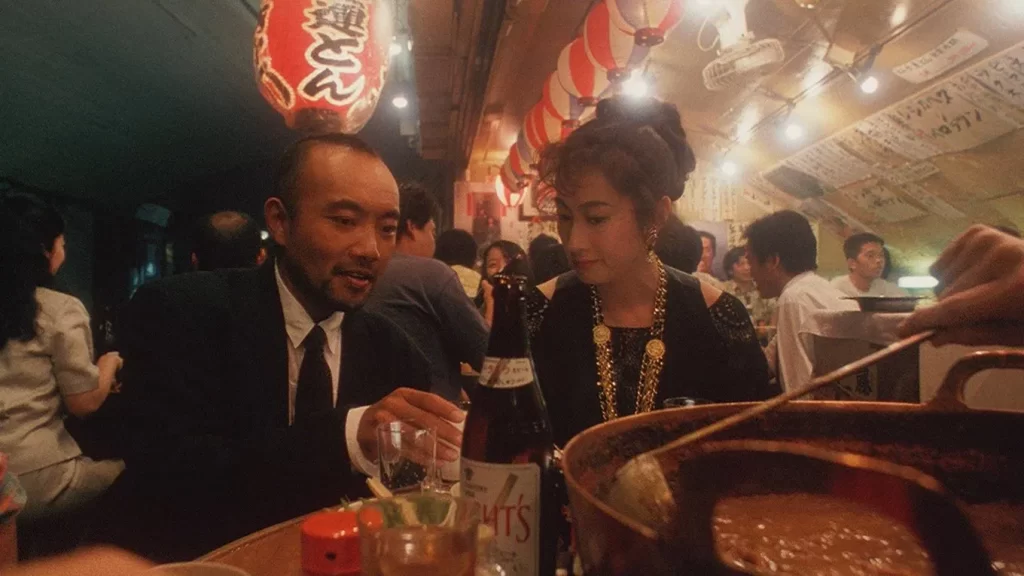
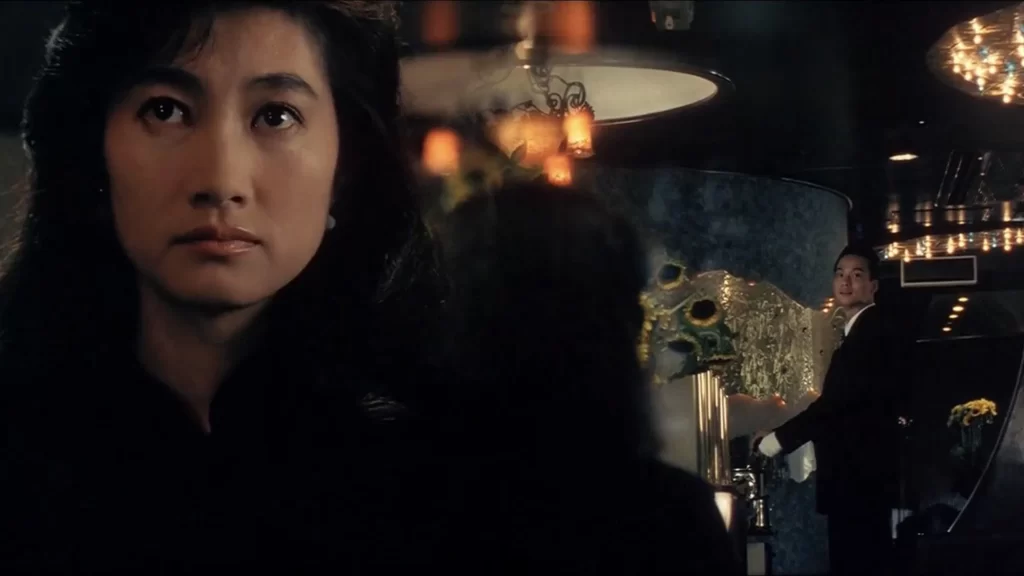



A Night in Nude’s Nami is seen mostly through the eyes of Jiro, a man lacking in many principles who will draw the line at being framed for murder. In many respects, Jiro is the closest stand-in for Ishii himself that is allowed to unpick the lurid genre each Nami finds herself caught up in; his role as a noir detective is wracked with his own guilt and paranoia and he is constantly either two steps behind or too damn late to help out the apple of his eye. This one is drenched in melancholy style and bathed in neon, like a harder-edged Wong Kar-wai film with less tenderness but the same amount of heart-rending longing and regret.
Angel Guts: Red Flash puts the focus and the power back in Nami’s hands, centring on her fractured worldview and populating her world with lovers and allies, with attackers and investigators, and each absurd turn deepens the experience into something scarier and more accessible than the other works. For a pinku film, it is light on the saucy thrills and harder on the honest consequences, lacking in eroticism but thick with dread and despair. This is Ishii’s second Angel Guts film (and the sixth in the wider series); in fact, his debut overall was the fifth Angel Guts entry, Red Vertigo, which began his preoccupation with the name ‘Nami’, the shared name of all the protagonists in the long-running property. In taking this known brand and extrapolating something new from its well-worn format, Nami is able to break out of her constraints as a punished sex slave and into multiple different stories that deepen the ‘woman in trouble’ figure into a central figure of great intricacy that Ishii returns to again and again.
Lurking at the end of this boxset is its most determinedly downbeat entry, Alone in the Night, which stands as a rather unforgettable and distinctive film, mostly due to its commitment to fully exploring this Nami’s plight. An unexpected epic, great passages of time are passed by in between critical incidents in her life where she draws nearer and nearer to the yakuza underbelly, often through being captured and raped by multiple evil figures. By the time you realise you’re only halfway through the film, this Nami has potentially suffered more than any of her forebears, and the crushing reality of her revenge plans are sapped of all catharsis. At many different points, she is snatched back from the brink of death by principled gangster Kozo, whose stubborn will to keep in the land of the living (i.e. hell on earth) becomes a genuinely difficult thing to watch. The atmospheric finale where truths are revealed as shed blood pushes the drama towards some kind of redemption, albeit between the flying emotions of other yakuza scumbags also out for blood. Alone in the Night coming at the end of this cycle feels like an uncomfortable culmination of Ishii’s struggle to rationalise the hurt faced by many women under the horrible grip of male oppression, so it’s perhaps appropriate that viewers will complete this set with a hollow feeling of despair and depression.
All of this is not to say that Ishii does not know what he is doing. His works here, while admittedly rough and hard to process, are intensely worthwhile testaments to the female spirit, wrapped up in generic trappings that could be just plain sleazy or bad taste. What’s in a Nami is displayed thoroughly and empathetically, whether that be her guts, her grit, her love, her lust or her determination to see her goal through to the bitter end.
TAKASHI ISHII: 4 TALES OF NAMI IS OUT NOW ON THIRD WINDOW FILMS BLU-RAY