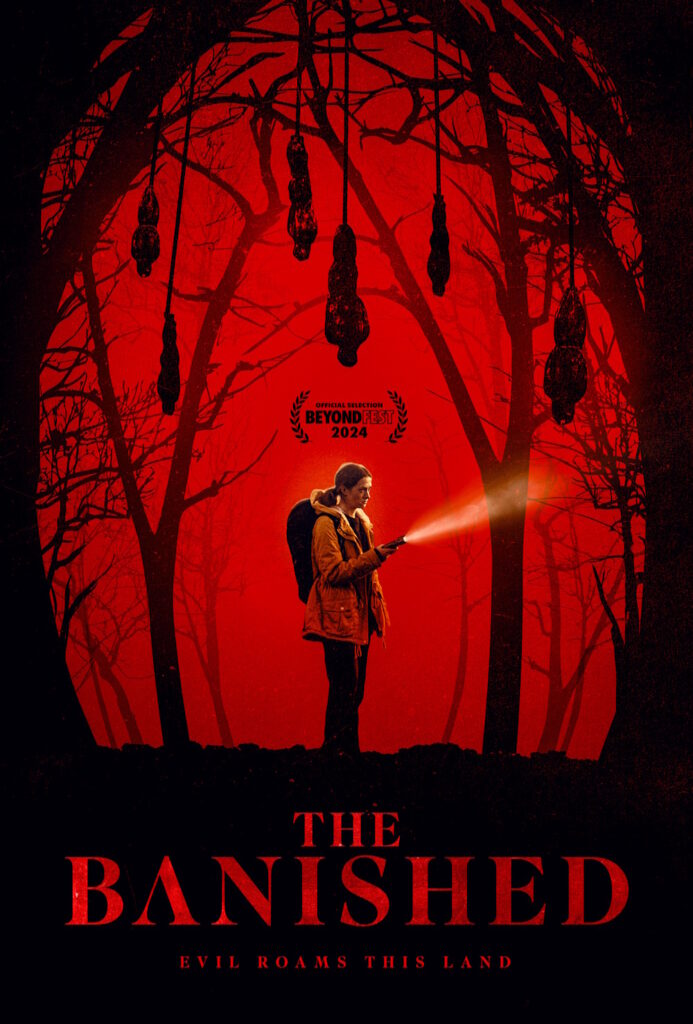
The old ways are truly alive and well in the deep, dark corners of the Australian landscape – by which I mean, of course, the country’s great tradition of folkloric genre fare. The Banished, the new “folk horror” feature from Observance (2015) director Joseph Sims-Dennett, follows in the footsteps of titles such as The Last Wave (1977) and The Dreaming (1988) in its journey to unearth and expose the darkness that lurks within Australia’s past, both recent and ancient.
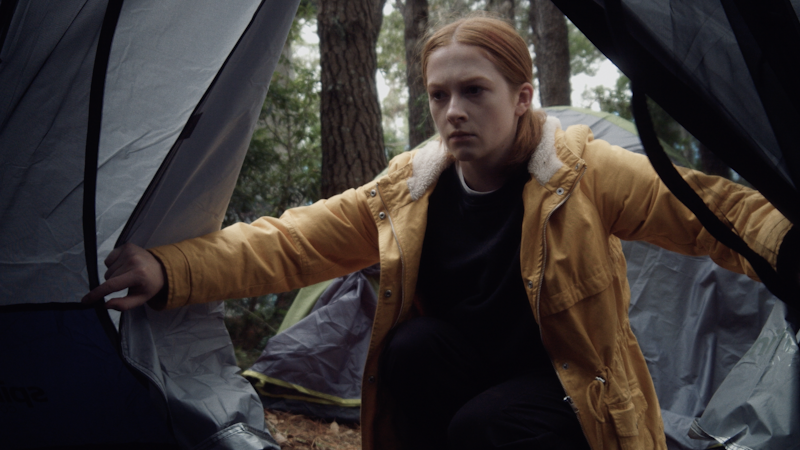
This twisted tale of the Antipodean wyrd follows Grace (Meg Clarke), a young woman who returns to the scarcely-inhabited ex-mining town that she grew up in following the death of her estranged father and the mysterious disappearance of her beloved brother, David (Gautier de Fontaine, seen earlier this year in Lorcan Finnegan’s The Surfer). Determined to locate and rescue her missing sibling, Grace enlists the help of her old schoolteacher, Mr. Green (Leighton Cardno), to guide her in search of an alleged woodland commune, inhabited by junkies and drifters who left the dying town in search of a new life out in the wilderness. However, when Mr. Green mysteriously vanishes from his tent overnight, Grace is left to fend for herself against the terrors that lurk in the darkest corners of the forest – ones which have been lying in wait for her and her family for a long time.
It also helps that there’s some superb location work on display here, from the town itself and the various neighbourhoods visited throughout to the sprawling wilderness of the forest and the dark mining tunnels and caves that lurk beneath.
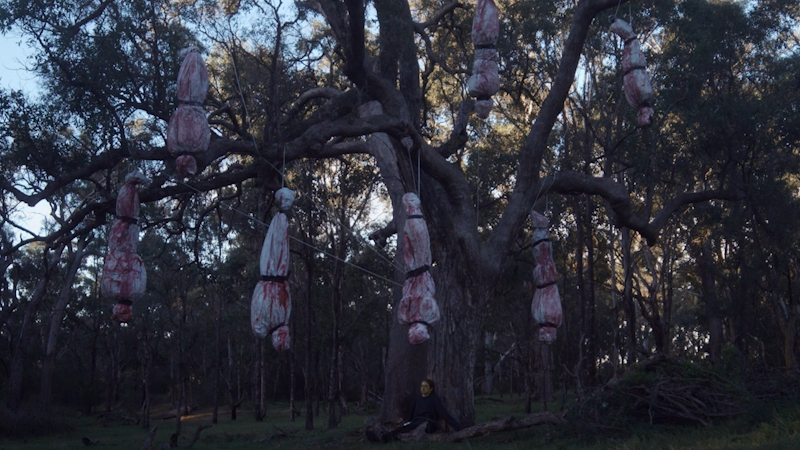
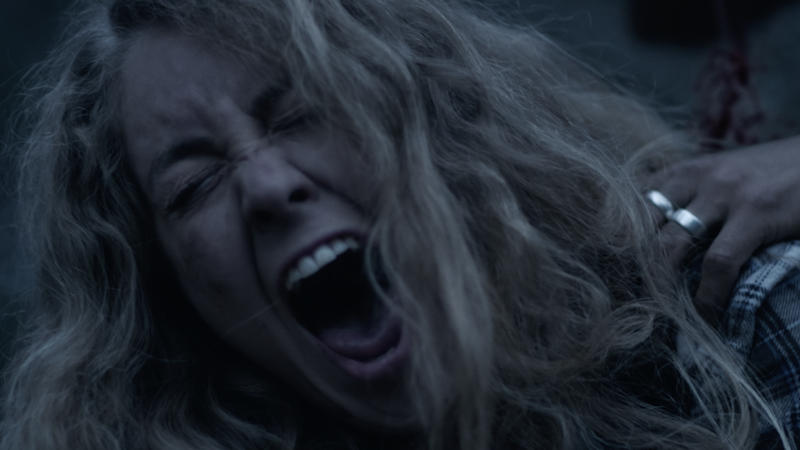
There’s a real gem of an idea at the heart of The Banished.
The entire film is set in and around a decaying, sparsely-populated rural town in decline following the collapse of local mining industry; its only remaining residents are a small handful of old folk, still clinging onto memories of old colonial glory, as the local youth have wandered off into the woods where the now-abandoned mine shafts lie, having become restless and disillusioned with the institutions which failed to keep their home alive. The fatal flaw that dooms many a “folk horror” picture in our modern day and age is when filmmakers forget to include, or otherwise generally ignore, the “folk” aspect of the subgenre – something that The Banished thankfully manages to avoid, its early portions filled with plenty of dusty historical documents, small-town familial weirdness, and faded photographs from a long-gone industrial past. It also helps that there’s some superb location work on display here, from the town itself and the various neighbourhoods visited throughout to the sprawling wilderness of the forest and the dark mining tunnels and caves that lurk beneath. Some of the locations are so good, in fact, that the film leaves you wishing that more time was spent exploring them. Grace and Mr. Green’s trek through the forest briefly leads them through an overgrown Victorian-era graveyard, an element of the film which intrigues deeply but is only featured for a matter of seconds and never really expanded upon.
Unfortunately, there are also a lot of areas in which The Banished doesn’t quite work as well as it should do. Once the film leaves the town and enters the woods, the tension picks up, but a lot of what made this film interesting prior to that point is lost; spooky sequences and effective scares pop up here and there, but the film largely abandons its curious regional elements in favour of more typical “lost-in-the-woods” plotting and fare. Dennett’s experimental editing style helps to make the film a little more visually engaging and stylistically interesting, but the decision to have the first half of the film play out in a non-linear, Reservoir Dogs (1992) like fashion, ends up being more of a hindrance to the film’s narrative and pacing instead of a successful storytelling gimmick. This angle is abandoned during the latter half of the film, but unfortunately, from that point onwards, it feels as though The Banished starts to lose conviction and confidence in telling its own original tale of regional and mythological horror, borrowing liberally from other recent hits to the detriment of its unique strengths; this occurs to the point that the film’s final sequence, whilst compellingly and stylishly edited, is taken beat for beat from another, widely-celebrated modern horror film – an ending which, used here, ends up recontextualising the rest of the film as something less thematically interesting and original than it was built up to be.
The Banished certainly has its strengths, and has elements which ensure it’s far from that offered by the worst folk horror films of recent decades. Sadly, its flaws prevent it from being particularly memorable or distinguishable from its genre peers, in spite of some cool production design, interesting stylistic choices, and a promising central concept. For my fellow folk horror and “Ozploitation” enthusiasts, Joseph Sims-Dennett’s latest might be worth a shot, but it left me feeling a little lost.
THE BANISHED IS OUT NOW ON DIGITAL PLATFORMS