Jesús “Jess” Franco was God’s favourite pervert. If Mario Bava was the father of European gothic cinema, then Franco is its weird uncle – a title I bestow upon him out of love and appreciation, of course. According to IMDb, the Spanish genre filmmaker directed a whopping 199 feature films over the course of roughly 54 years, including exploitation and horror hits such as Vampyros Lesbos (1971), A Virgin Among the Living Dead (1973), and Bloody Moon (1981); if you couldn’t already tell from those titles, Franco’s creative visions as a director tended to involve a lot of boobs and blood (often more of the former than the latter), and as both a lesbian and a horror enthusiast, you won’t see me complaining.
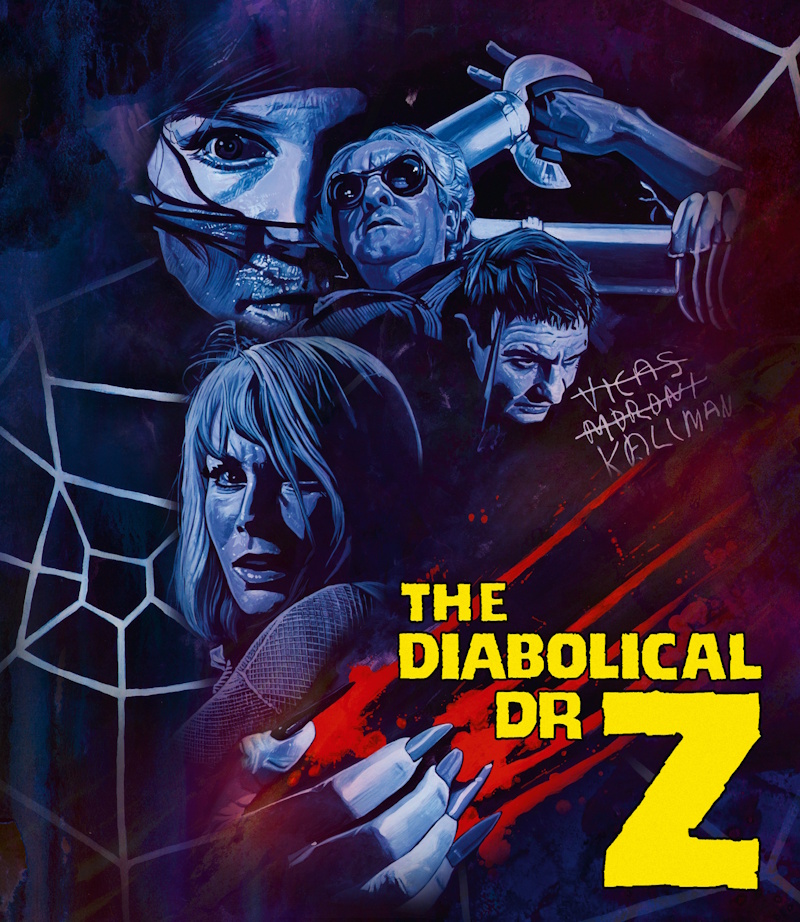
However, before any of those aforementioned cult classics, Franco would craft a strange, sensual, and shocking tale of mad science that would help kickstart his journey towards becoming a legend of sleazy and schlocky cinema; flash forward to 2025, and Eureka Entertainment are making their first foray into the land of Franco with a new 2K remastered release of this early work by one of Spain’s most iconic horror directors… The Diabolical Dr. Z (1966), a.k.a. Miss Muerte.
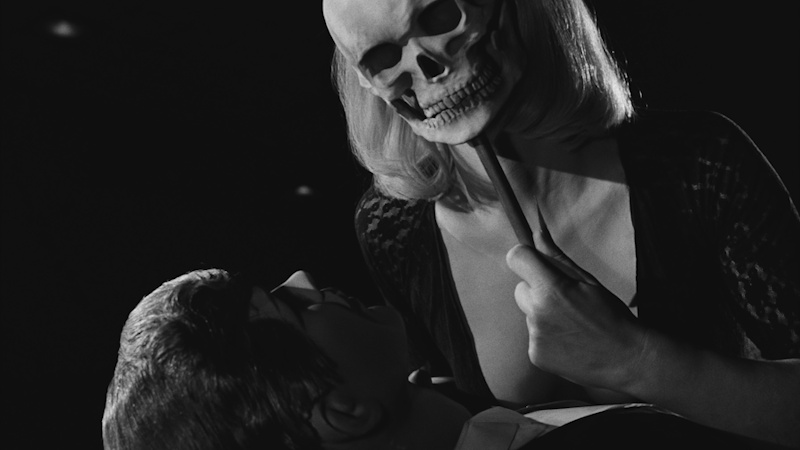
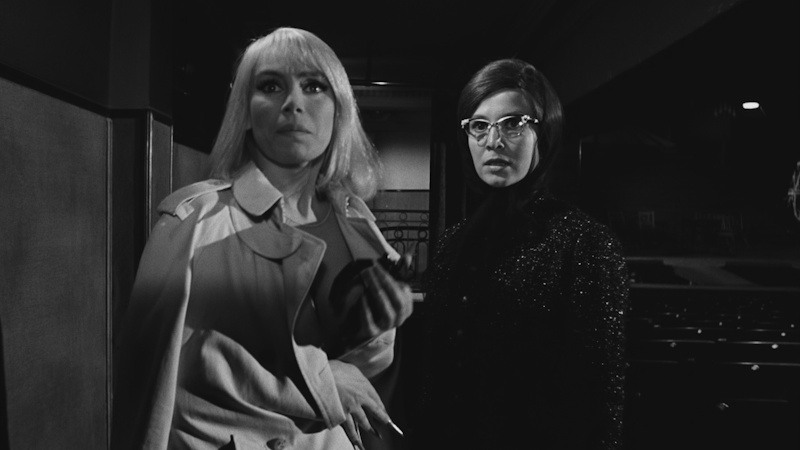
A pseudo-sequel to Franco’s prior mad scientist horror picture The Awful Dr. Orlof (1962), and later remade with Soledad Miranda as She Killed in Ecstasy (1971), The Diabolical Dr. Z follows Irma Zimmer (Mabel Karr), the daughter and assistant of the infamous scientist Dr. Zimmer (Antonio Jiménez Escribano), when the old doctor drops dead after his scientific peers forbid him from continuing his deeply unethical research into brainwashing and mind control, Irma decides to fake her own death and continue her father’s work in secret. Determined to get her revenge against the doctors who denied her father’s twisted brilliance (one of whom is played by Franco regular Howard Vernon), Irma abducts and brainwashes a beautiful cabaret dancer named Nadja (Estella Blain), utilising the long nails of her stage persona “Miss Death” as instruments of sharp, poisonous vengeance…
For the most part, The Diabolical Dr. Z is just a fun, pulpy, sexy romp that, even if experimental in its visual style, does what it says on the tin, yet there are also layers to Franco’s film – whether consciously included or not – which help to make it far more intriguing and historically compelling than some of its peers.
CLICK THE BOX ART BELOW TO BUY THE DIABOLICAL DR Z AND SUPPORT THE GEEK SHOW
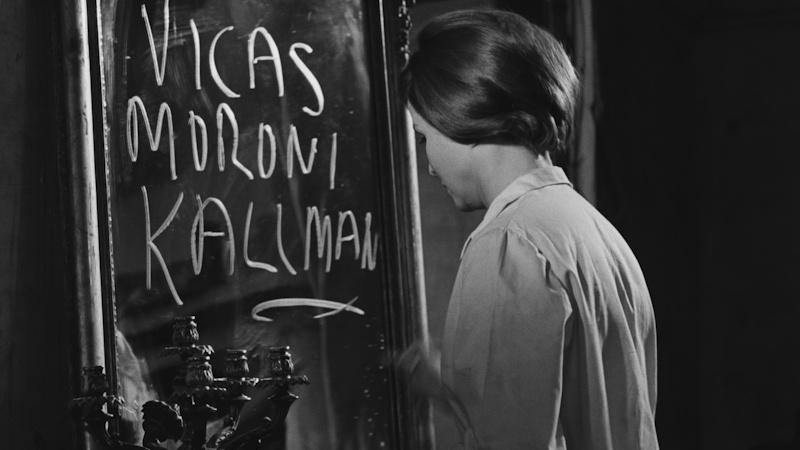
There’s a little bit of something for everybody in The Diabolical Dr. Z, if by “everybody” you mean anybody who would be likely to find themselves watching a Jess Franco film in the first place – mad science, crime, revenge, sadomasochism, cabaret, atonal jazz music… it really is a smorgasbord of ‘60s genre elements and influences. It also just happens to be a very well-made black-and-white thrill-ride, full of impressive (and frequently experimental) camerawork and solid performances which manage to shine through in spite of the fact that the dialogue in Franco’s films doesn’t seem to quite match up with the actors’ mouth movements (no matter which language dub you watch it in). As with much of Franco’s filmography, the pacing and tone of The Diabolical Dr. Z is a bit of an acquired taste, the combination of a multi-layered, genre-bending plot with a dreamlike tone and pace could leave The Diabolical Dr. Z feeling impenetrable to some (though it might be the most accessible Franco picture I’ve seen to date), but for me personally, I found the film’s visuals and tone to be compelling and enjoyable enough for this to avoid feeling dull or sluggish at any point.
For the most part, The Diabolical Dr. Z is just a fun, pulpy, sexy romp that, even if experimental in its visual style, does what it says on the tin, yet there are also layers to Franco’s film – whether consciously included or not – which help to make it far more intriguing and historically compelling than some of its peers. The most obvious example of this is the fact that The Diabolical Dr. Z’s two central leads are female, and have fully-developed characters and personalities beyond merely being love interests or objects of affection – something incredibly rare for 1966, and for all that Franco is critically dismissed for making movies full of graphic female nudity, I feel he should be commended more for the way in which his script and direction allowed Mabel Karr the space to absolutely shine as Irma here. I also couldn’t help but feel like there were some sapphic undertones here, with Irma’s use of mind control over Nadja being presented as akin to a dominant-submissive relationship; given that Franco would go on to further explore themes of sadomasochism and relationship power dynamics in his later work, both for the purposes of psychosexual exploration and audience titillation, it’s interesting to see the beginnings of Franco’s cinematic interest in the subject during a time when Spanish film censorship was at its strictest.
More obviously noticeable, and almost certainly intentional, are the ways in which Zimmer’s unethical experiments are meant to evoke then-fresh memories of the Nazi atrocities which shook the whole of Europe only a few decades prior; as with many a tale of mad science, The Diabolical Dr. Z is a cautionary tale against experimentation without empathy, and thanks to the real-world horrors of fascism and the cruelty performed by Nazi doctors throughout the course of the second world war, horror and science-fiction filmmakers now had a very real and deeply horrifying example of the very thing they had warned against to draw inspiration from.
As for the quality of Eureka’s new limited edition release, it’s of the typically high standard that their output tends to reach – the picture quality is pristine, the audio is clear (with both the French and English dubbed versions included), and there was some clear consideration put into making sure the light levels on this transfer were ideal for making The Diabolical Dr. Z’ s deep shadows pop. It’s rare to see Spanish horror of that era, let alone the works of Jess Franco, in such gorgeously preserved condition, and I can only hope that Eureka will go on to release more films in this vein – a restoration like this can go a long way towards getting an overlooked or oft-dismissed work of cult cinema critically reappraised. Extras include Death on the Continent, an informative featurette in which author Xavier Aldana Reyes discusses the history of European gothic cinema, and Awful, Diabolical, Sadistic, a brand new video essay by film historian Samm Deighan, which explores the role of the mad scientist in horror and gothic fiction.
THE DIABOLICAL DR Z IS OUT NOW ON EUREKA BLU-RAY