Every seasoned horror fan knows that small British towns are home to pagan cults and ritual sacrifice, and small American towns are home to backwoods cannibal clans and strange locals who worship the Great Old Ones – but what danger lurks behind the sun-baked walls and seemingly welcoming storefronts of a small Italian town? The answer to this question can be found in Pupi Avati’s 1976 rural shocker The House With Laughing Windows, a labyrinthine nightmare from the height of Italy’s giallo boom. Recently restored in 4K by those crafty folks at Arrow Video, and premiering in its new remastered form at the 29th annual Fantasia Festival, this forgotten frightener is a strange creature indeed – and one that looks and sounds better than it ever has before, at that.
Avati – who co-wrote Pasolini’s Salò (1975) and would go on to direct a handful of notable genre oddities including All Deceased… Except the Dead (1977) and Zeder (1983) – wrote and directed this unusual and deeply uneasy tale of small-town folk and the dark histories they will stop at nothing to ensure stay buried. The House With Laughing Windows follows struggling painter Stefano (Lino Capolicchio), who moves to a remote Italian village in order to carry out restoration work on a decaying mural in the nearby church, one which depicts the martyrdom of Saint Sebastian in particularly gruesome and lifelike fashion. When his employer, Antonio (Giulio Pizzirani), dies suddenly after discovering a dark secret about the mural’s infamous, long-dead painter, Buono Legnani (Tonino Corazzari), Stefano begins to develop a spiralling obsession with the late artist and his allegedly unorthodox methods of capturing death on canvas; as Stefano’s acquaintances disappear one by one, and locals grow more and more reluctant to discuss the village’s sordid secret history within earshot of their fellow townsfolk, it becomes clear that one wrong move could result in the young restorer being the next subject of a gruesome work of art.
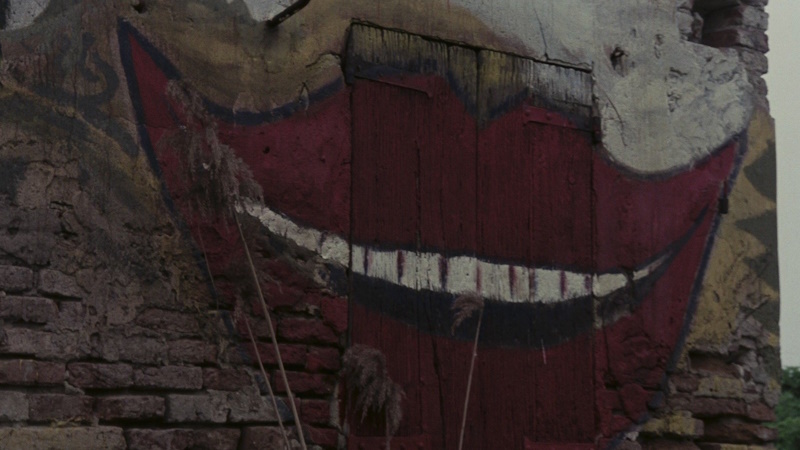
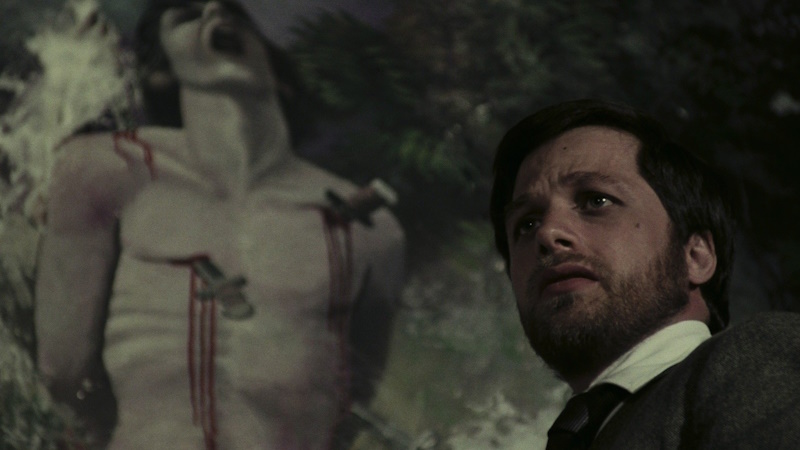
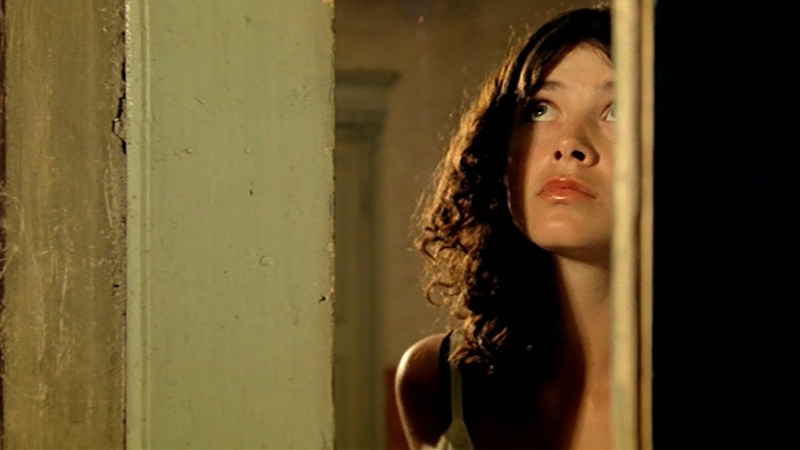
The House With Laughing Windows is a deeply strange, grimy film – with the clarity of Arrow’s new 4K restoration, you can practically feel the bugs landing on your skin under the Mediterranean summer sun whilst watching. Landing somewhere in approach and tone between Don’t Look Now (1973), Deep Red (1975), and The Wicker Man (1973), Avati’s film melds giallo and the gothic in a rather curious and sinister fashion. As with many a gothic tale, The House With Laughing Windows is deeply concerned with the Freudian idea of the “return of the repressed”, both through the layered identities and psycho-sexual tendencies of its characters, and through the horrors of the town’s past that remain alive and well regardless of the villagers’ denial of their existence. One of the more curious aspects of Avati’s film, particularly in our modern global socio-political climate, is how it addresses and acts as an allegory for Italy’s fascist past and its then-recent wartime role as one of the Axis powers; as both a political work and a “folk horror”-adjacent piece, this is a tale where the denial and repression of past atrocities allows their legacy to continue, and where an adherence to and return to tradition re-awakens historic horrors. As in the aforementioned Wicker Man, the small, casual cruelties of the characters within, as well as their carefree attitudes towards disturbing happenings because “it’s the way things have always been”, belie a far larger and darker horror that lies just beneath the topsoil.
Unfortunately, when it comes to pacing and structure, I feel as though The House With Laughing Windows lets itself down somewhat. It’s a conceptually brilliant work with an undeniably sinister edge to its atmosphere, but the plot progresses at a pace that is a little too slow and uneventful for its own good, and even once things start moving during the last third, Avati spends a lot of time going through the giallo motions in ways which filmmakers like Argento or Bava would normally work through during the first 20 minutes of their films. For all the interesting character relationships and small-town intrigue, this is the kind of giallo film where the fact that murders are even taking place is treated like a secret until roughly halfway through, and even then, the phenomenally creepy and gruesome opening credits sequence kind of gives the game away as to what direction the film is going in. Things do pay off somewhat towards the end with some nicely grotesque (and totally bonkers) reveals, as well as a shock twist that could easily have aged very poorly but ends up working quite well in execution, but those moments left me feeling as though the rest of the film could have featured moments like these which sow seeds of horror and grotesquerie rather than yet another repeated instance of a crime scene being magically cleaned up when Stefano calls the cops to come and look.
Nonetheless, The House With Laughing Windows intrigues, a slow and uneven but nonetheless skin-crawling holiday to a quiet place in the country where the soil is full of bones and the local church is anything but a place of sanctuary. There are moments within which I can easily imagine playing well to a packed festival audience, not least the deranged closing sequences; and fear not, dear viewer, for this is one of those rare cases where a giallo film’s title is more literal and relevant than it might seem…