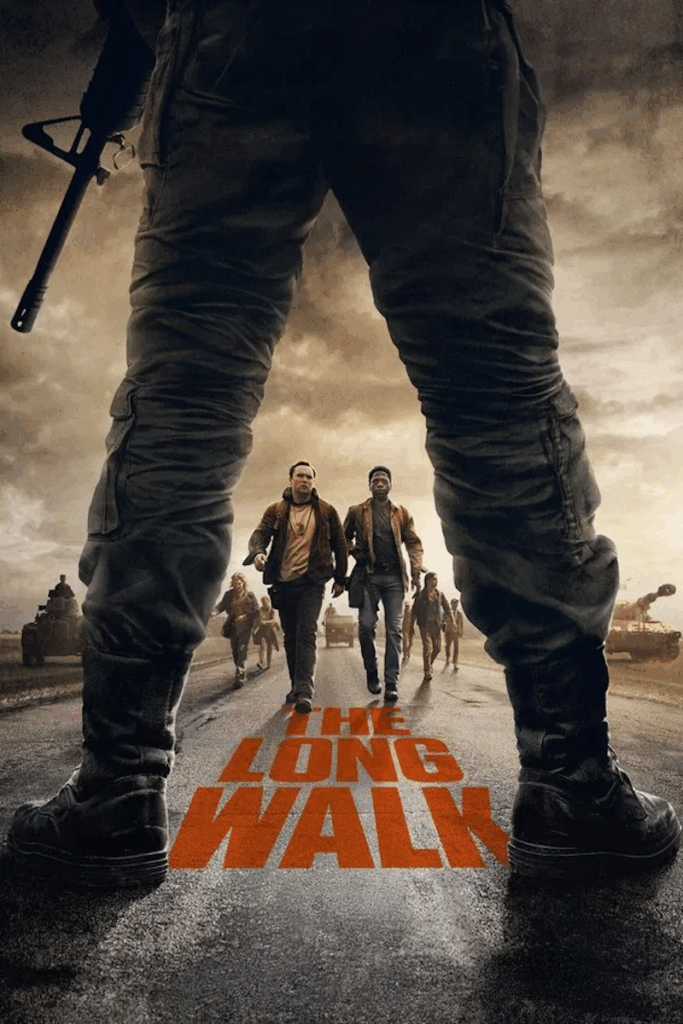
The Long Walk doesn’t ease you in- it shoves you onto the pavement and you hit the ground walking. From its first shot, there’s no buffer, no warm-up, just the relentless rhythm of feet on asphalt and the unshakeable knowledge that this journey has only one possible ending. Adapted from Stephen King’s 1979 novel, Francis Lawrence’s macabre dystopia is an exercise in tension through a slow, hypnotic descent into exhaustion that manages to be as humane as it is horrifying.
What immediately distinguishes the film is its willingness to trust simplicity. Fifty young men set out to walk at a set pace- if they fall behind, they die. On paper it sounds static, but its product maintains captivating momentum, finding power in its repetition. The muted, rain-slicked palette leans into a nauseating purgatory- long takes stretch across the endless road, horizons blur into sameness, and close-up shots magnify every step. Knowing what awaits makes every lingering shot unbearable. The tension is so palpable that Lionsgate experimented with immersive screenings, having audiences work on treadmills at the film’s 3mph pace for the entire duration, while other biometric screenings monitored heart rates that soared 2.5x above resting levels within the first twenty minutes, sometimes exceeding 200bpm.
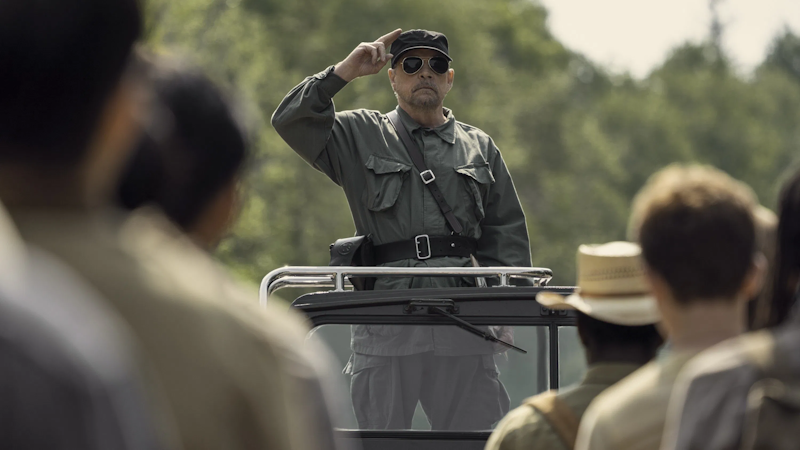
This sparseness extends to the world-building. Lawrence offers no context of how this authoritarian, war-torn society came to be and no elaboration on its political machinery. Instead, the thriller is evoked in fragments: faceless soldiers, barked orders, and a television audience whose presence is felt more than seen. There’s so much space left for the imagination which forces us to fill the gaps and envisage the kind of society that would normalise such a death march. And crucially, this absence keeps the focus squarely on the young men trapped within it, establishing the horror in humanity rather than machinery.
The Long Walk is an ode to boyhood and tenacity, one of King’s unrelenting conceits.
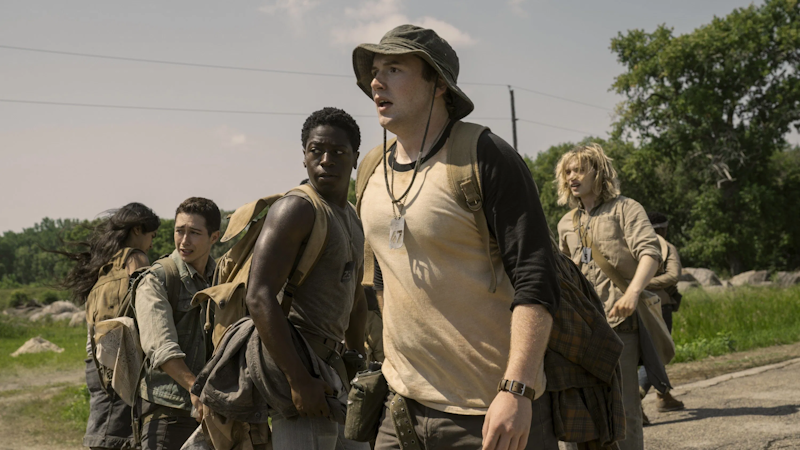
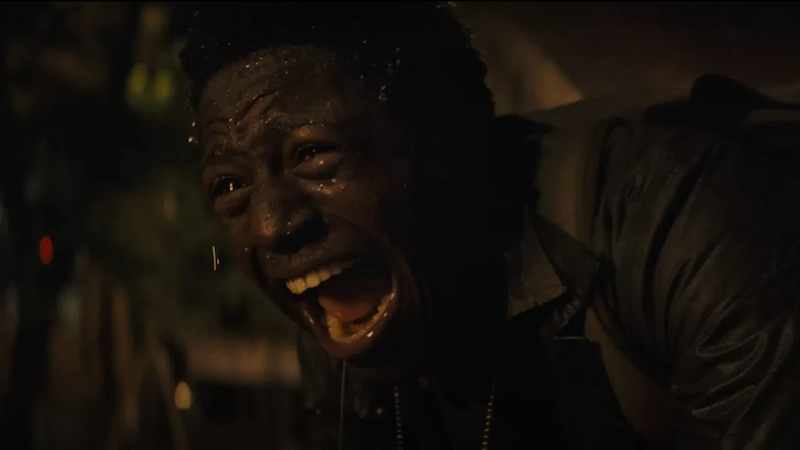
That humanity is what makes The Long Walk feel so unmistakably King. Reminiscent of Stand By Me (1986) and It (2017), The Long Walk toes the line of brutality and tenderness through the intimacy of male friendship. King’s typical collision of innocence and inevitably is ever-present: the boys’ fleeting jokes, shared songs, and small acts of loyalty despite being opponents are freighted with the knowledge that any misstep could be their last. Through this tension, the story builds its emotional backbone that underlines King’s most vivid work.
Cooper Hoffman and David Jonsson capture this balance beautifully. Hoffman shifts into dystopian settings with his character Raymond Garraty propelled by an emotional quest of loyalty and avenge, a far cry from his comedic acting chops in Licorice Pizza (2021) and Old Guy (2024). He turns that interior wound into raw volatility, a body driven forward less by stamina than sheer refusal to stop. Jonsson, whose performance is anchored by the sci-fi horror world of Alien: Romulus (2024), channels his natural charisma as Pete McVries into quiet resilience and level-headed ambition. His charisma operates in half-smiles, wisdom, and the sense of a mind always working, which offers a counterbalance that makes their evolving companionship feel quietly radical. In a contest designed to strip boys of identity and reduce them to spectacle, their chemistry reads as an act of resistance.
Lawrence’s direction understands this through refusing to build violence into a spectacle and instead zooming into how the horror lies in how ordinary the boys remain. And yet, I think that the severity is both the film’s strength and weakness; the stripped back plot through its absence of context and refusal of allegory will frustrate audiences who prefer their dystopian worlds mapped out. The repetition can at times teeter into monotony, but in that restraint lies its force. Through its repetition, the film becomes commentary on endurance and the human capacity to find tenderness in brutal circumstances. You hesitate to connect with the boys, yet the charm compels you to anyway. The Long Walk is an ode to boyhood and tenacity, one of King’s unrelenting conceits. It’s horror as exhaustion and comradeship, and dotes on the fleeting tenderness that makes survival feel profoundly human.
READ THE ORIGINAL STEPHEN KING BOOK OF THE LONG WALK BY CLICKING HERE