Apocalypse cinema is fairly self-explanatory and, if you listen to certain fatalistic people in the media and on social media, we’re currently living through one. Post-apocalypse, in which the end has happened and society falls into a violent anarchy, has been endlessly mined as part of the zombie sub-genre – we may love George A. Romero but he has a lot to answer for on this one. Then there’s the other one, the post-post-apocalypse, which is a moniker for stories that take place long after the anarchy has subsided and a new, more survivalist way of life has become the norm. Indie cinema of the past decade or so has been rife with series and movies like this, maybe in response to the Walking Dead, maybe not – either way they play out like a quieter, more solemn take on the end of the world. This is the point where Hubert Davis’s The Well comes in, which recently had its World Premiere at Fantasia 2025, and fits firmly within this tradition.
I also have an idea of what to call this sub-genre as I’m definitely not calling them post-post-apocalypse forever, but more on this at the end.
The Well, thank the heavens, isn’t a post-zombie drama, but is instead something that will hit pretty hard and close to home for any Brit reading this. Davis’s movie posits an apocalyptic scenario where the water has gone rotten, causing a quick, diseased death for anyone who drinks or touches the wet stuff, and our way in to this nightmarish scenario is through a family squirrelling away a meagre existence deep in the woods, living in a small countryside cabin with a well nearby. Father, Paul (Arnold Pinnock), mother, Elisha (Joanne Boland), and daughter, Sarah (Shailyn Pierre-Dixon), are doing okay for themselves until they’re hit by the double-whammy of the well’s structure being compromised by old, failing technology, and the arrival of a young man called Jamie (Idrissa Sanogo). In this post-post world, being in the middle of nowhere means anyone turning up is a potential threat, but fortune is on the family’s side as the young man is apparently Paul’s nephew. Jamie insists he knows a way to fix their well and Sarah, in spite of his justified protestations, follows him in the middle of the night. As the pair head off on their mission, Paul – who’s back at the cabin, decides to follow on behind them to find his daughter and bring her home.
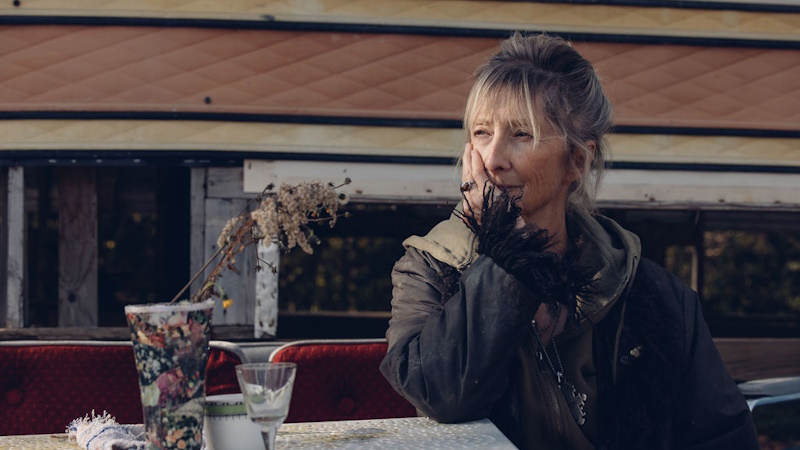

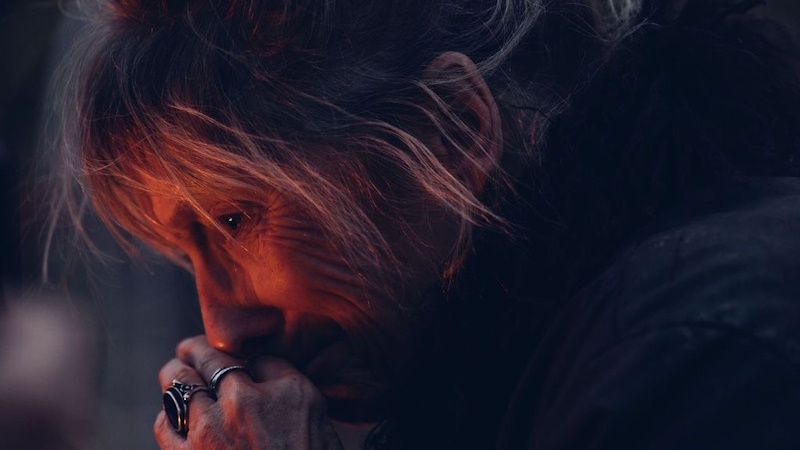
Most of the slender ninety-minute run time is given to Jamie and Sarah, who find themselves at the camp where he and a handful of others live under the “care” of the bloodily pragmatic Gabriel (Sheila McCarthy), and as compelling a story as that is, it represents a missed opportunity that’s largely endemic across post-post apocalyptic movies in general. Gabriel and Jamie talk about their experiences before they arrived at their new home, and of the regime that controlled the water supply where they came from, which had camps where people were forced to “work” like slaves. It’s a fairly common bit of world-building in post-post apocalyptic stories, so you’d expect that the narrative purpose of Paul’s wandering would be to show what else is out there – like the threats both he and his wife kept their daughter safe from. Sadly it’s a wasted opportunity as although Paul wanders aimlessly through some Canadian scenery, when he finds a town he’s shot at by a voiceless, faceless hostile presence off camera, and the best we get about the rest of the world is him walking past a decrepit, but no doubt functional, water filtration plant.
Beyond that, the score and cinematography are gorgeous.
Jamie and Sarah’s tale is a classic case of of utopian storytelling in which we’re told by the meagre cast that the world is hard and violent, but the one place we see extensively is a fairly sedate little community. As events unfold, more and more holes and punched into the illusion projected by Gabriel’s community – the role giving Canadian character actor Sheila McCarthy a spectrum of emotions to chew on. The script provided ample opportunities for its largely unknown (at least, in the UK), cast while neatly circumventing the most egregious concern I have with the whole post-post apocalyptic method of fantasy storytelling (i.e. the story doesn’t end, it just stops), but something happens in The Well, and the slow burn builds to a climax.
There are so many post-post-apocalypse stories that see vibes replace good storytelling, and while Kathleen Hepburn and Michael Capellupo’s script doesn’t evade all the pitfalls, it does avoid the nastier, more asinine and boring ones – which may sound like I’m damning with faint praise, but nothing could be further from the truth. There are any number of post-post-apocalypse movies that want to use the language of genre cinema, but with a “realist” register – which misses the point entirely as fantasy, horror, sci-fi and the like exist not only to comment on reality, but also function as a pure form of escapism. Removing this aspect in favour of “realism” is an irredeemably pointless exercise in my book, and it’s one that The Well avoids.
Advance word for the Well has given rise to some deeply bad faith comments and arguments like “the people are too clean for an apocalypse without ready access to water”, but for me it’s the right story at the right time – especially here in the UK and in some parts of the US. Here, our water supply has been poisoned, polluted with sewage, and sold off for the sole benefit of shareholders, and its only this year that something has even started being done about it. Sure, it’s politics so it’s never going to be enough, but Hubert Davis’s movie has allowed me the opportunity to apply a little indie fantasy gloss to a pretty grim reality – a lesson that I wish all those other Post-Post Apocalypse movies had learned.
Which brings us back to that particular term. If you look at the sequence of time in the form of days, then the first day would be the apocalypse, and the second would be the post-apocalypse, then the third day would be the post-post-apocalypse – the day after tomorrow (no, not the film). Now there’s actually a word for that – overmorrow – so I suggest that the post-post-apocalypse sub-genre should be referred to as overapocalypse.
Or you can keep calling them post-post apocalypse.
THE WELL HAD ITS WORLD PREMIERE AT FANTASIA INTERNATIONAL FILM FESTIVAL 2025