Brazilian cinema is having one of its occasional moments on the world stage, thanks to films like The Secret Agent and I’m Still Here breaking the usual containment unit of Best International Feature and being nominated in major categories at American awards shows. Even a synopsis of those films will offer some insight into why this is happening. Just as Brazilian politicians are leading the world in fighting back against anti-democratic far-right authoritarianism, their film-makers are similarly doing a better job at artistic protest than anyone else. This raises, in turn, the question of why the Brazilian directors are outpacing the rest of the world, and one answer might be that they have a more engaged public. The films of Walter Salles and Kleber Mendonça Filho aren’t just awards-season darlings, they’re massive popular hits in their own country. This then raises a third question (last one, I promise): if something as deranged and fearless as Bacurau can be a box-office smash in Brazil, what the hell does that country’s underground look like?
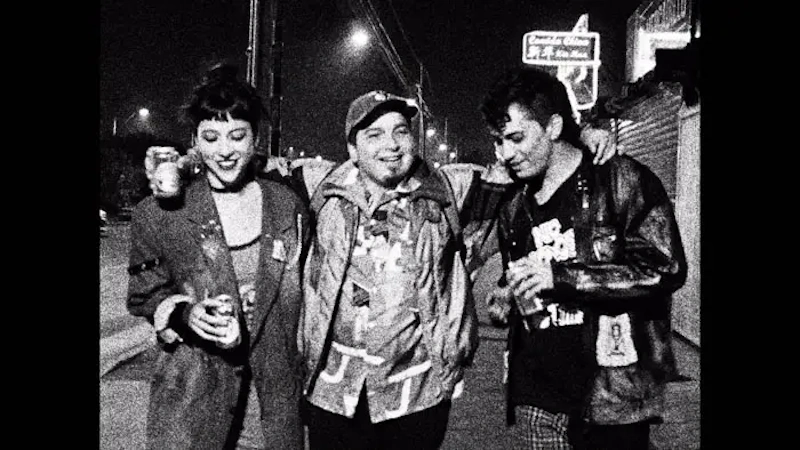
One answer can be found in Tony Odyssey, the debut feature of the superbly-named Thales Banzai, which makes its world premiere at this year’s Slamdance Film Festival. A scrappy, episodic low-budget film shot almost entirely in black and white, it’s a small film in every way. The nearest thing to a big name is Da Lapa, and even then that’s only because I misread their name as “Dua Lipa”. Yet it has an energy, an ambition, a punk spirit and a level of sheer cheek that puts everything else around now to shame.
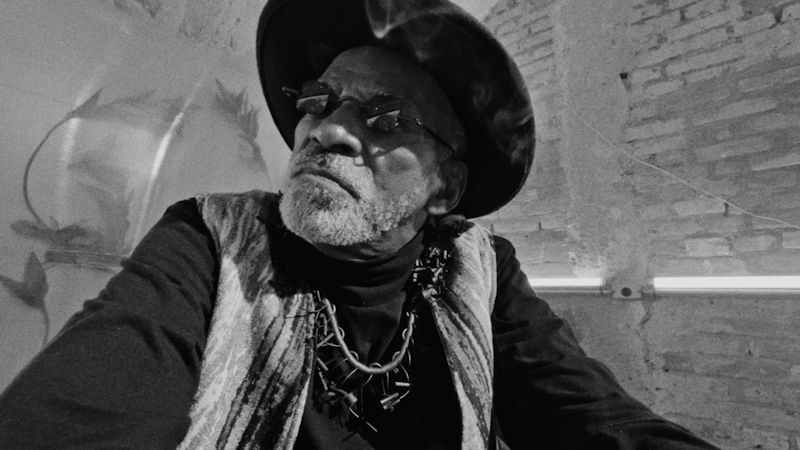
The story of Tony and Ivy, two best friends on a quest to find a drug that may allow them to see God, it begins with a combined chapter title and mission statement: “I Hate Reality”. You might also say that the film hates realism, although it isn’t averse to squalor. It begins with Tony unblocking a toilet that’ll make you profoundly grateful the film isn’t in colour. But Banzai quickly expands his film out of the social-realist box, not just with the expected drug trips but with expansive musical montages, swaggering wide-angle shots, jump cuts and monologues. His handling of the latter element invites comparison with similar verbal fireworks displays in the films of Spike Lee. There’s a particularly bravura speech from an old man who explains why he thinks art should have stopped with modernism: it’s dynamic and experimental enough in its staging and editing to suggest Banzai does not agree with his character on that point.
Its stately period-movie pacing and mise en scene suggested a worldview that couldn’t quite exist in the modern age, now the loudest advocates for psychedelics aren’t cool outlaw Beat authors but fash-curious Silicon Valley oligarchs. But Tony Odyssey makes it feel fresh, relevant and street-level again.

FOR MORE ON SLAMDANCE AND TONY ODYSSEY, CLICK HERE AND ON THE POSTER
Tony and Ivy are a perfect odd couple to follow along on this meandering trip (in both senses of the word). As Tony, Kelson Succi manages to be charmingly nervy and hang-dog without losing the charisma necessary to be a relatable lead. He provides a welcome element of comic understatement in a film that might otherwise have been overbearingly full-on; there’s a particularly big laugh when he says “I’m nervous about this situation”, and if that doesn’t sound very funny right now, wait until you see the situation. The task of maintaining the film’s forward momentum falls to Iraci Estrela, who unbelievably has only appeared in one short film before this. You instantly accept her as someone persuasive enough to get a jittery streak of nothing like Tony to rob his workplace and go on the run.
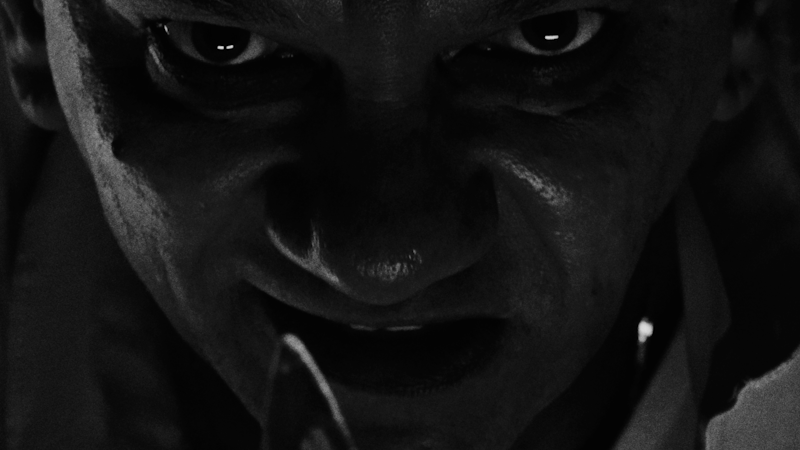
During the first hallucination scene, Tony sees a glitched-out version of Tony Odyssey‘s opening credits, as if he’s becoming aware that he’s a movie character. Perhaps this is why he’s so passive; you wonder if the God he spends the film looking for is a director. Without spoiling anything, Banzai has his own answer to the question of how to depict the creator of the universe, one that is funny and audacious and strangely right. Tony Odyssey‘s palette of ideas – drugs as a conduit to God, nonsense as a tool of liberation, a comment from Ivy that “life is programmed by speech” – recall William S. Burroughs, whose work was recently filmed by Luca Guadagnino in Queer. I liked Queer a lot but I did wonder if it was a last hurrah for Burroughsian cinema. Its stately period-movie pacing and mise en scene suggested a worldview that couldn’t quite exist in the modern age, now the loudest advocates for psychedelics aren’t cool outlaw Beat authors but fash-curious Silicon Valley oligarchs. But Tony Odyssey makes it feel fresh, relevant and street-level again.
Anyone with the slightest fondness for underground cinema, rebellious cinema or simply cinema where you can’t predict what’s going to happen next needs to keep their third eye open for Tony Odyssey. The film’s humour, style, attitude and narrative curveballs are all as wild as they can possibly be. It doesn’t all work, and even with Estrela around the film’s energy flags a little at the start of the final act. But even here, Banzai is capable of winning you over with audacity; specifically, the fact that the third chapter title is, simply, “What the F*** is the Point of This?”. You may not be able to answer that question fully by the end of Tony Odyssey, but it’s urgent, it’s hilarious, and it offers a thrilling new viewpoint on Brazilian film.
TONY ODYSSEY HAD ITS WORLD PREMIERE AT SLAMDANCE FILM FESTIVAL 2026