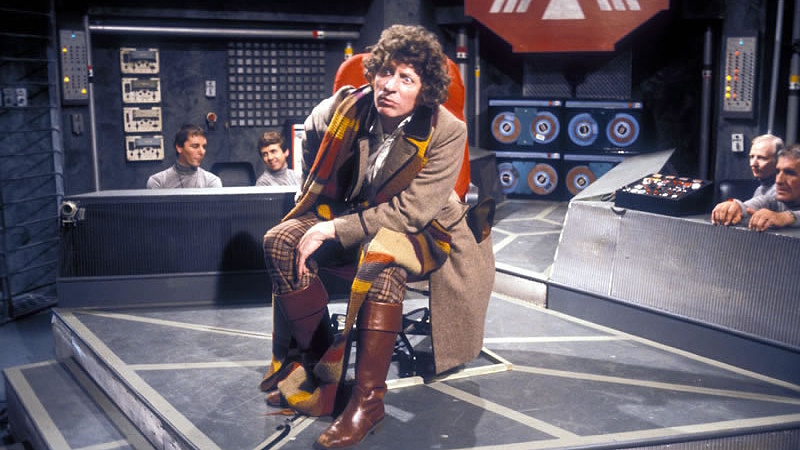
When faced with a Doctor Who story that is, to put it mildly, not very well-thought-of, there are three approaches you can take. The first is simply to say, yes, this is crap, which is often tempting but doesn’t make for good reading. The second, more analytical approach is to say this is crap, so what went wrong? And the third, which is the one I always look forward to, is to say actually you’re all mad and this is a masterpiece. I think my approach to The Power of Kroll is going to be closest to the last one, even though this is ultimately far from a great story.
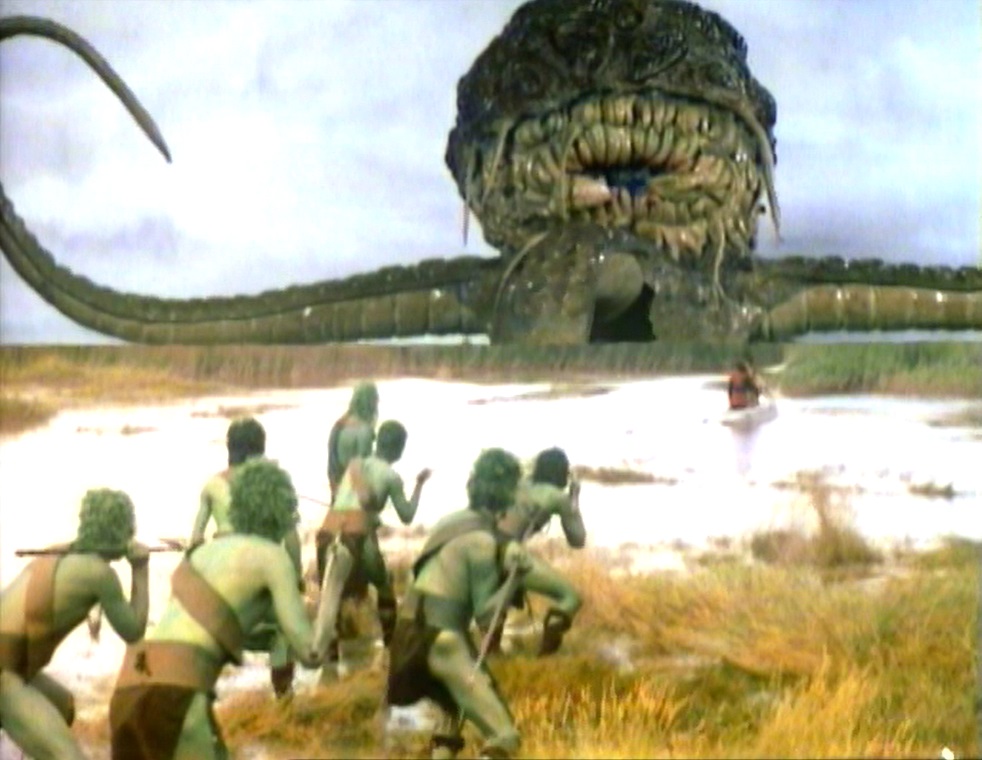
Actually, a lot of the common criticisms about it are dead on the money. The main failing is Kroll itself, which producer Graham Williams wanted to promote as “Doctor Who‘s biggest monster ever”. That it is, but the pitfalls should have been obvious from the second, third and fourth-biggest monsters; without a movie-sized budget for miniatures and mattes, 1970s effects will simply not allow a giant monster to be satisfyingly integrated into the action. The model of Kroll towering over the horizon isn’t bad, if transparently the product of blue-screen work; the scenes of refinery workers being thrown around by its tentacles have a pleasing Fury from the Deep quality. The problem is they don’t work together. At no point are those tentacles the right size to belong to the creature the Swampies are worshipping.
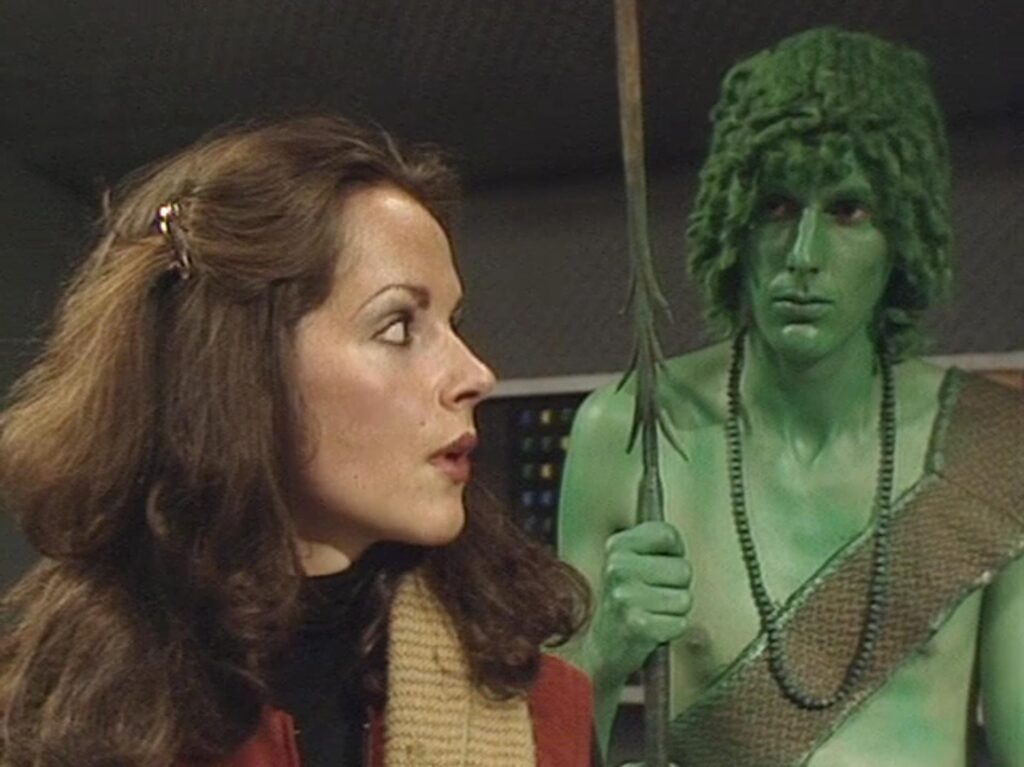
There are other failures. The episodes all under-run but it certainly doesn’t feel like that; the cliffhanger to the first episode, with the Swampies endlessly chanting “Kroll! Kroll! Kroll!” at a disappointingly passive Romana, feels like it lasts the length of a standard four-parter on its own. The refinery crew are a pretty interesting, well-differentiated bunch, with some quality actors playing them – John Abineri, Philip Madoc and a rare on-screen appearance from the voice of K9, John Leeson – but they’re introduced info-dumping at each other on an over-lit set, so it’s understandable that some viewers will tune out before they reveal their dimensions. The most interesting character in part one is the gun-runner Rohm-Dutt, and it’s a shame he has to leave the action before the end.
But – despite its draggy pacing – there is a fair bit of honest fun to be had in The Power of Kroll.
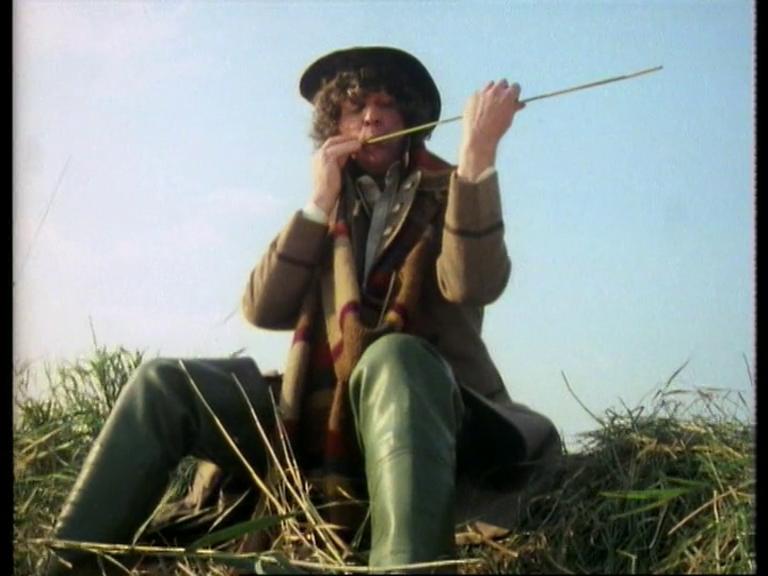
Rohm-Dutt’s death doesn’t just make the story less interesting, it makes it less characteristic of Robert Holmes, the rightly venerated writer who intended to make this his last Doctor Who story. When he was lured back, it was for The Caves of Androzani, a story which proves he’d learned from his mistakes: brutally cynical and full of double-crosses, Caves is a story where everyone is Rohm-Dutt. If this had been Holmes’s last script for the show, it would be seen as an ignoble conclusion to a great body of work. As it is, his last script for the show was the half of The Ultimate Foe he delivered before his death, which isn’t any better. It doesn’t, then, feel like tempting fate to ask: how would The Power of Kroll be regarded if it really was Holmes’s farewell to Doctor Who?
In some ways, it would be easier to appreciate. Holmes’s first Doctor Who script, The Krotons, isn’t much more highly regarded than this, yet it nevertheless contains an interesting and overlooked strain of anti-religious satire. The Power of Kroll reprises this theme, but in a way that shows how the series had grown and changed since the Patrick Troughton years. Most obviously, Holmes – whose stories haven’t always been the most racially sensitive – is writing in the anti-colonial mode introduced during Terrance Dicks and Barry Letts’s time on the show. The indigenous Swampies are referred to by the derisive-sounding nickname they’ve been given by the humans, yes; but then the humans are usually referred to by the Swampies’ preferred name for them, dryfoots.
Indeed, the initial portrayal of the Swampies – a chanting, spear-carrying human sacrifice cult straight out of a H Rider Haggard novel – is so on-the-nose Holmes has to subvert it, if not out of political conviction then out of mischief. This happens twice. The first is a throwaway joke, when the Swampie Ranquin amusingly snaps “We’re not savages!”, but the second is more consequential. In an earlier Holmes script, Kroll’s divine status would be as fraudulent as the similar claims made by the Krotons and Magnus Greel, but here the creature really does have mystic, universe-reshaping powers: it’s the fifth segment of the Key to Time, which the Doctor has been collecting all season.
Holmes’s other Key to Time story, The Ribos Operation, is also about heresies being vindicated in the light of the Key’s remarkable properties. While The Ribos Operation is a much better script than The Power of Kroll, it’s worth asking if scheduling plays a part in their divergent reputations. The Ribos Operation was the first story in the Key to Time season, and perhaps it’s easier to tell a story about the Key as the focus of awed religious devotion when the audience has just been introduced to it. Back then, the Key was a compelling mystery. Next week Bob Baker and Dave Martin will start treating it like an Ikea self-assembly kit, and in any case the audience have had four preceding stories to get blasé about this vast, ambitious concept.
Very little of what goes wrong in The Power of Kroll is Holmes’s fault, which maybe isn’t important; if something isn’t fun to watch, does it matter whether the writer or the director or the producer screwed up? But – despite its draggy pacing – there is a fair bit of honest fun to be had in The Power of Kroll. Yes, that first episode cliffhanger is probably the exact point when Mary Tamm decided to leave the show, and the script throws in some careless deus ex machinas to get the Doctor and his allies out of trouble. But Tom Baker is still operating at full power, the guest cast – as noted above – are strong, and director Norman Stewart is clearly enjoying getting out on location after the blue-screen hell of his other story Underworld. Had Holmes left after this we’d have missed out on some truly great work, but we’d have an easier way to read his career. He starts and ends softly, but when he gets his feet under the table and a bit of control over the show’s direction, he doesn’t half do amazing things.
Next: The Armageddon Factor (1979)