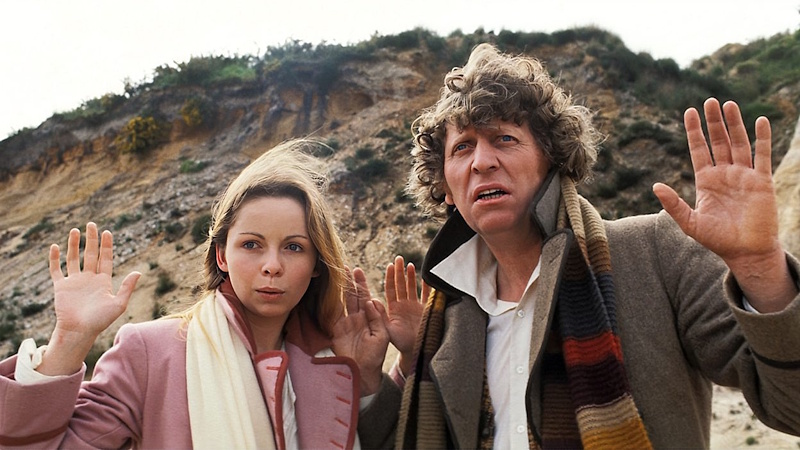
Classic Doctor Who comes from an age when the word “arc” did not fall confidently from television producers’ lips, and the Key to Time is mostly the kind of loose overarching plot that works in a show like this. It’s a MacGuffin, one that can affect as much or as little of the story as the writer wishes. The metaphysics of the Key and how it works is best treated as lightly as possible, which unfortunately results in a huge headache when you get to this, the grand finale.
In The Armageddon Factor, the option of ignoring the sheer vastness and weirdness of the Key to Time is not on the table. It fails, ultimately, at making the Key or the Guardians make any kind of sense, but I’m not sure anyone could have managed that. The gulf between what the show can achieve and what this storyline implies – that God and the Devil are real, and they’re fighting over the Doctor Who version of the Infinity Gauntlet – is irreconcilably huge. It would take around ten years for Doctor Who to work out how to make this cosmic vastness feel enigmatic and haunting rather than just dragging it down to an underwhelming, prosaic level. I realise I recently praised The Ribos Operation for doing exactly this, but that story uses ordinariness – the peasantry of Ribos, the unassuming appearance of the White Guardian – to imply something truly incredible is just off-screen. In The Armageddon Factor it needs to come on-screen, and that’s a doomed mission.
Presumably writers Bob Baker and Dave Martin weren’t happy having this palmed off on them either, because they seem to be undermining the idea of the Key at every chance they can get. There’s a bizarre subplot where the Doctor and Romana realise that, with only one segment left to find, they already know the dimensions of the missing piece, and can therefore build a mock-up. Granted, this turns out to have limited functionality, but it does raise the question: if you can just counterfeit these things, why bother looking for the final piece at all? You could skip the visit to Atrios and go straight on to the next story, which also isn’t very good but at least has Daleks in it.
Indeed, for all its flaws The Armageddon Factor at least leaves Doctor Who in a better place than when it started.
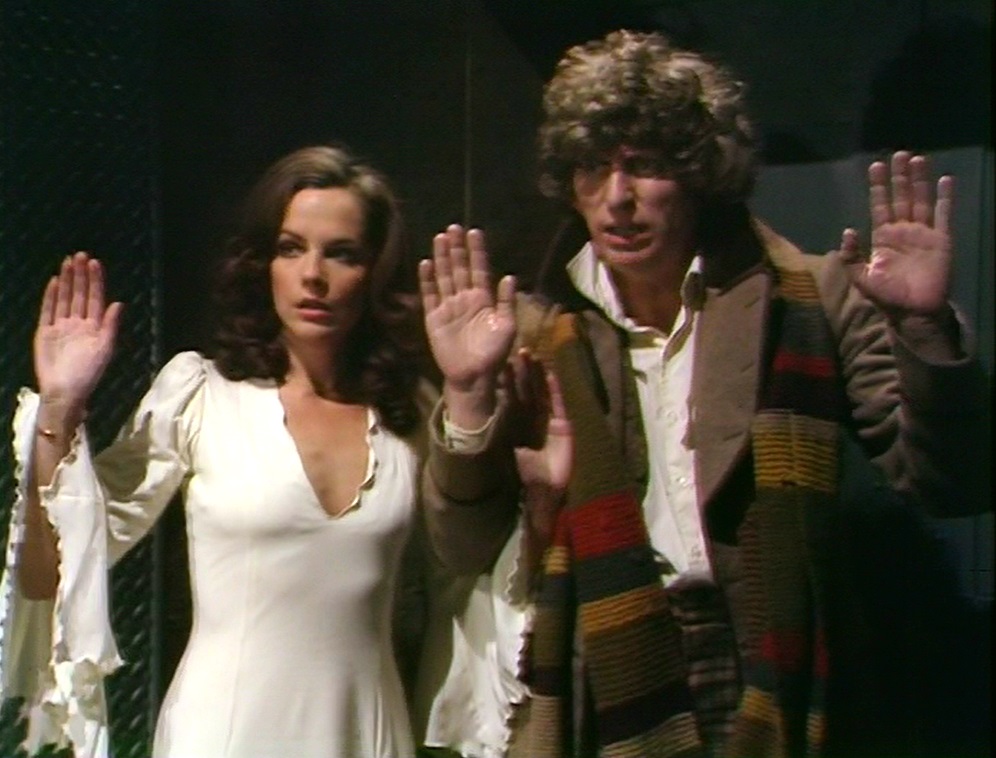
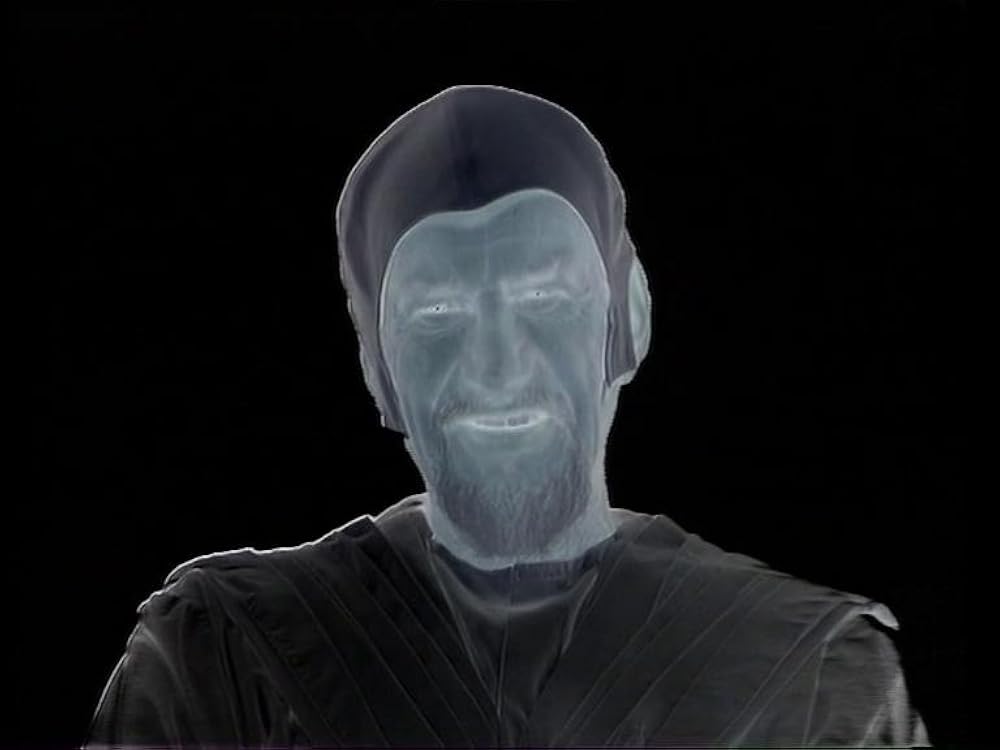
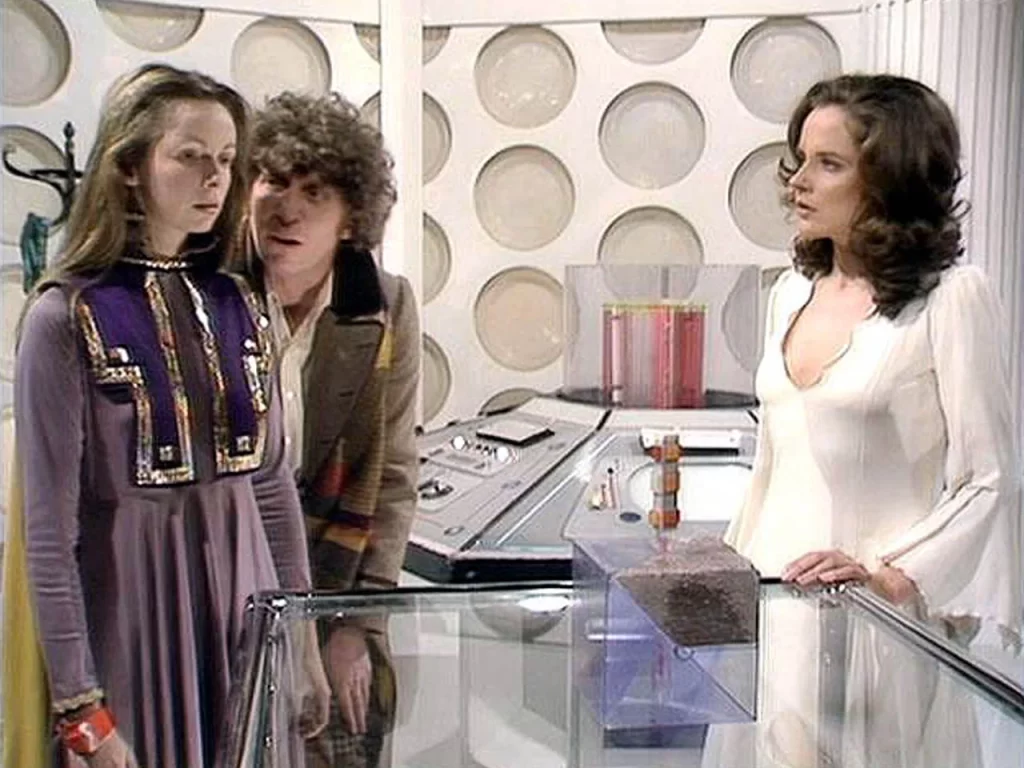
As it turns out, there’s a different moral dilemma surrounding the final segment, which isn’t a bad one at all, but is introduced in the final episode. If it had been simmering away from, say, the halfway point the story would have been substantially more interesting, but then a lot of odd things happen at the halfway point of this story. During the rewriting process Baker and Martin made the decision to dissolve their writing partnership – Baker would have a solo credit next season, and would also go on to co-write most of the Wallace and Gromit films with Nick Park (meaning that, thanks to A Close Shave, The Armageddon Factor is the second-best Bob Baker script where a robot dog is trapped on a conveyor belt). The late drafts were handled by outgoing script editor Anthony Read.
Whatever he was given, it’s fair to say he didn’t fix the problems. The Marshall of Atrios, introduced as a principal villain and played well by the late John Woodvine, gets stuck in a time loop in episode three and remains there until they remember to deal with him at the end. Major gadgets are brought in late enough to qualify as deus ex machinas, and the second half of the story feels, in general, only tangentially related to the situation we started off watching. This isn’t entirely a bad thing: the Atrios of the first three episodes is one of the most boringly generic war-stricken worlds in Doctor Who history, and the second half is full of big swings like the presence of The Shadow and Drax which still might not be good, but are at least bold and unusual.
Even so, and considering this is the final story of his wildly ambitious season-long arc, we have to ask: is Anthony Read a good script editor? He’s not a visionary like Robert Holmes or David Whitaker, but then flash isn’t always what you want from a script editor. His basic ideas – season-long plot arcs, bringing in inspiration from mythology and classic Romances – are arguably exactly what the show needed at this point. And yet every time I’ve watched a classic Who serial where the basic structure is just banjaxed beyond repair, it turns out to have been either him or Eric Saward in the script editor’s chair. I realise a Baker and Martin script is often a whirligig of undisciplined ideas and previous script editors have struggled to impose structure on them, but Read’s own scripts can be even messier than this.
Read’s main virtue is that he kept Doctor Who on the tracks at a time when the fall-out from Hinchcliffe and Holmes leaving could have killed it. He and producer Graham Williams make The Armageddon Factor easier to appreciate than a similarly flawed script would be in the 1980s. There is a sense that everyone here knows what they’re doing, and the actors who are giving Big Performances – Woodvine, William Squire, Barry Jackson – are at least licensed to do so by their scripted characterisations. Director Michael Hayes, who would soon make one of Doctor Who‘s all-timers with City of Death, gives the serial a more moody, claustrophobic feel than it frankly deserves. The scenes in the cockpit of the Marshall’s spaceship are clearly influenced by the grounded, war-movie feel of the original Star Wars, but for once that comparison doesn’t embarrass Doctor Who.
Indeed, for all its flaws The Armageddon Factor at least leaves Doctor Who in a better place than when it started. A lot of talent moves on from the show here – Martin, Read and Mary Tamm – but the replacements are tantalising. No-one could have known at this point that this serial’s guest star Lalla Ward would replace Tamm as Romana, but watched in retrospect Ward’s role as Princess Astra is a hugely successful audition piece. Already she has the knack for quietly, casually dominating a room that would serve her well as a companion. The closing TARDIS scenes, too, are written by Read’s replacement, Douglas Adams, and it’s rare for a behind-the-scenes change to register so abruptly within an episode. The Adams-scripted scene of the Doctor appearing to go mad with power now he has the Key to Time is often excerpted in documentaries, and you can see why: it’s brilliant, but it has almost nothing in common with the preceding six episodes. It works just as well snipped out of context as it does as the culmination of a whole season’s worth of plot arc.
The good and bad of Season Seventeen is previewed here: both Adams and Baker would be given free range to indulge themselves, and maybe it wouldn’t produce enough great stories. But the moments would be incredible. For now, we’ve got an unfortunately apt analogue to the Doctor and Romana assembling the Key to Time, with a story that isn’t very good and isn’t very bad either. Balance is restored.
Next: Destiny of the Daleks (1979)