By Season Fourteen, the style that script editor Robert Holmes and Philip Hinchcliffe have brought to Doctor Who has been so carefully refined that it’s hard to imagine any writer being at odds with it. Their first season saw them coax a gritty, sophisticated and original script out of Terry Nation, a writer who’d spent the preceding two years essentially resubmitting his old scripts with the character names changed, so everything after that must be a cakewalk, surely? Not so much, as it turns out. The Hand of Fear is slightly out of step with a season that is otherwise remarkably cohesive in both themes and high standards – sometimes enjoyably out of step, sometimes less so.
The writers in question are Bob Baker and Dave Martin, a partnership who don’t get enough credit for being among the best writers of the Jon Pertwee era. There are several reasons for this. Firstly, one of their best stories, The Mutants, is wrongly maligned. Secondly, their key innovations – going all-in with action and VFX spectacle, writing UNIT as comic relief – are also the ones some fans find bothersome about the Third Doctor era. But they were still remarkably consistent throughout Pertwee’s whole tenure. The biggest blot on their reputation is the massive fall-off in competence that begins with their two scripts for the next season, but that hasn’t happened yet. The Hand of Fear is still closer in quality to The Claws of Axos than Underworld; you could imagine someone referring to it as a classic and you wouldn’t leap in to correct them. There are, though, hints that they’re chafing against the show’s new house style.
It’s not through a lack of effort. The inciting incident of The Hand of Fear shows Baker and Martin are learning from some of the best stories of the prior season: the discovery of a mysterious body part (an apparent mummified body, an actual brain, and here a fossilised hand) that in turn evokes a classic horror narrative (The Jewel of the Seven Stars, Frankenstein, The Beast With Five Fingers). No shame in reusing a formula that’s nowhere near worn out, but this time it’s preceded by a very iffy, unwisely extended establishing scene on a world that might as well be called Planet of the Snuggies. The ultra-camp show that Jon Pertwee starred in could have survived this opener, even thrived on it. The grave, Gothic adventure serial Tom Baker leads is struggling with it.
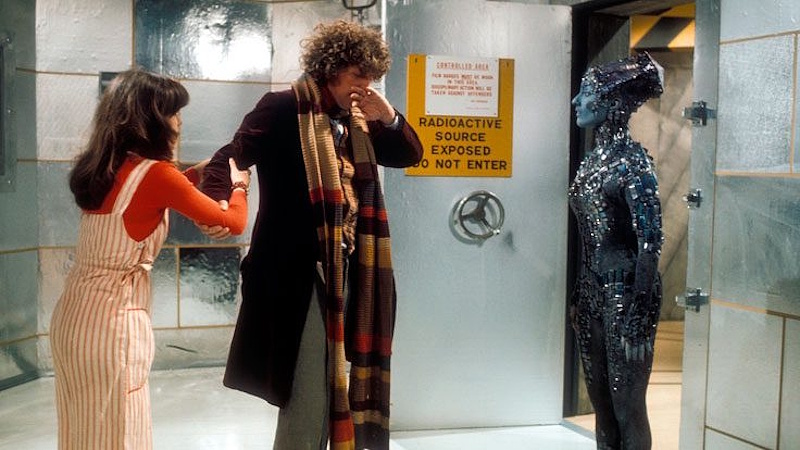
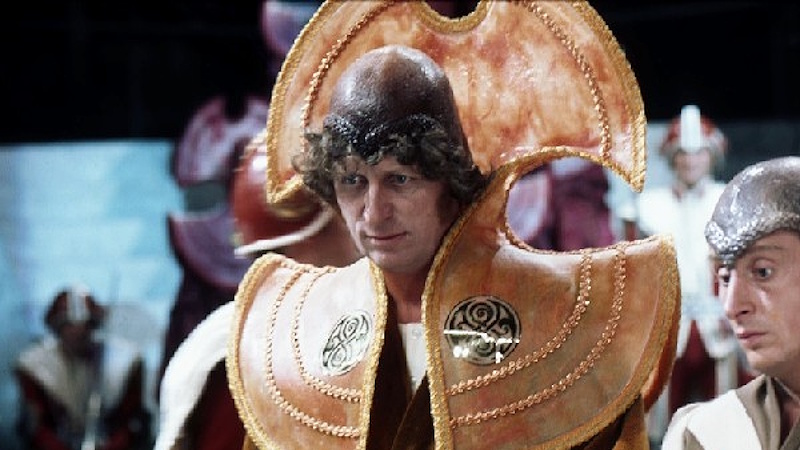
Indeed, The Hand of Fear gets shakier the further away it gets from Earth. The outer-space conclusion is absolutely preposterous, resting on Stephen Thorne’s final-form Eldrad loudly insisting that he “built the Barriers!” (no idea what that means, but it doesn’t sound as impressive as he thinks it is) and doing a very unconvincing trip over Tom Baker’s scarf. OK, maybe it isn’t much sillier than the ending of a lot of perfectly good stories, but it’s a definite comedown after two episodes of Judith Paris playing another incarnation of Eldrad with much more subtlety and depth. Indeed, Paris’s Eldrad comes off as something like a revisionist version of the exiled megalomaniacs who populate this stretch of the show. We know she’s been sentenced to death by her people, but who’s to say they’re so good? They do maintain the death penalty, after all…
The sweeping away of all this complexity in favour of another ranting Thorne performance is truly unfortunate, as it shines an unforgiving light onto the rest of this otherwise halcyon era. Compared to the ostensibly more lightweight Pertwee era, the morality of early Tom Baker stories can be awfully black and white. In its pursuit of maximum scares, it creates a world where ugly monsters are bad and heroes are good, and that’s that. Most of the time, the stories can find enough complexity elsewhere to make up for this, but The Hand of Fear doesn’t have as many interesting side characters as usual, and its dialogue isn’t as witty. The best gag, Sarah’s “Eldrad must live!… just checking”, was ad-libbed by Elisabeth Sladen.
This, though, leads us to the chief pleasure of The Hand of Fear. It is the last time we see the show’s most iconic Doctor-companion pairing; both Tom Baker and Elisabeth Sladen would return, but never together, and their chemistry here is as strong and as charming as it was in Robot. Sarah’s leaving scene rightly lives large in the memory of anyone who watched this as a child, partly because it’s so generous-hearted. We know from her first scene that Sarah is waiting to get back home, so it’s not a tragedy in the manner of Donna Noble’s exit. Yet the Doctor can’t bear to let her go, and neither can we.
Ultimately, it works because of Sladen. After The Green Death, writers tasked with a companion departure would take their jobs increasingly seriously, but not all of them would come off this well. Nyssa and Mel get some prettily-written and well-performed leaving scenes, but the characters had been so botched by the time they exited that it didn’t matter, and don’t get me started on what the show just did to Belinda Chandra. Sarah Jane Smith, though, remains the archetypal Doctor Who companion, whose charm, pluck and love of adventure spoke to every age group tuning in. The choice to have her possessed by Eldrad for the first episode of her leaving story is an unusual one, but Sladen is clearly enjoying doing something different, and by the time she’s back on the streets of London she is recognisably, absolutely herself again. Moreover, Sladen herself told the production staff that she didn’t want to have a big, weepy farewell story, that she would feel much better leaving after another entertaining adventure. Despite the story’s missed opportunities, Baker and Martin certainly delivered this – but in the end, it was decided the occasion needed to be marked just a little more. Quite right too.
Next: The Deadly Assassin (1976)