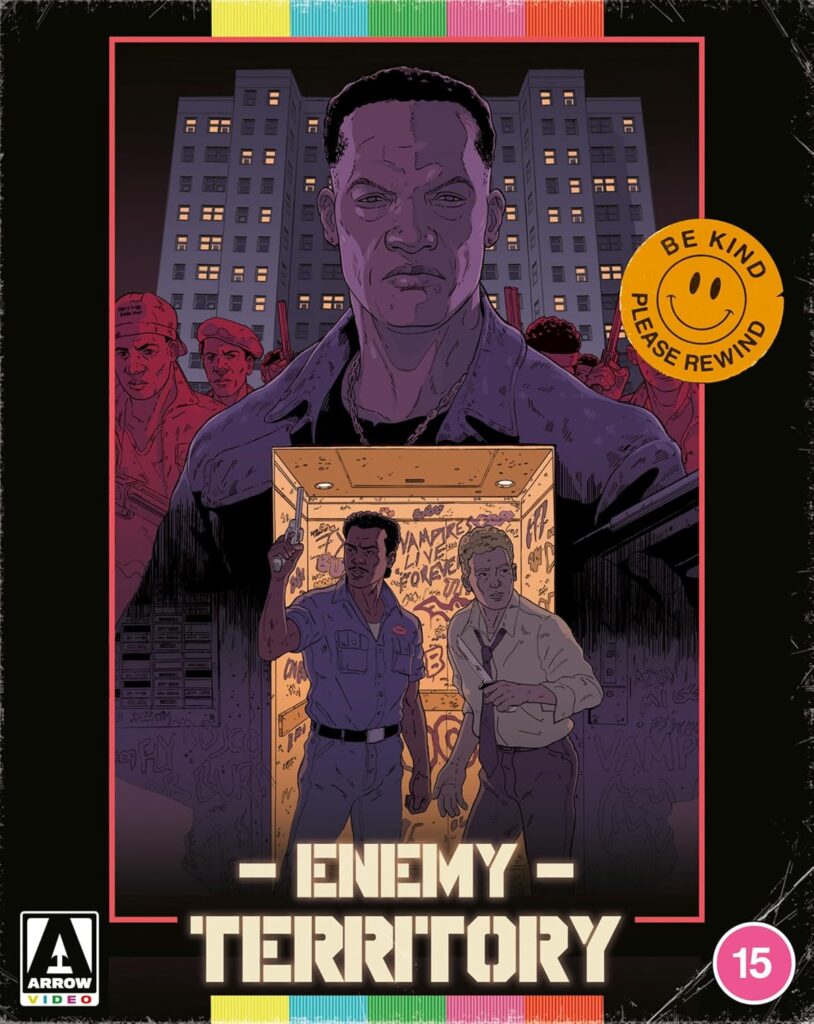
1987’s Enemy Territory has often been described as a knockoff of John Carpenter’s Assault on Precinct 13. I decided to watch the two together, mainly since I hadn’t actually seen the latter film before. I originally planned on doing an in-depth comparison of the two, yet I found that similarities between them only consisted of the basic plot and perhaps a couple other story elements, so that comparison would be somewhat unwarranted.
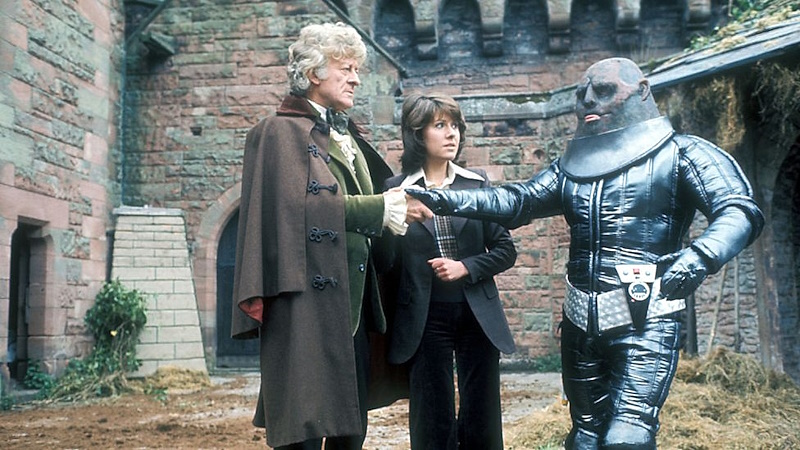
Despite being produced by Charles Band’s Empire Pictures, Enemy Territory feels closer to a Cannon Films production á la the gloriously ridiculous Death Wish 3. Much of the apartment block and surrounding street is covered in graffiti and there’s a typically cheesy synth funk score. It’s also worth noting that this film was released the same year as the Doctor Who story Paradise Towers, which also involves a rundown apartment block being taken over by a larger than life gang. It goes without saying that there are no murderous cleaning robots or a fascistic Richard Briers to be found here. Instead, the main antagonists are the gang known as the Vampires, who spark conflict with our main character, Barry Rapchick (Gary Frank), when he prods a young member of the gang named Decon on the shoulder, asking for directions. Barry is unaware of the unspoken rule that the Vampires are not to be touched, and things soon escalate to violence.
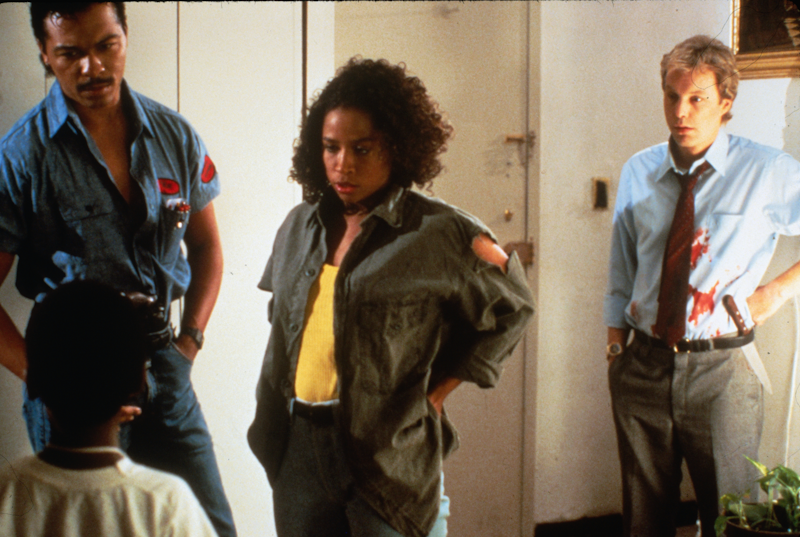
Barry is essentially a fish out of water, being a yuppie insurance salesman who only enters the apartment building due to the promise of higher commission once he manages to sell life insurance to one of its elderly residents. However, Barry visits at night and is unaware that this is when the Vampires take control of the entire block. He soon teams up with quick-thinking telecoms engineer Will Jackson, played by Ray Parker Jr. I, much like many others, was unaware of Parker’s career outside of his iconic theme song for Ghostbusters and it wasn’t until learning about this film that I even knew he had a brief acting career. When it comes to musicians turned actors, he is not that bad but his performance works best within the context of the buddy pairing with him and Frank. Will is noticeably more used to the mayhem than Barry, so he is therefore the character pulling off most of the heroics, also helping to calm down Barry when he has a panic attack after resorting to violence for the first time. Although later on Barry ends up crashing through a window like John McClane, only Die Hard came out a year later and Barry is much more dorky.
Interestingly that’s not the only moment that reminded me of John McTiernan’s film.
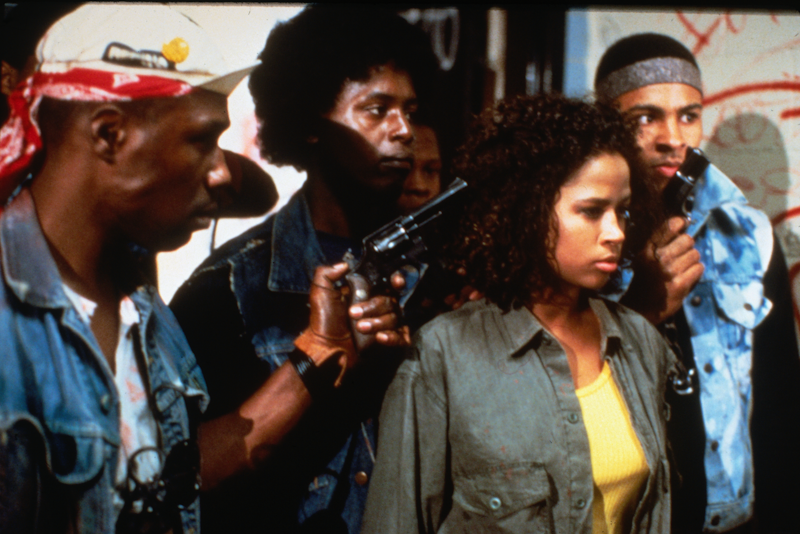
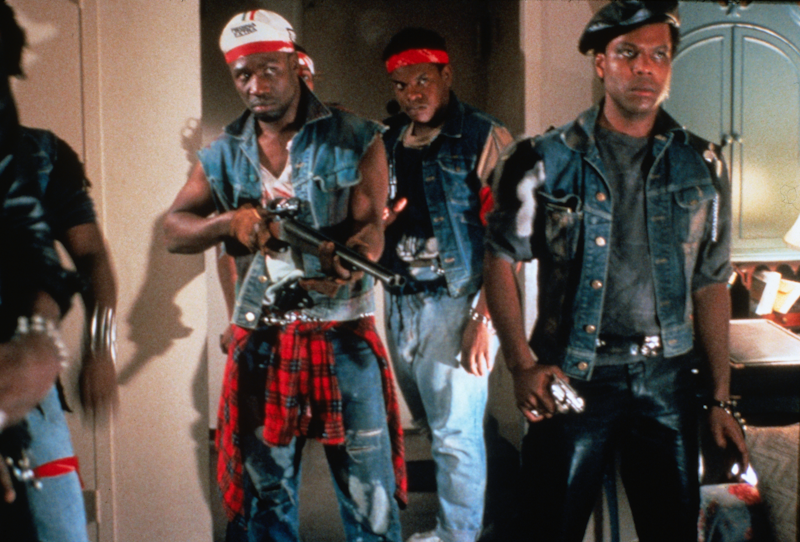
An actor who unsurprisingly does stand out here is the greatly missed Tony Todd as main antagonist and leader of the Vampires, the Count. This was still relatively early in Todd’s career, receiving some early career recognition for his minor role in Oliver Stone’s Platoon the year prior. Yet, it is he who practically steals the film here, chewing the scenery whilst also being a genuinely menacing presence. He’s not in this quite as much as I would have liked, yet just from this it’s clear why he would go on to become such a beloved cult figure following roles in Candyman, Tom Savini’s remake of Night of the Living Dead and the Final Destination franchise.
Something that really surprised me about Enemy Territory was its social commentary on race, which I found unexpected for a B movie like this. The Count repeatedly refers to Will as ‘the Blood Traitor’ and Barry as ‘the Ghost’, plus judging by how most of the building’s occupants are black, with events playing out in a predominantly black neighbourhood. To me this insinuated that the Count and the rest of the gang’s violence was a response to the discrimination they have faced for most of their lives and is an attempt for them to be seen as more powerful. This theme is further exacerbated when one of the occupants finally manages to call for outside help yet is dismissed and even detained by the all-white police force. Another quite notable moment is where our main characters enlist the help of a child, Chet, to find a way out of the building. His mother is understandably disapproving of this so Barry tries to bribe her. She then says “$400 can’t buy a black boy anymore” which leads to Barry feeling immediate guilt and remorse for what he just tried.
Another memorable element comes in the character of Parker, a wheelchair-bound Vietnam vet played by Jan-Michael Vincent. Vincent is in typical post-Airwolf form, half asleep and seemingly drunk during filming. His character is a bizarre tin foil hat type who has converted his apartment into a bunker, blames the Vampires’ invasion on ‘the commies’, and states that he keeps adopting cats and then killing them once he suspects that they’re genetically bred to infect him with diseases like cancer and AIDS. He’s easily the most barking mad part of the film and, much like Todd, isn’t in the film anywhere near enough.
Briefly going back to Assault on Precinct 13, if you were to still compare it to Enemy Territory then it’s most noticeable that the latter has a much more exploitative and goofy tone typical of the era it was produced. There’s one hilariously overacted scene where a character falls down an elevator shaft that I’m sure I had seen shared on one of those Instagram pages that post unintentionally funny B movie clips.
The film portrays its urban setting rather well, mainly due to having Ernest R. Dickerson as director of photography. There’s a particularly striking shot of the Count standing on a rooftop overlooking the city that I rather liked. Dickerson had already worked with Spike Lee at this point on She’s Gotta Have It, before working on his acclaimed films Do the Right Thing and Malcolm X – then becoming a director himself. A new interview with him (‘Den of Vampires’) is included on this new Blu-Ray release, where he discusses his early career and how he lit the film on a low budget to create a noirish atmosphere. It’s an informative and entertaining piece and he even brings up the aforementioned similarities to Die Hard. Gary Frank also provides an interview in ‘Giving Up the Ghost’, an interesting look at the career of an actor who I was previously unfamiliar with and who talks very favourably of those he worked with. The limited edition release also comes with a collector’s booklet and a double-sided foldout poster.
I would have perhaps liked for there to also be a featurette on the new restoration provided, yet this being the film’s first release since VHS and Laserdisc is more than enough. The theatrical run was also very limited, possibly because there were protests against the film’s portrayal of the African American community. The trailer in the Blu-Ray’s extras is taken from a videotape source which especially helps to show off how good the new restoration of the film is. This release effectively follows on from Arrow’s Enter the Video Store: Empire of Screams box set which compiled various mostly forgotten titles from the Empire Pictures library including Arena, also from director Peter Manoogian.
Enemy Territory has only gained a small cult following from its VHS release, so hopefully that grows from this fantastic new Blu-Ray package.
ENEMY TERRITORY IS OUT NOW ON ARROW VIDEO BLU-RAY