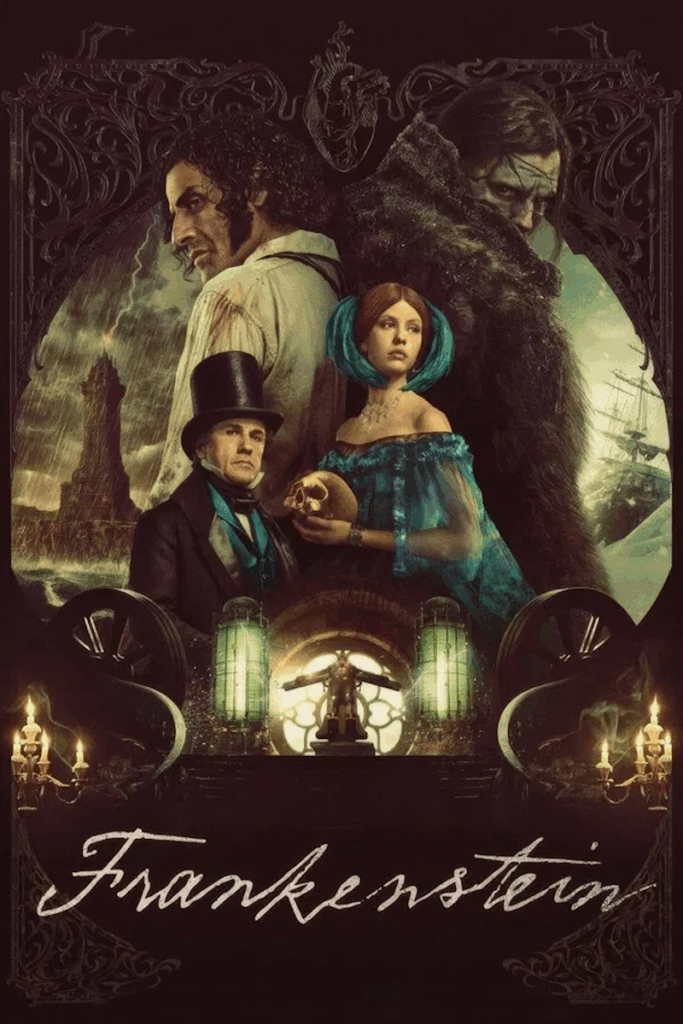
Although Guillermo del Toro’s Frankenstein was certainly something I was looking forward to, I’m also not blind to the inherent fear that yet another director would finally deliver their long-gestating big-budget passion project, and find it completely underwhelming.
Large-scale passion projects seem to have a tendency to go wrong. Infamously, Pixar veteran Andrew Stanton lobbied for the film rights to Edgar Rice Burroughs’s novel A Princess of Mars and the result was 2012’s $250-million misfire John Carter, one of the biggest box-office bombs of all time. Just last year, Francis Ford Coppola released Megalopolis, the result of 40 years of work, and after watching it you’ll need another 40 years to figure out quite what he was getting at when making it. At least with Megalopolis though, it was Coppola’s own idea. Del Toro is trying to adapt one of the most iconic novels of all time, a progenitor for science-fiction and a book that has inspired countless adaptations and re-inventions already. It’s up there with Bram Stoker’s Dracula as an influential horror novels that has had film and television adaptations for just about every generation over the last 100 years. And in 2025, after nearly twenty years of planning and development, Del Toro has finally realised his vision – and it’s bloody brilliant.
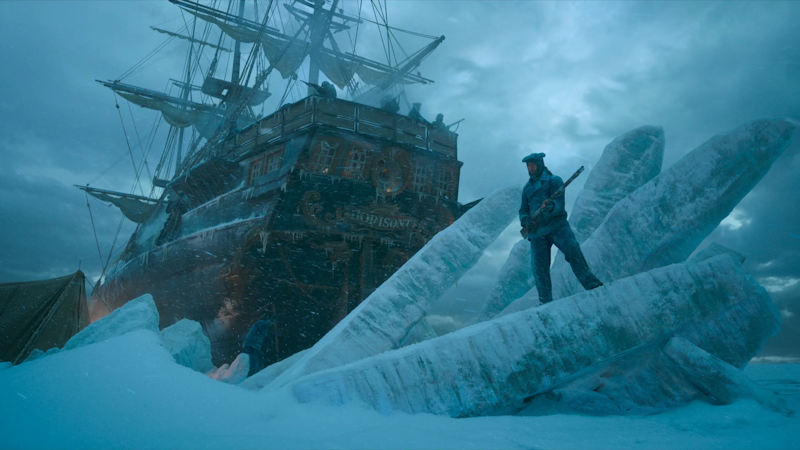
Guillermo del Toro’s Frankenstein is truly a feat. It’s two-and-a-half hours long, with a stacked cast, massive budget and an inspired production design that mixes the gothic and romantic with the scale of a period epic. And from the moment it starts, the gargantuan scope is up on screen, from the first scene of a huge ship stuck in ice with the crew trying to kill a mysterious cloaked creature, to Victor Frankenstein’s stunning castle-laboratory which looks right out of Del Toro’s Crimson Peak. I found myself sat with my mouth agape, just taking in the look of the whole thing – visually, Frankenstein already had me gripped.
A delectable visual palette means nothing if there isn’t a great narrative to chew on, and Frankenstein is a narrative that many people know like the back of their hand, so you would be hard-pressed to find something that hasn’t been done before. What del Toro really goes for with his interpretation is the romance. He has spoken about the Miltonian influence in his take on the novel, and while that might not have excited me initially (I have too many bad memories of reading Paradise Lost at A-Level to not have that bias), I think the epic romantic feel of Guillermo del Toro’s Frankenstein really works. Del Toro is adamant that his Frankenstein is not a horror film, and indeed there’s not much in the way of horror conventions here, with only a handful of scares. What there is though is a lot of character-driven suspense, with the film exploring the ideas of lust, longing and empathy in bold and brilliant ways.
It’s hard to think how much I’m going to be rewatching Frankenstein just for its escapist value, but I know I’ll want to revisit it for its sumptuous visuals, amazing performances and deep, emotional core.
CLICK THE POSTER AT THE BOTTOM OF THE REVIEW FOR GUILLERMO DEL TORO’S FRANKENSTEIN PAGE
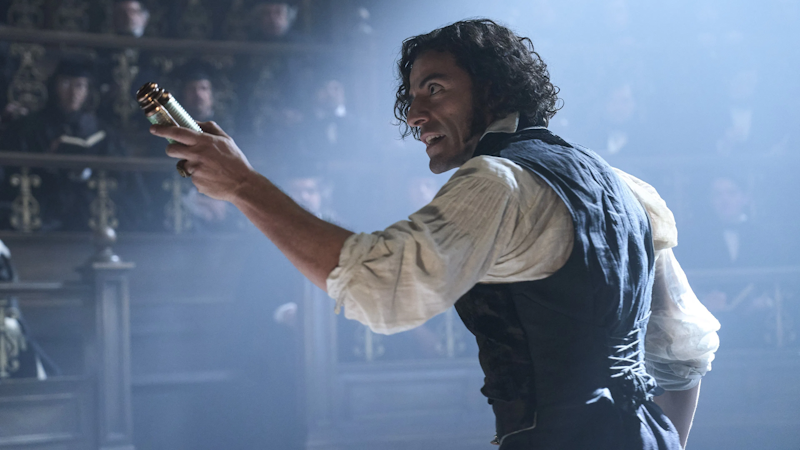
Perhaps the most twisted subversion of romantic tropes is Frankenstein himself, with a really commanding performance from Oscar Isaac. Victor Frankenstein has always been a complex and flawed character, and Isaac’s portrayal really sells Frankenstein’s personal and emotional drive. He has an attachment to his work and the creation that he has slaved over, but also the arrogance and the callousness that comes with the creation of something so awe-inspiring. Even the film’s visual aesthetic plays a part in this – let’s face it, if you buy yourself a gargantuan castle covered in flora and fauna that doubles as a steampunk-like laboratory, you probably love yourself a bit too much.
His upbringing with his demanding father, played by Charles Dance (perfect bit of casting), and the bond he shared with his late mother, played by Mia Goth (another perfect bit of casting), is ultimately what drives him. His difficult relationship with his father, and his deep-rooted grief over the untimely death of his mother, has him fixated on this idea of bringing about new life and stopping death. You could say that Frankenstein’s monster is the result of one intelligent man’s massive Oedipus complex.
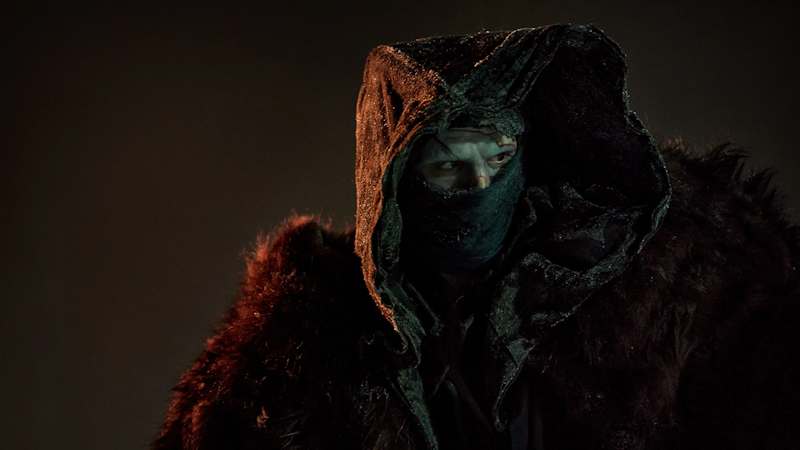
As for Frankenstein’s monster, only ever referred to throughout this film as ‘the creature,’ this is a really cool take on the character. For one thing, this monster isn’t actually that monstrous. That’s always been a recurring idea throughout most iterations of Frankenstein, where some supporting characters are able to see the humanity in the creature despite its inherent grotesquery, but here the monster is portrayed by an almost unrecognisable Jacob Elordi. Mia Goth’s Elizabeth Harlander (you can never have too much Mia Goth, right?) and a blind villager, played by David Bradley, see the beauty in him and help him to become his own person, teaching him in a way that his creator never could. This does not mean that he is a pitiful creature for the entire film. His introduction is absolutely badass, and I got chills when this hunched hooded figure appears out of a blur and begins attacking a crew of sailors. I did love this take on Frankenstein’s monster, with Jacob Elordi being absolutely fantastic. I presume this appearance in an adaptation of a classic novel is going to be much less contentious than his upcoming role as Heathcliff in Emerald Fennell’s Wuthering Heights.
I was so impressed with all the ways that del Toro kept the film interesting. Just when you think it’s starting to slow down, things immediately pick back up. Just when you think one character is no longer relevant to the story, it’s revealed just how much they’re lingering in the narrative. Christoph Waltz’s Henrich Harlander exists first as a plot device to get Victor Frankenstein thinking about his experiments more, but the more time he gets the more involved in Frankenstein’s affairs he becomes, and the evolving chemistry and tension between him and Victor produces some amazing scenes during the first and second acts. This is one of Christoph Waltz’s strongest performances in recent years.
It’s easy for a passion project like this to disappear up its proverbial, and Guillermo del Toro is certainly not telling the Frankenstein story with any sense of irony. What he is doing, however, is telling it from a fresh and large-scale perspective with purpose and dramatic heft. There’s not a lot of humor in Frankenstein, but likewise it never feels stodgy or self-serious. A lot of money has been thrown at the project, but it never loses the heart and soul of the story. It’s hard to think how much I’m going to be rewatching Frankenstein just for its escapist value, but I know I’ll want to revisit it for its sumptuous visuals, amazing performances and deep, emotional core. It’s just a pity that it will have to be on Netflix and not the cinema screen, where this rightfully belongs.
GUILLERMO DEL TORO’S FRANKENSTEIN DROPS ON NETFLIX NOVEMBER 7TH