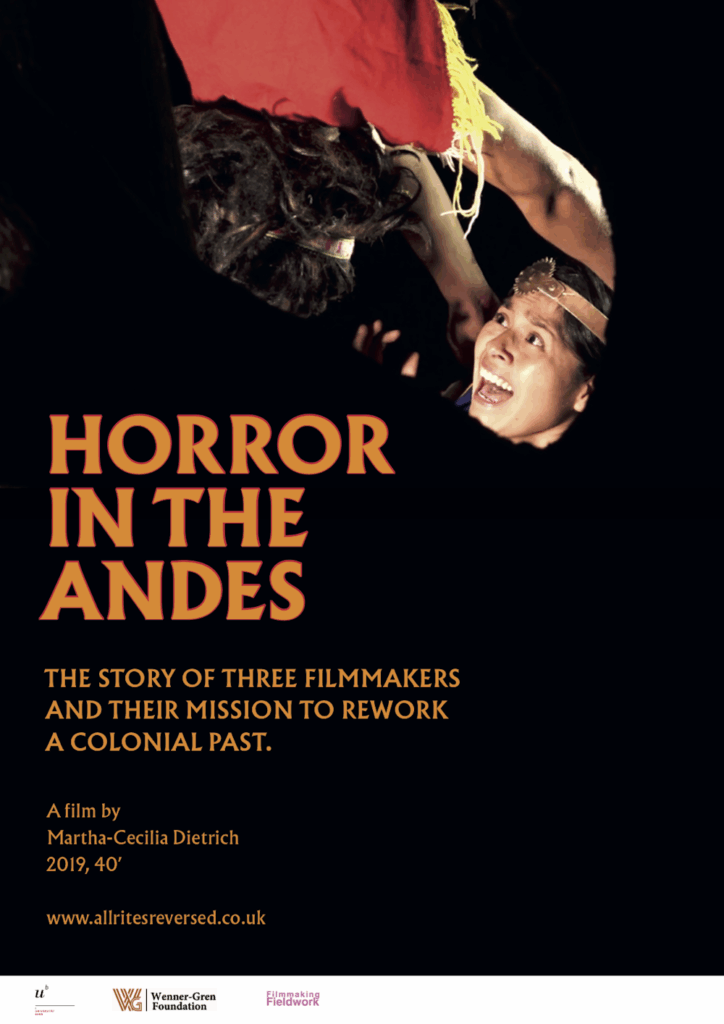
Academic analyses of film can sometimes be esoteric and alienating. References to theorists and terms like ‘mise-en-scene’, ‘postcolonialism’ and ‘intersectional understanding’ might cause readers to lose interest, and in some cases, annoy filmmakers. The documentary Horror in the Andes: Ayacuchean Cinema in the Making indicates such annoyance with its opening supertext: ‘You foolish academics! Stop analysing and come to see what we do and listen to what we say’. From this assertive invitation, director Martha-Cecilia Dietrich takes the viewer to Ayacucho in Peru, following director Martin David Ccorahua Illanes as he puts together his film and brings it to an audience.
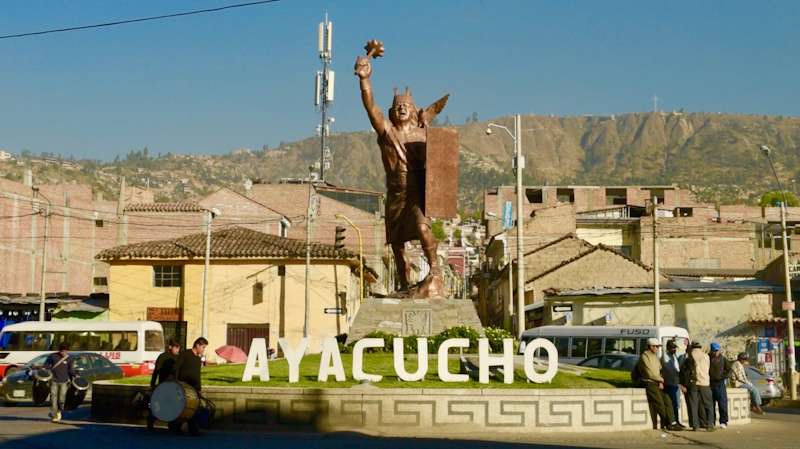
From the opening sequence of Martin driving through the town of Ayacucho, the viewer is invited into a community. The busy streets, weathered buildings and motion of the camera portray this bustling town, as well as the community of filmmakers. Martin is an engaging protagonist, his blue shirt and leather waistcoat suiting his role as director. We learn about his history, his brother recalling Martin’s creative life and background in obstetrics. We are also introduced to his wife and children, including a toddler whose wide eyes indicate fascination with the camera that comes into the living room. This domestic setting pervades the opening and closing of the film, as Dietrich presents Martin and his team setting up a screening of his film in a rudimentary setting, where the seats are simply sofas and the film comes from a laptop connected to a projector.
This amateur ingenuity lends the documentary a shambolic charm, although it also feels somewhat sanitised as there is no footage of the filmmakers becoming frustrated with their work or with each other. What we do see is Martin’s direction, sometimes captured in shot with his actors. These slightly absurd tableaux literally expand the frame of cinema, as actors are in a completely unnatural pose with Martin to the side pointing and giving direction, presenting the mechanics and difficulties of direction and performance, such as an actor dropping an arrow from his bow, within a very stiff performance that leads to multiple takes.
FOR MORE ON HORROR IN THE ANDES, CLICK ON THE POSTER AT THE BOTTOM OF THE PAGE
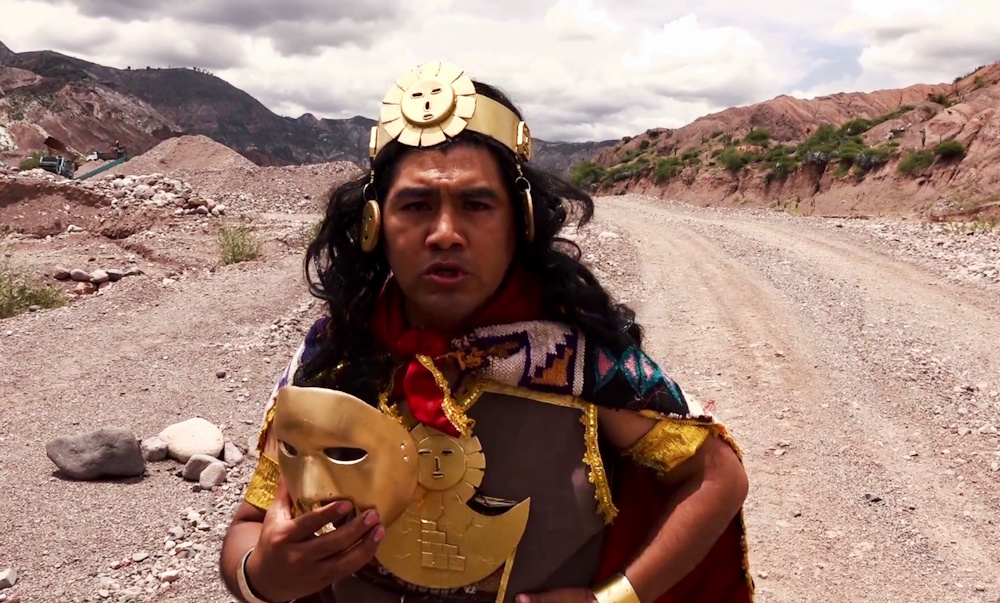
Other mechanics also populate the documentary, such as the challenges of weather and location including forest, river, rocks and transportation. Once on set (as it were) we see the painting of stage blood, cast and crew waiting to shoot, actors asking about their mental state and getting into costume. These costumes look cheap yet are still recognisably ‘Incan’, and an improvised camera rig as well as a montage of other equipment, including VHS cameras and bulky computer monitors, plus moments of editing footage on a home TV in a rundown room filled with various types of junk, all add to the amateur charm. This amateurishness extends to Dietrich as well, as at one point we see the reflection of a boom mic as Martin goes around the town in search of his actors. However, remembering that opening text, this is learning about the practice of filmmaking, and seeing problems like this does provide that insight.
The viewer also gains insights into the local area and traditions, which fits with the socio-anthropological thesis of the film (hello, we’re getting academic again). There is a brief insert of a pan-pipe busker, and when the crew are on location, we see local people walking by in the background. This background is only seen briefly but is quite spectacular, the Andean locations providing a strong sense of place. Indeed, referring to the landscape as background could be misleading, as the crew ask permission of the mountain to film, making an offering of water and demonstrating respect. There is also engagement with indigenous culture as the actors are directed to speak in Quechua, but some (understandably) only speak Spanish. The dual learning experiences of filmmaking and socio-anthropology appear here, as this desire to present indigenous culture can be addressed with dubbing.
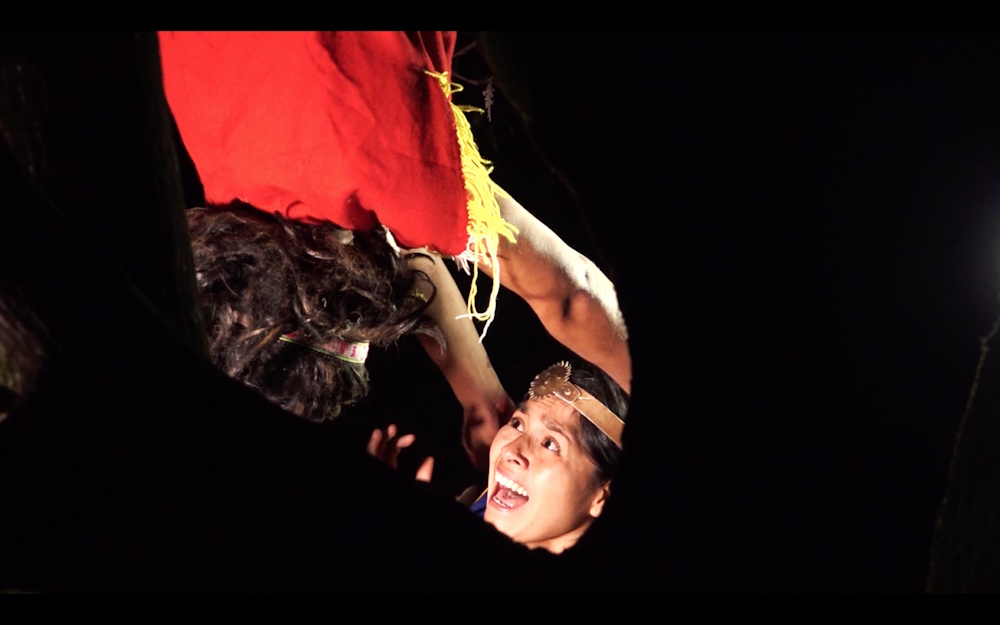
It is interesting that the film Martin is making is barely seen. The only finished footage appears in monochrome, making it reminiscent of Roma and Embrace of the Serpent, while the setting has echoes of Apocalypto. The actual title is not explicated (it might be The Last Inca, but this could be an issue with subtitling), though Martin does mention his other works including Tears of Fire, Cries for Freedom and Blood Passion. The moments of this film certainly look intriguing, with Inca soldiers, people slaughtered, persecution and a leading lady who screams well. Perhaps this documentary could encourage interest in Peruvian cinema, and that would be a worthy accomplishment. As a documentation, Horror in the Andes does work – but it is hardly deep or revealing – offering a snapshot that is interesting, but may leave the viewer wanting more.
HORROR IN THE ANDES PLAYED AT THE IMAGINE FANTASTIC FILM FESTIVAL 2025 (IN AMSTERDAM)