

Human Traffic is one of the many films from the 1990s and 2000s that explores the social lives of young idealistic men and women in their twenties: we watch them exchange banter in pubs, go out on the town, indulge in as much sex and drugs as is humanly possible, and have the morning-after regret, where they reflect on the choices made the previous night, or indeed throughout their life in general. Now, a lot of these films are cult classics but to an outsider it can be quite hard to separate them all – there’s so many films you can watch about hedonistic young people struggling through adult life before they begin to bleed into one. Luckily, while Human Traffic isn’t the most flawless example of the genre, it does manage to stand out in a lot of interesting and cool ways.
Writer and director Justin Kerrigan spoke about how he wanted Human Traffic to focus primarily on the 90’s club scene, a scene he and his friends were very familiar with, and the film certainly commits to. It’s narrated by lead character Jip, played here by John Simm in one of his breakout roles (which I suppose could make this review an unofficial instalment of Outside the Blue Box).
Jip documents both his exploits and the exploits of his friends and others around him, who are all desperate for a night out to alleviate themselves from their problems. Jip is working a dead-end retail job with a malevolent creep of a boss, Shaun Parkes’s Koop is having woman trouble, and Danny Dyer’s Moff is trying to be an uber-tough drug dealer when really he’s still living with his parents and has Star Wars posters in his room – and that’s just to name a few. While many films from the time centred on these themes and featured similar casts of colourful characters, Human Traffic stands out by concentrating much of its story on one weekend of revelry. Instead of spanning months or years, we get a brief but nonetheless vivid snapshot of these people as they indulge in the staples of the nightlife scene: sex, drugs and alcohol.
This is one of only a handful of films that Kerrigan has directed but visually it makes a strong impression, and this new restoration does it the world of good as it really makes the colours pop, and it gives the Cardiff nightlife scene a lot of, well, life.
Another thing that surprised me here: Danny Dyer. Look, I haven’t seen him in many things (partly because of my stubborn refusal to watch EastEnders) so I can’t really throw stones, but he doesn’t strike me as an actor that picks the best projects, let’s put it that way. Yet, I was very impressed with him when I watched Andrea Arnold’s short film Wasp last year, and I was similarly impressed with him here. Not just because he has a rant about Peter Andre, which would get him in most people’s good books, but because he ends up being the film’s emotional anchor.
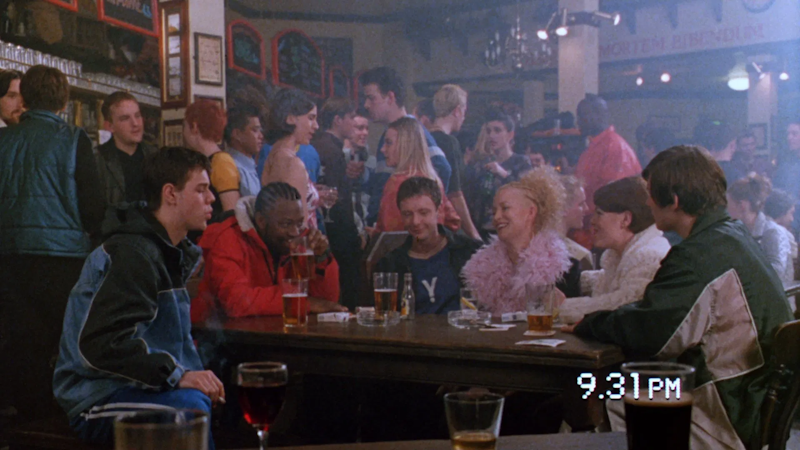
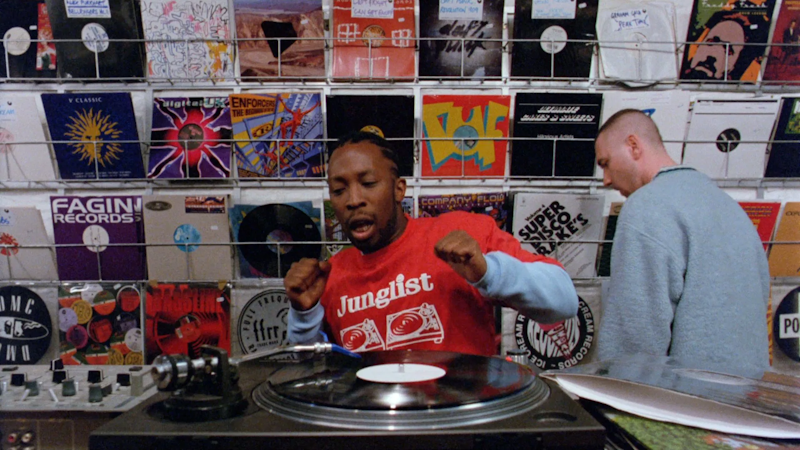
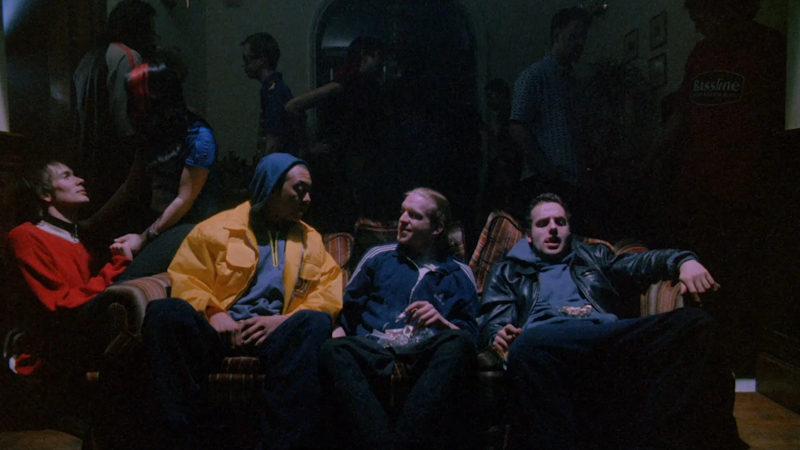
While Jip dominates much of the action especially with the narration, the final scene really belongs to Dyer, as Moff’s character begins to reflect on his and his friends’ carefree lifestyle and wonders whether it’s really worth continuing. Dyer is really damn good in the last third and he easily gets the most dramatic stuff to do in a film that otherwise is consistent in its broad, brash comedy setup and has its tongue firmly in cheek.
Jip’s narration sets the tone really well; he is the unreliable narrator telling a simple human story that becomes increasingly surreal and visceral. His frustration with working a horrible job in a clothes shop and being a ‘wage slave’, as he puts it, is highlighted with a grotesque visual metaphor of him being assaulted by his boss and his mouth taped shut with a bank note. The characters all feel alienated, so Kerrigan decides to have a moment where they all turn to the camera and sing a heavily-revised version of the national anthem. These moments aren’t exactly the most subtle in demonstrating the underlying themes, but by a certain point they go from sticking out like a sore thumb to being a crucial part of the tone.
With the blend of the real and the surreal, I was reminded of Trainspotting (a film that Human Traffic references perhaps intentionally) and while there’s nothing here nearly as disturbing as watching Renton go cold turkey and see a dead baby crawling on the ceiling, it’s admirable just how much Human Traffic feels like its own thing despite the multitude of reference points to other things.
Kerrigan describes in an interview with the Guardian the incredibly loose approach to making the film: he wasn’t experienced in the structures of directing and screenwriting, and as such a lot of the scenes are fairly rambly and don’t forward the overall story that much. It’s not really a bad thing, given the ‘story’ is basically these characters going on a bender and trying to escape what they consider to be their miserable lives, so it’s cool to see a film that feels very much like a free-flowing narrative instead of having a rigid structure. However, the clash between the realistic night on the town and the surreal dreamlike imagery that eventually works its way in can make Human Traffic feel just that bit too directionless. The titles even play out to archive footage of riots and demonstrations, further differentiating the film’s two goals. The surrealism fits tone-wise, but not so much story-wise. One minute it’s normal enough, next you feel like you’re tripping out just as much as the characters are.
I also came away from Human Traffic with the impression that it said less than it really wanted to. Apart from Moff, I didn’t really understand how these characters had grown and learned from their experiences throughout the weekend or whether they felt the partying had satiated them despite their weekday struggles. It is a very simple film and that’s to its strength, but at the same time it feels insular, small. It’s a film about characters living out the nightlife scene in Cardiff to escape from their day-to-day, and that’s all it is.
Human Traffic has had many a dissection by film scholars about how it fits into the late 1990s zeitgeist, explores contemporary social themes and defines the “Cool Cymru” moment on film. There’s some great featurettes on the recent Blu-Ray release too which explore this, including a conversation with Renata S. Aly, the film’s executive producer. Personally, I found much to appreciate in Human Traffic as a snapshot of young twenty-somethings letting their troubles go and having fun on a weekend, but I don’t know what else I’d gain from watching it again.
Human Traffic is out now on BFI 4K Blu-Ray
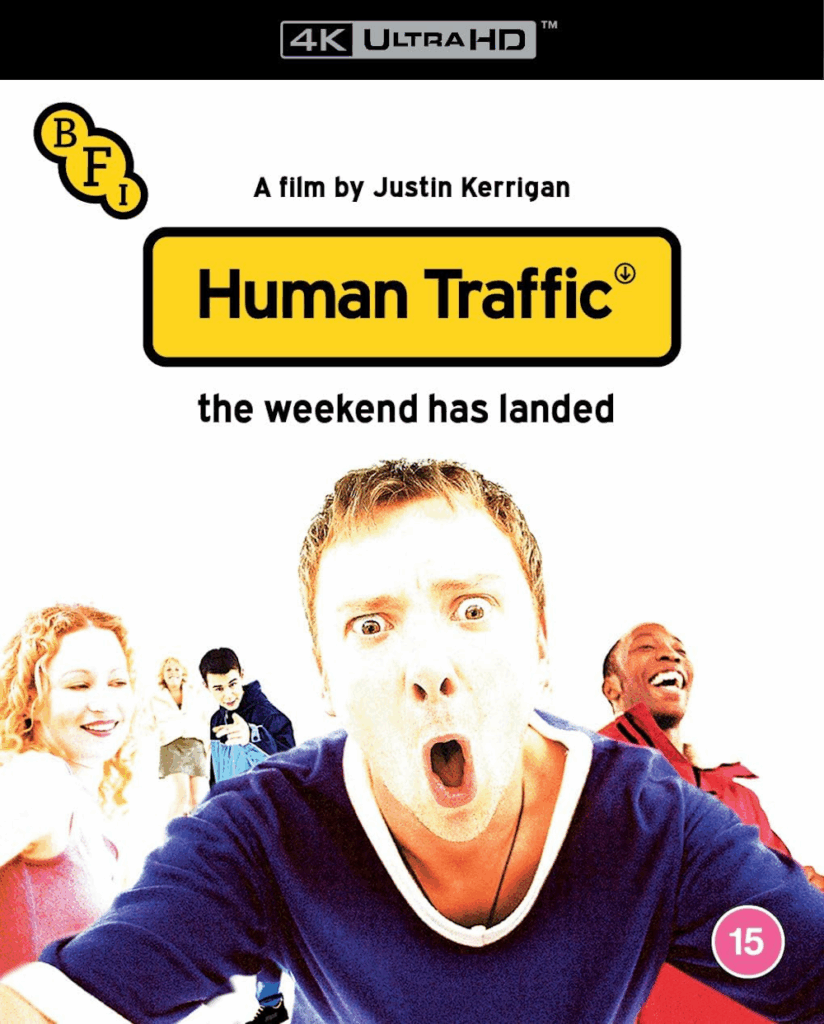


Great release but why why why didn’t BFI get Kerrigan involved on this. A new Commentary from him would have been perfect. How about interviews with the main cast. And why wasn’t the original making of also included. I understand rights issues but this is a 90s film and not massive blockbuster. Just think BFI could have done better.