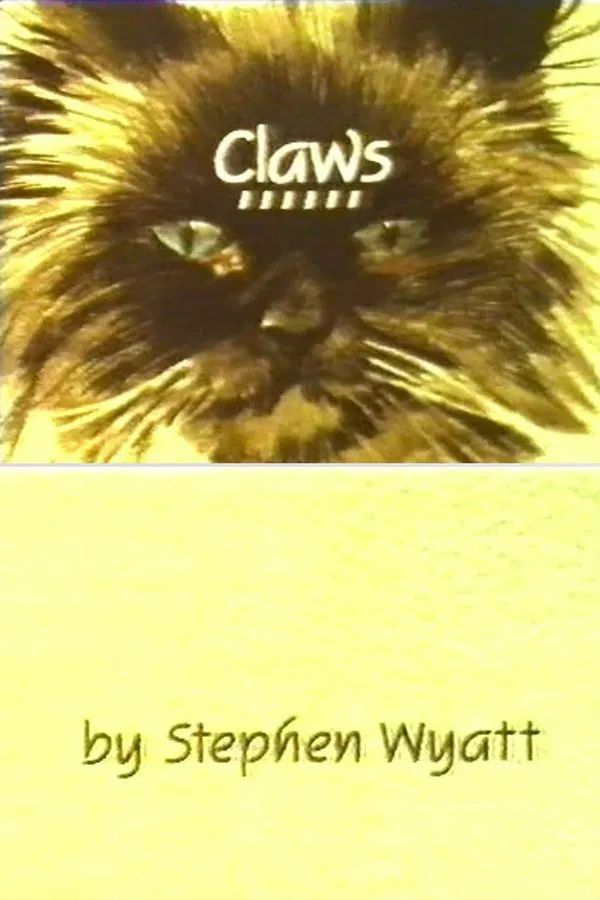
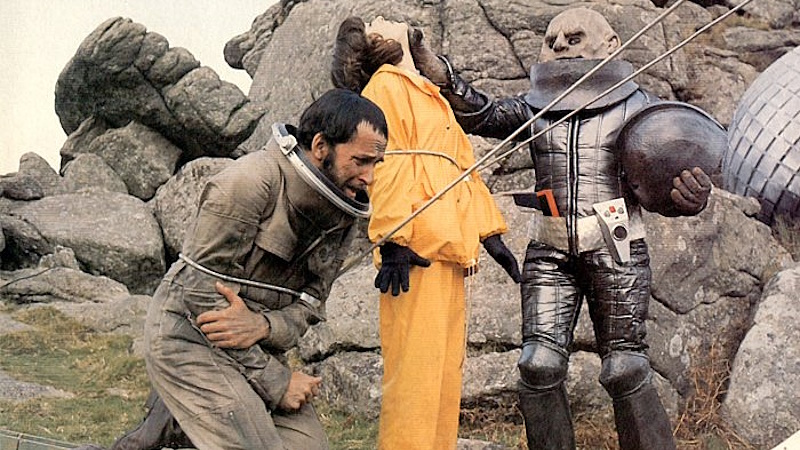
Looking back on the history of Doctor Who means looking back over the last sixty-plus years of British television. Along with a few other titans like Coronation Street and Blue Peter, it’s one of the few shows whose contemporaries can include anything from Animal, Vegetable, Mineral? to Adolescence. The fact that Doctor Who is a going concern when so much of television is forgotten means there are whole shows that are now remembered largely for their role in Doctor Who history. A prime example is Claws, a 1987 television play which, up until its recent re-emergence on YouTube, had been seen by few but was remembered by many, specifically for one fact: Andrew Cartmel, the script editor throughout Sylvester McCoy’s time on the show, saw it and immediately hired its writer Stephen Wyatt for Doctor Who.
A suburban black comedy set in the world of pedigree cat breeding, Claws is not an obvious audition piece for Doctor Who. It’s hard to believe Wyatt would have got the call were it not for the very specific set of circumstances Cartmel had inherited, and how he planned to respond to them. By 1987, Doctor Who was far from the mainstream hit it had been ten or twenty years previously, and its budget had shrunk to the point where attempting serious science fiction was liable to backfire. Cartmel’s masterplan may still be shrouded in mystery, but his masterstroke was clear: since Doctor Who was no longer popular, mainstream television, it should instead become counter-cultural, subversive television. Suddenly, writing an acid satire on middle-class snobbery became quite the recommendation for an aspiring Who writer.
Another restriction Cartmel was having to cope with involved a reduced number of episodes in each season, so the writerly economy of Claws was also tremendously appealing. Characters are introduced with details and dialogue that instantly informs you of their social standing and attitudes. The husband of Sylvia, Brenda Blethyn’s protagonist, first appears as a voice off-camera, braying through the walls to his wife about “the Japanese deal”. Mrs. Venables, the breeder who sells Sylvia her first Albanian Brown cat, leaves a telling pause after warning Sylvia not to get involved in “squabbles”. Occasionally the establishing details come without any dialogue at all: in a moment guaranteed to gladden the hearts of any British ’80s babies, one character’s increasing disillusionment with the cat-breeding world is foreshadowed by her watching the canine cartoon Dogtanian and the Three Muskerhounds.
This is great stuff, and Wyatt has the cast to make it shine. Aside from the ever-reliable Blethyn, Simon Jones of Hitch-Hiker’s Guide to the Galaxy fame appears as her husband, and Mrs. Venables is played by Doreen Mantle, just three years before she found sitcom immortality as Mrs. Warboys in One Foot in the Grave. Wyatt has a particular gift for writing comic roles for actresses of Mantle’s age, which is why his Doctor Who stories have such fantastic older performers in them: Peggy Mount in The Greatest Show in the Galaxy, Elizabeth Spriggs in Paradise Towers. Those stories also have fantastic roles for young and middle-aged performers, though, and that’s perhaps what’s lacking in Claws. The battle between the grande dames of cat-breeding takes up more and more of Wyatt’s focus as the story goes on, to the extent where even a younger performer as good as Blethyn can’t fully take control of the narrative.
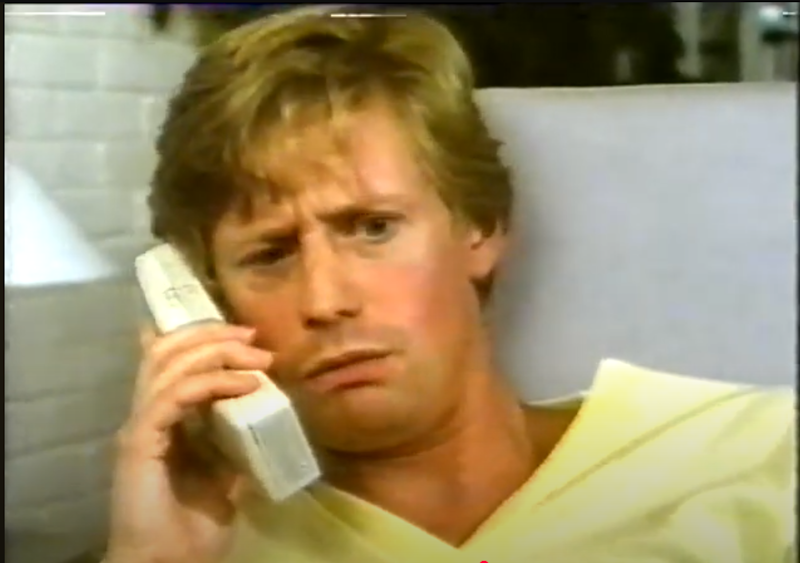
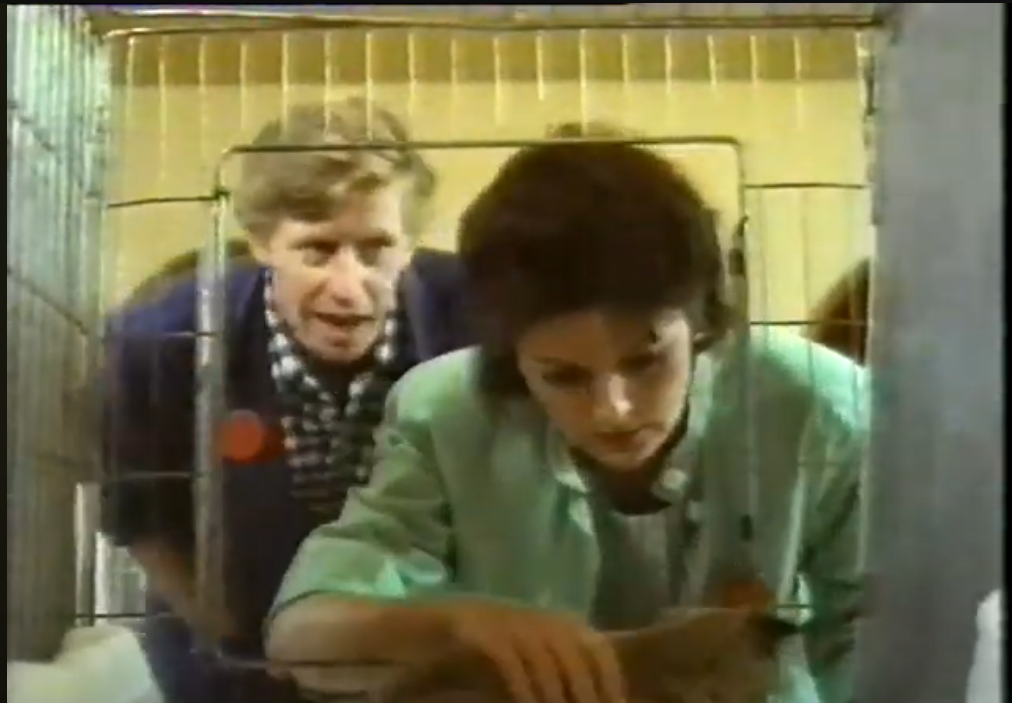
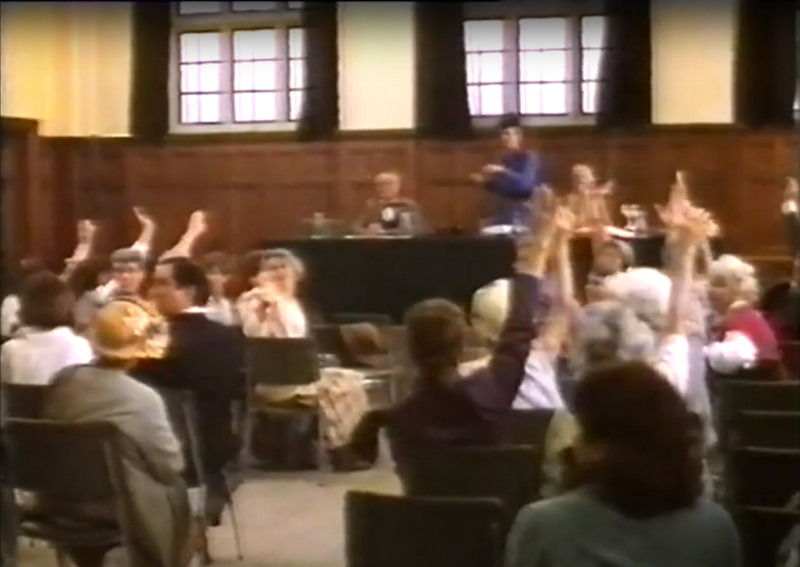
The other hallmark of Wyatt’s characters is that they’re often incredibly camp, and Claws is certainly catty in every sense of the word. Producer John Nathan-Turner had to reassure a nervous BBC that the “rezzies” in Paradise Towers weren’t lesbians – this, remember, is one year before Section 28 was brought into law – but Cartmel’s memoir Script Doctor reveals Wyatt did in fact intend them to be gay. Being written for an adult audience, Claws is at liberty to portray Dominic Jephcott’s character Alisdair as openly gay, and he provides a rare sympathetic male figure in a Stephen Wyatt script. Both Paradise Towers and The Greatest Show in the Galaxy satirise the macho culture of the ’80s mainstream by introducing Hollywood-style violent action heroes, then exposing them as inept losers. Paradise Towers‘s Pex does, at least, get the benefit of an ambitious triple-bluff as he eventually lives up to his heroic image, but Greatest Show‘s Nord is depicted with complete contempt right up until he’s unceremoniously killed off-screen. It’s one of my favourite quirks of Wyatt’s Doctor Who scripts, and it may be that Claws needs an equivalent character to throw some bombs around. Its portrayal of vicious feuds and “corruption on a mafioso scale” over something so meaningless is the point, but it also comes to feel quite suffocating.
You can’t spell “suffocating” without “cat”, of course, and Claws is nothing if not thematically consistent. The obsession with history and breeding is clearly a metaphor for the upwardly-mobile ambitions of the human characters, and sure enough Claws depicts it as built on a complete misperception of the past. Doctor Who had alluded to the concept of “theme-park Britain”, the idealised versions of history and heritage that Thatcherism used to claim legitimacy, in stories like The Awakening and The Mysterious Planet, and McCoy stories like Remembrance of the Daleks and Greatest Show would extend that critique to Doctor Who‘s curation of its own legacy. If the past is a battleground being fought over, the cleverest way to win is to refuse to play the game and move onto the unclaimed territory of the future. Wyatt was a huge part of that intellectual project, with Greatest Show satirising vast swathes of British cultural history – hippiedom, the Empire, the BBC, Doctor Who fandom – before revealing that it ultimately wants to liberate the country’s higher ideals from the baggage of past failures. Pex is killed, yes, but the story ends on “wallscrawl” saying he lives – and he does, proving to be more powerful as a cultural ideal than he ever was as a human being.
Does it undercut this message if watching Claws today gives you a wistful sense of what we’ve lost? Somehow, our much-ballyhooed Golden Age of Television has resulted in a situation where no broadcasters have the money to make drama serials. The lucrative parts of British television today are not the shows themselves, but the concepts and formats that can be sold to other nations and streamers, to the extent where Amazon once bought Inside No. 9 – not the episodes to screen, but the format to make a new version of. Except… without Steve Pemberton and Reece Shearsmith, is the format of Inside No. 9 worth buying? Surely you could just make your own anthology series, something which used to be a staple of television but is now completely unbankable. Yet Claws shows it was once commonplace, common enough for people to get blase about how good they had it. Claws isn’t even part of one of those legendary strands like Play for Today or Armchair Theatre, it’s an instalment of Sunday Premiere (me neither) that nevertheless has an enviable cast, strong direction from Mike Vardy, and even its own unique animated title sequence. Once, there were multiple things like this on every week: great scripts from great writers that had satisfying endings. Now, the state of the art is to spend enough money to make fifty of these on a deathly-dull Netflix serial that’s meant to last eight years but gets canned after two. Reject modernity, embrace specifically this part of tradition!
After all, you never know what forgotten parts of TV history might come back into fashion. By 1987, most people assumed Doctor Who was a programme with more past than it had future, but this wasn’t the case. And even if that had been the case, Andrew Cartmel had an escape route. As soon as Doctor Who was cancelled, he took the script editor’s chair on Casualty, then a relatively new hit drama, and took most of his Seventh Doctor writers over with him. Mark Cunliffe has been tackling the Cartmel era of Casualty both on this site and on our Patreon, and if you check the latter next week he’ll be looking at what Stephen Wyatt wrote during his stint at Holby.