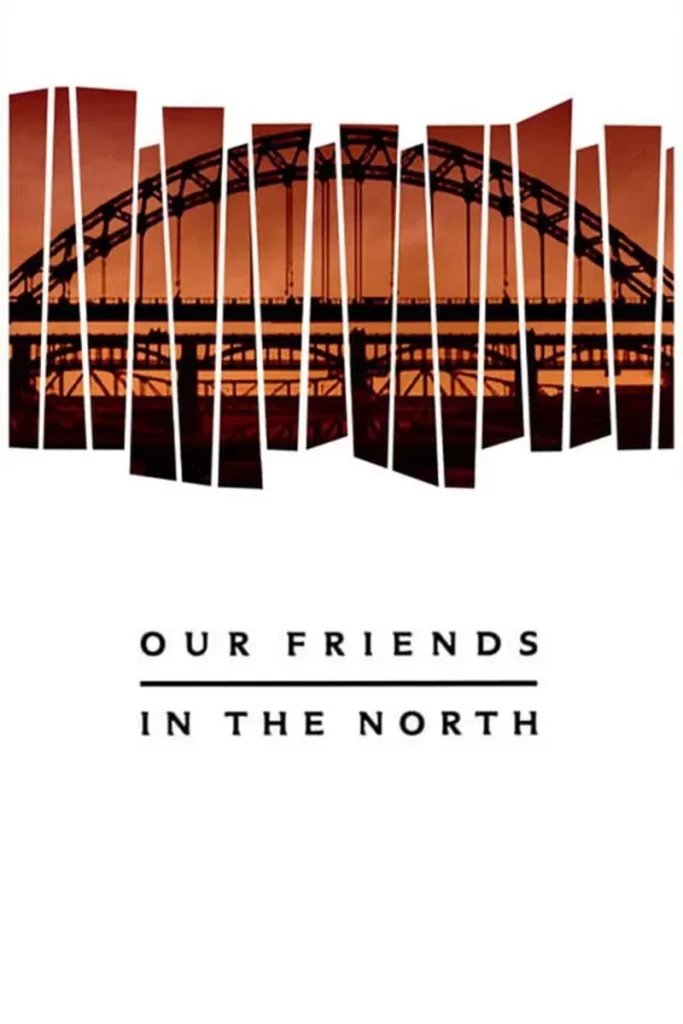
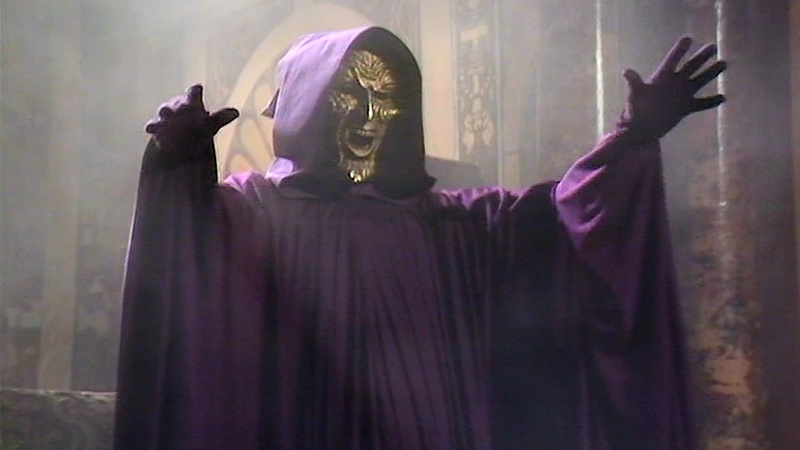
This series of reviews has led us writers down some very peculiar avenues, ones we perhaps weren’t expecting to take. Personally though, I’ve been using it as an excuse to explore my parameters and start ticking off things I hadn’t seen before (not that you’d notice since over on Patreon a few months back, I somehow ended up talking about Wolfblood again), and one night in August while brainstorming for my dreaded dissertation, the perfect idea landed right in my lap: Our Friends In The North, the nine-part drama from 1996 hailed as one of the finest shows the BBC has ever commissioned.
I was, of course, aware of the main connection to Doctor Who, being Christopher Eccleston’s starring role, but the series proves to be quite the ensemble of Who-based talent: David Bradley, Donald Sumpter, and even Brigadier Bambera herself, Angela Bruce shows up in a background role. In fact, this is really one of the most impressive casts I’ve ever seen for a TV series, helping to launch the careers of Eccleston, Mark Strong, Gina McKee, and featuring recurring roles from Peter Vaughn and Malcolm bloody McDowell. Oh and some unknown face called Daniel Craig, dunno what became of him.
Our Friends In The North is definitely a lot. Nine episodes, all lasting over an hour, that span from the mid-1960s to the mid-1990s, featuring a variety of ongoing plotlines and depictions of most major events in the United Kingdom within that time frame, such as the the Three Day Week, the premiership of Margaret Thatcher, and the turbulent miners’ strike. As if it wasn’t easy to figure out when each episode is set, a popular song from the time plays over the credits e.g Goodbye Yellow Brick Road for 1974, Two Tribes for 1984, and Don’t Look Back In Anger for the final episode in 1995 (the latter was at number one at the time of transmission). Regardless of quality, it was a major feat to pull all this off, not least getting the show commissioned: hearing some of the shit said to writer Peter Flannery by various executives (including Michael Grade – obvious Doctor Who jokes are obvious), it’s amazing he didn’t give up on the show entirely.
Luckily Our Friends In The North does exist in its large-scale form and, nearly thirty years on, it still holds up. This is engrossing, powerful and rewarding TV that feels so epic in scale yet remarkably intimate in the exploration of its characters and setting. The series’ origins as a play are well-documented (and that play also starred future big names Jim Broadbent and Roger Allam) and Flannery is brilliant at translating the engrossing unfolding experience of live theatre into scripted television.
It should be no surprise that Our Friends In The North mostly takes place, you guessed it, up north, and as such a lot of the show is filmed in Newcastle-upon-Tyne. This is not only very cool for someone like me who attends university there, but the location filming and the down-to-earth look of the show adds so much to the show’s atmosphere. While there are moments of levity, events can get very gritty and bleak indeed, yet it never feels like poverty porn. Peter Flannery was influenced by his own political views and the social landscape of the region he lived in, and everything that happens feels real and, in some cases, tremendously hard-hitting.
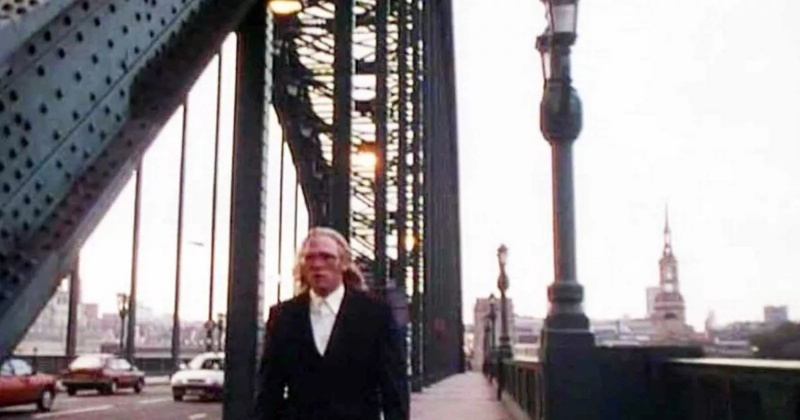
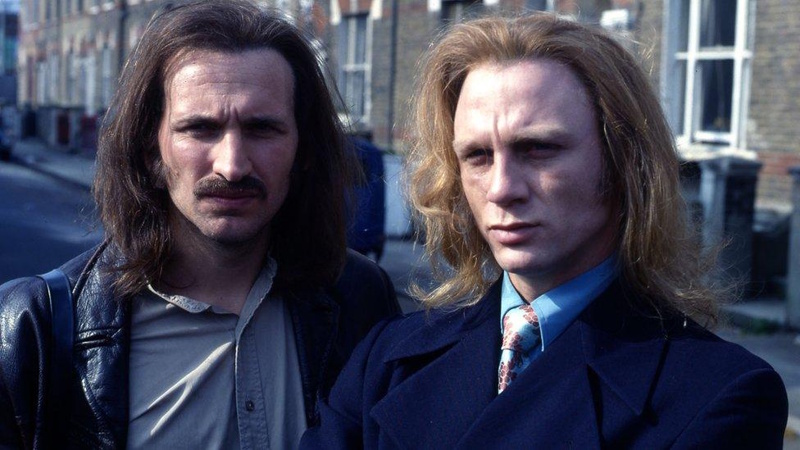
Nicky is billed as the main character, and Christopher Eccleston is fantastic throughout all nine episodes, but the most interesting person for me was Daniel Craig’s Geordie. In a large cast of layered characters going through tough times, Geordie’s arc is easily the most tragic. Fleeing an unwanted marriage, he works in the corrupt Soho sex industry down in London, becomes homeless and is imprisoned, all over the course of the show. The famous final shot of him walking alone on the Tyne Bridge, watching his old friends live a peaceful life, is even more melancholy after you’ve spent nine episodes watching him struggle without really achieving any emotional catharsis.
After abruptly leaving in a precarious state in episode 6, he doesn’t appear at all in episode 7 before we suddenly see him next time as an amnesiac tramp. Seeing the friends drift apart is hard to watch already, but it’s even more gut-wrenching when you realise that, even if they’re all struggling to get by in life, one of them is doing far worse than the rest.
Our Friends In The North is definitely some of the most compelling TV I’ve ever seen and, while I’m not sure I got to grips with all of it, the vast majority of the show was truly something to behold.
CHECK OUT THE GEEK SHOW’S PATREON FOR MORE OUTSIDE THE BLUE BOX
It’s not an exaggeration to say that writer Peter Flannery wears his politics on his sleeve throughout the series. Much of the background action in Our Friends In The North focuses on our characters’ interactions with, and involvement in, left-wing politics, and the political outlook in the North throughout the thirty-year timespan of the show. Starting in the 1960s, Christopher Eccleston’s Nicky is a passionate left-wing activist: the first scene of the series is him returning from America after taking part in the fight for civil rights, and throughout the show he works for a PR firm, becomes part of an anarchist group, runs as a Labour candidate in the 1979 election, and works as a photo journalist that documents injustices around the country.
Similarly Nicky’s on-and-off partner Mary, played by Gina McKee, becomes a Labour Party councillor and, in a scene I found really engaging, is confronted in 1995 by a fellow member who believes that Labour are now virtually indistinguishable from Tories. The narrative spanning thirty years gives Flannery a great chance to not only show our characters growing up and aging, but against a backdrop of major political upheaval that sees the transformation of the entire country: the turbulent 1970s, the Thatcher-ruled 1980s, and the rise of New Labour in the 1990s. And the main point here is that, for all the changes in government, the lives of our main characters never get any easier. Nicky is still seeing injustice everywhere he goes, Tosker is still jumping from job to job, and Geordie is so lost that, at one point, he doesn’t even realise that an election was happening until it’s already done and Nicky invites him to the victory celebration. It’s very topically-minded, but it always uses the politics it’s exploring to enrich and develop the characters.
Every episode of Our Friends In The North really does feel like an event, and the runtimes probably play a part in that – I wasn’t expecting all the episodes to be over an hour, but that length allows all of them to breathe. Things can get quite intense throughout, but in terms of pacing it’s pretty much perfect.
I will admit that it did sag slightly in the middle for me. Episode 4 and 5, while still very good TV, felt a little like treading water, still exploring plotlines that I’d assumed were done, particularly the story regarding corruption in the Soho sex industry. However, this is all of course deliberate to show the lingering repercussions of our characters’ experiences and choices, and some long-running plotlines pay out in raw and devastating fashion: Nicky’s father’s descent into dementia is heart-breaking, as are the troubled relationships Mary has with both Nicky and Tosker.
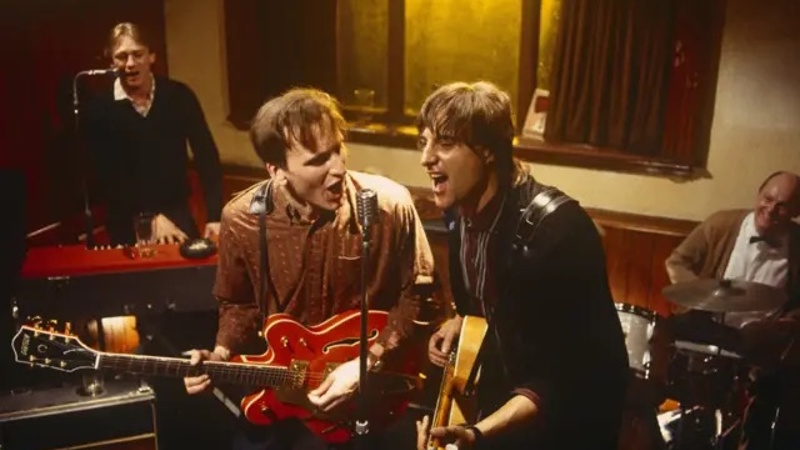
It’s also admirable how much most of the main cast come to inhabit the characters as, when it comes to the four friends, only Gina McKee is from the North East. It’s acknowledged by some that Daniel Craig’s accent is a little ropey, yet he’s so believable as Geordie he kind of gets a pass.
Our Friends In The North is definitely some of the most compelling TV I’ve ever seen and, while I’m not sure I got to grips with all of it, the vast majority of the show was truly something to behold. No wonder it kickstarted the careers of so many of its stars, event television like this really helps put talent on the map. It’s no secret that we need more television like this, but Our Friends In The North proves that you can’t force these things into existence – instead, let the project come together naturally, and the end result should be absolutely fantastic.
OUR FRIENDS IN THE NORTH IS AVAILABLE TO WATCH ON ITVX PREMIUM IN THE UK AND ON BRITBOX INTERNATIONALLY