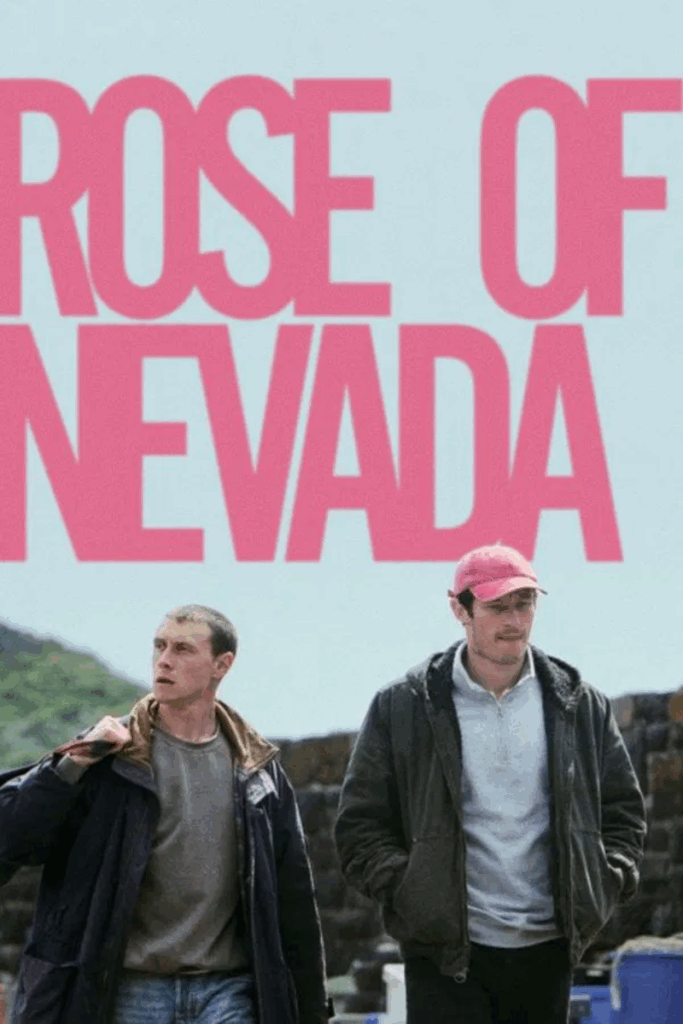
After working on his Bafta-winning feature Bait and folk-horror follow-up, Enys Men, Mark Jenkin vowed that he would never work with boats again: too many logistical problems, unpredictable tides, sea sickness, etc. Thank goodness he went back on his word, as it is hard to imagine a better impetus for a Jenkin film than a ghostly, long-lost fishing vessel, like the one seen in Rose of Nevada. The Cornish director’s uncanny aesthetic, achieved via Super 8 cinematography and dubbed audio, again accesses something evocative and otherworldly emanating from the Cornish landscape and the very celluloid running through his handheld cameras.
As is expected of Jenkin, Rose of Nevada takes place in the Southernmost tip of the UK, Cornwall, a county diseased with AirBnBs and a terminally ill fishing industry. The difficulties the county faces, explored in Jenkin’s Bait, are evident too in Rose of Nevada. The post office shutters are down, the local boozer vacant, and most worryingly, the harbour empty. The town is dying and the locals along with it, until the Rose of Nevada returns, a fishing boat which was said to go missing at sea along with its crew thirty years ago. A crew is quickly assembled, comprising two swabbies, family man Nick (George MacKay) and rough-sleeper Liam (Callum Turner), as well as a salty sea captain played by Francis Magee. They set off for a sea’s bounty, but upon returning, find that the harbour is bustling, the post office is open for business, and it’s all elbows at the local bar.
Although primarily known for using Super 8 and for his Cornish roots, the most potent common thread in his work is time. Perhaps this is thanks to his time studying and teaching Deleuzian film theory at Falmouth University, but Jenkin has made clear in his work, and in interviews, that film is the best medium to play with time. While Rose of Nevada is perhaps the most digestible temporal experiment he has done, certainly miles more comprehensible than Enys Men, time is again made elastic in service of evoking something supernatural within a kitchen sink, rural environment.
There’s a sense that the the halcyon days hover in the air or have never been completely wrung out of the county, and Jenkin elicits this perfectly in this haunting tale.
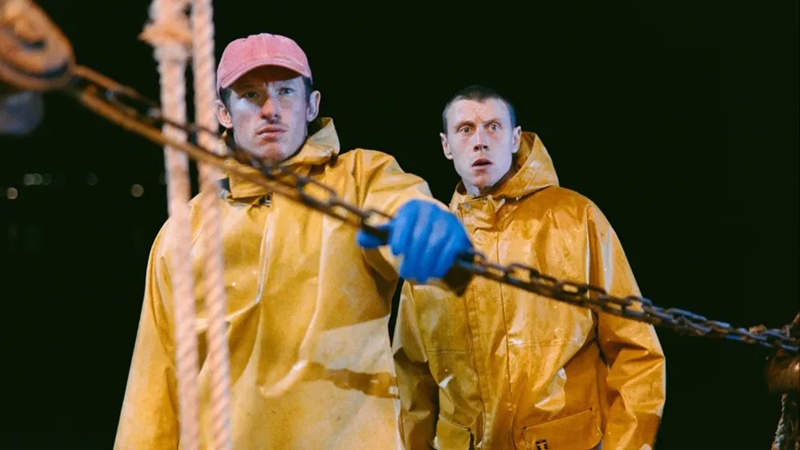
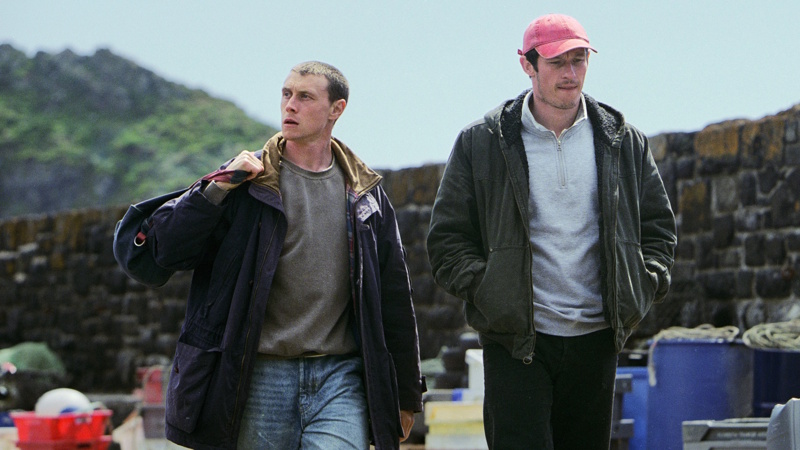
That environment is realised so vividly in Jenkin’s Super 9 cinematography. Microscopic close-ups of rusted grates, sprouting weeds, and weathered fishing ropes are hovered over, every blotch extracted by the grainy, crank footage and analysed by curious viewers to an atomic level. The clarity of Jenkin’s work awakens a need to scan every detail on screen, revealing the stark complexity of the most unimaginable chunk of landscape or ephemera. Suddenly, the timey-wimey problems faced by Nick and Liam feel small, at the whim of the magnificent, decaying world engulfing them.
Just as these hyper-close-ups break the narrative, so too do lags in time, where moments such as Nick tripping on a rusty, harbour excrescence suddenly drag. This is not slo-mo in the common sense, as it is not used to emphasise a particular action, but instead suggests that the world is off-kilter and that our characters are helpless to the sway of the tides of time.
It’s a heart-breaking revelation, even upon seeing the town revitalised. While Liam eagerly jumps on the opportunity, Nick is cogniscent enough to know that, beyond being separated from his family in the “present”, their fate is consigned to the depths, and the town will regrow its cobwebs. It’s a message of futility which pays homage to the sacrifices those who shape communities make while noting that those sacrifices aren’t necessarily effective in the enclosed communities of 21st-century United Kingdom.
It’s a bleak outlook, but realistic too. Coastal communities in the UK especially feel more isolated and abandoned; their towns still feel the effects of post-industrial Britain, and Rose of Nevada draws on the sense of pastness which has resulted from this. There’s a sense that the the halcyon days hover in the air or have never been completely wrung out of the county, and Jenkin elicits this perfectly in this haunting tale.
ROSE OF NEVADA HAD ITS UK PREMIERE AT THE BFI LONDON FILM FESTIVAL 2025