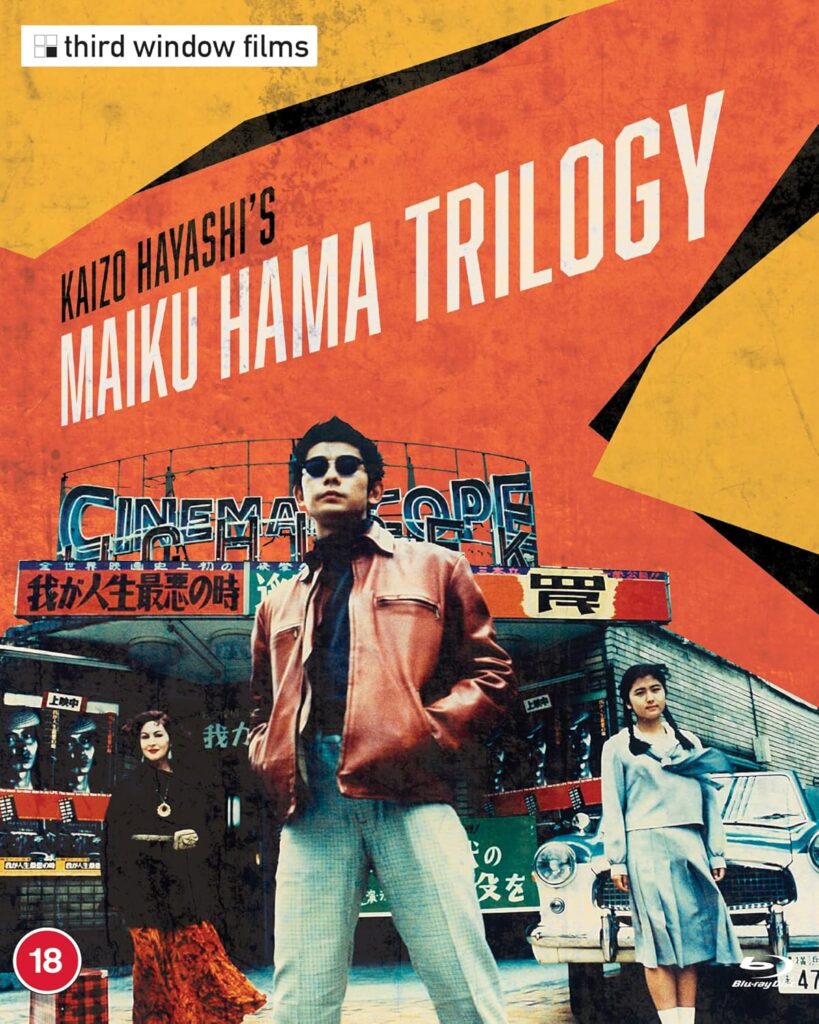
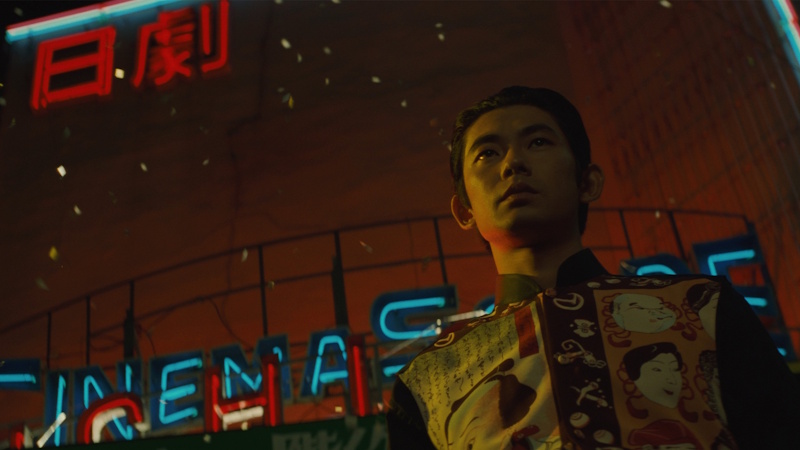
Anyone mourning the recent cancellation of Rian Johnson’s Poker Face might find a more than acceptable substitute in the form of Third Window Films’s new Blu-Ray release, The Maiku Hama Trilogy. They may be a series of films rather than a television series, but they have exactly the right stand-alone mystery vibe, with each movie beginning with a new client knocking on the door of Maiku’s office and ending – audaciously – with a trailer for the next movie. That office is in a small back room of the Nichigeki cinema, whose marquee boasts screenings of “Japanese and American movies”. It’s the first indication of the series’ cross-cultural remit, translating American hardboiled detective fiction into a Japanese setting.
The Maiku Hama films are hardly the first to attempt this – look down the list of source authors for Akira Kurosawa’s films and you’ll find vintage US noir writers Ed McBain and Dashiell Hammett alongside the more literary likes of Shakespeare, Akutagawa and Dostoyevsky. But they may well be the most arch. Director Kaizo Hayashi previously directed To Sleep so as to Dream, in which two classic gumshoes find themselves lost in a silent movie. There isn’t anything like the same break in reality in any of the Maiku Hama films, which paradoxically makes them much stranger. All of their non-naturalistic elements, from Masatoshi Nagase’s spoken-to-camera introductions to the hero’s joking name (a Japanese take on Mike Hammer, the thuggish detective created by Mickey Spillane and subverted by Robert Aldrich in his masterpiece Kiss Me Deadly), are just how these films are. Take it or leave it.
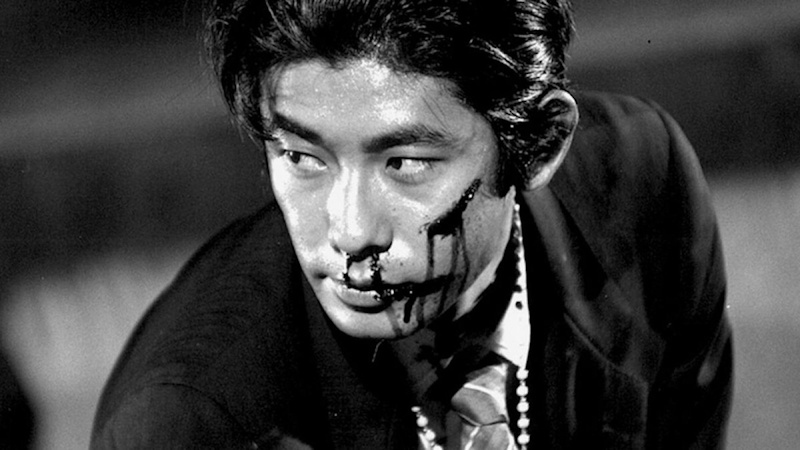
With talent like Nagase and Hayashi on board, it’s pretty easy to take it. The first film, The Most Terrible Time in My Life, is the closest engagement with noir style, not least because it’s shot in black and white. Here, Maiku’s client is mistaken for a cinemagoer looking to see the afternoon American movie, William Wyler’s The Best Years of Our Lives, whose title is subverted in the name of Hayashi’s film. Not that it stops Nagase’s Hama acting with brash confidence, because nothing does. A noir hero needs to receive an especially painful indignity early on, so we’ll admire them even more when they keep pushing on – think Jake Gittes’s nose in Chinatown. Maiku loses a finger in an altercation with some yakuza, an injury compounded when a passing dog tries to eat the severed digit. Yet he still carries on with a spring in his step. No wonder, when he has Meyna Co.’s irresistible, brassy, jazzy ‘Maiku Hama Theme’ jollying him along.
For all their ups and downs, there’s something about the brash charm of these films – and their lead performance – that makes you wish this series could have gone on forever.
For all the punishment he takes, Hama is never as cynical and brutal as his American near-namesake. His goal, outside of solving cases, is to make enough money to send his younger sister to college. “Yeah, it’s a humble dream,” he barks at the camera. “Got a problem with that?” Said younger sister is played by Mika Ohmine, who provides a point of continuity throughout these otherwise independent films. There are other recurring faces; Akaji Maro turns up in the first film and gets a great showcase in the last one as the macho policeman who tries to solve Hama’s cases before him, another classic noir trope successfully absorbed into Hayashi’s narratives. There are also significant supporting appearances from body-horror genius Shinya Tsukamoto, and Joe Shishido as Maiku’s mentor (a particularly loaded casting decision, given how Shishido’s collaborations with Seijun Suzuki are clearly influences on Hayashi).
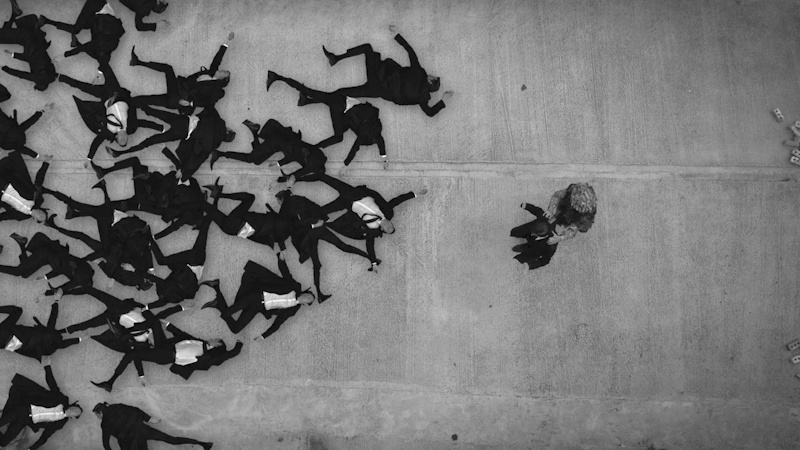
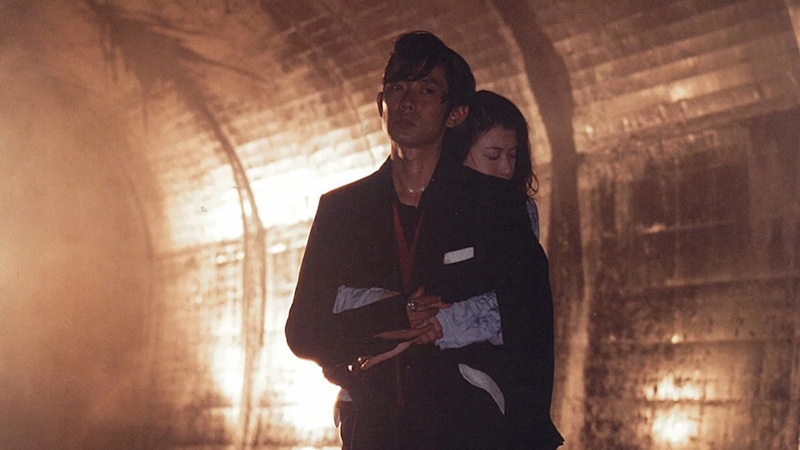
But really, the chief pleasure of the Maiku Hama films is watching Nagase crack the latest case, which is why the second film, Stairway to the Distant Past, falters slightly. Shot in colour rather than The Most Terrible Time‘s monochrome, it tries to merge its crime plot with a dive into Hama’s family history. On a pure plotting level it works, but there’s something about giving Maiku Hama a backstory that jars awkwardly with the in-the-moment pleasures of Nagase’s livewire performance. A better big swing comes in the form of the last film, The Trap, in which a serial poisoner turns out to be a plot to frame our hero. This is the trilogy’s closest engagement with horror, with the villain depicted as a masked, disfigured maniac straight out of a Gaston Leroux novel. It also offers the clearest evidence that Hayashi was capable of engaging with crime movies made after the golden age of noir ended. The Most Terrible Time in My Life has a good Tarantino-esque Mexican stand-off, but the plot here is based around exactly the kind of game-playing serial killer familiar from Se7en and its imitators, while there are also some astonishing, cryptic dream sequences that suggest Hayashi was a fan of Twin Peaks. In some ways it’s the most interesting film in the set, it’s just a shame that Hama himself occasionally gets lost in all the madness.
For all their ups and downs, there’s something about the brash charm of these films – and their lead performance – that makes you wish this series could have gone on forever. And while it didn’t last that long, it did have an afterlife beyond these three films. In 2002 Maiku Hama returned for a twelve-episode TV series, The Private Detective Mike. Nagase returned for this series, but Hayashi did not, resulting in each episode being helmed by an often prestigious guest director. Eureka‘s Shinji Aoyama did one, as did the legendary Gakuryu Ishii… and, somewhat incongruously, Alex Cox. Cox recalls in his memoir X Films that he asked the producers why they chose him, and they said they were looking for something along the lines of Straight to Hell. After completing an episode full of gonzo spaghetti Western homages, the producers clarified: they meant they wanted it to have lots of cameos from rock stars. A cross-cultural misunderstanding, then – but as these films prove, those are often extremely fruitful.
The three films all have new commentaries from a dream team of speakers: critic Jasper Sharp on The Most Terrible Time in My Life, director Edmund Yeo on Stairway to the Distant Past and Samm Deighan on The Trap. The first film is also supplemented with new interviews from Hayashi and his producer Shunsuke Koga, while the other two feature video essays from Matthew Carter and James Balmont respectively. Trailers are included on all three discs.
KAIZO HAYASHI’S MAIKU HAMA TRILOGY IS OUT NOW ON THIRD WINDOW FILMS BLU-RAY