Beauty is in the eye of the beholder, but it’s generally determined by the standards of society, and when that society is patriarchal, women suffer. It’s a fairly trite observation that’s the subject of a fascinating exploration in The Ugly Stepsister – a version of Cinderella that’s dark and malevolent while being honest and believable. Filmed in Poland, but with dialogue that includes Polish, Norwegian and Swedish, writer-director Emilie Blichfeldt takes everyone on a challenging (but rewarding), journey through expectations, demands, dreams and the ugly realities of beauty.
Elvira (Lea Myren), is the titular stepsister, but she’s hardly ugly and, as per the fairy tale, she’s not the only one as she’s accompanied by sister Alma (Flo Fagerli). When their mother domineering Rebekka (Ane Dahl Torp), marries Otto (Ralph Carlsson), his daughter Agnes (Thea Sofie Loch Naess), is far from welcoming, but the frosty reception is only the beginning of a set of misfortunes. When things turn bad the the only option is (apparently), to marry a wealthy man, and handily, Elvira’s already obsessed with Prince Julian (Isac Calmroth).
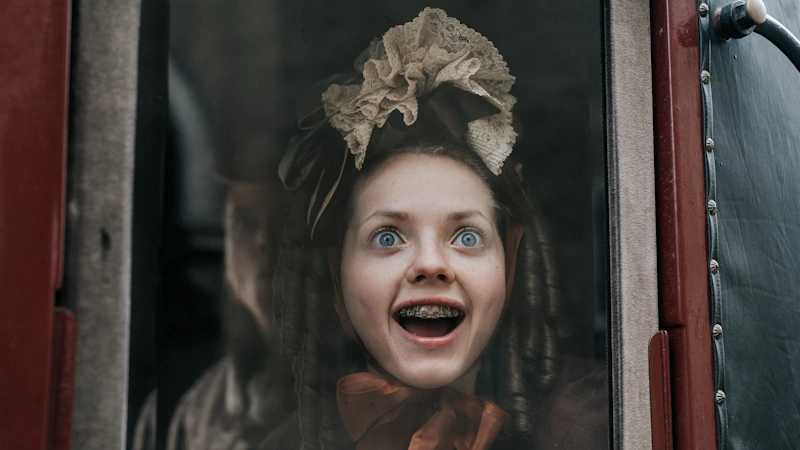
The opening sequence features Elvira’s fantasy of being shot with the Prince’s arrow while reading his poetry, her obsession and insecurities leading her to compete for attention with the more conventionally attractive Agnes. Although it might not be apparent at first, The Ugly Stepsister, is a different take on a classic story that becomes more obvious when, due to some indiscretions, Agnes is later called Cinderella. The core of the narrative remains, but like similar adaptations the details are different, for example Kenneth Branagh’s version for Disney in 2015 expanded the scope of the stepmother beyond simply being ‘wicked’. In this case, the focus on Elvira and her her arc of wide-eyed innocence encountering brutal reality opens things up for a range of different ideas about the lengths people will go to for the sake of beauty.
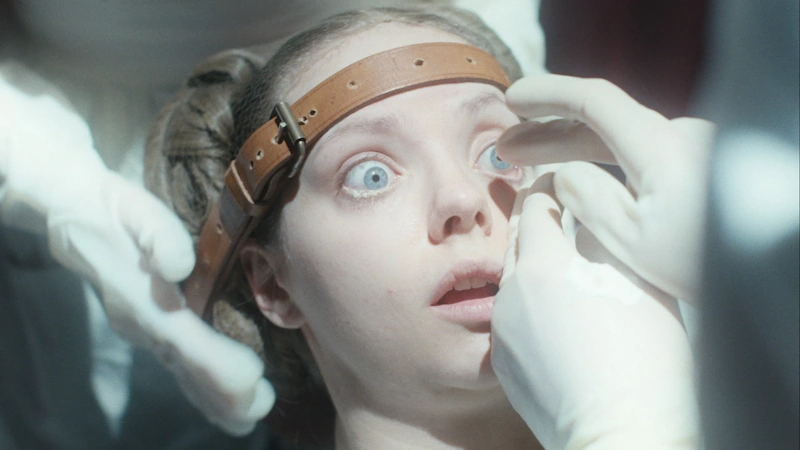
Viewer discretion is advised (along with a strong recommendation not to eat during the film), as things get incredibly brutal and grotesque. Given the grounded, distressing, and at times clinical nature of the horror – which includes trauma to different parts of the body – even hardened viewer may find themselves wincing and biting their knuckles. The slow build-up creates suspense, and while the surgical scenes contain outfits that are reminiscent of David Cronenberg’s Dead Ringers, it’s made very clear that there’s no anaesthetic – the crunchy sound effects and piercing screams drawing the viewer in to witness the horror.
The Ugly Stepsister is far from a gorefest as although these instances are few, they do stick in the mind – especially one scene that includes what’s possibly one of the most discomforting P.O.V. shots ever committed to film. There are other stomach-churning moments, which are made all the more uncomfortable with the knowledge that the suffering is in the service of people trying to fit particular standards, and trying to be beautiful for others. The period setting doesn’t detract from this as the film draws discomforting parallels with conditions better understood today.
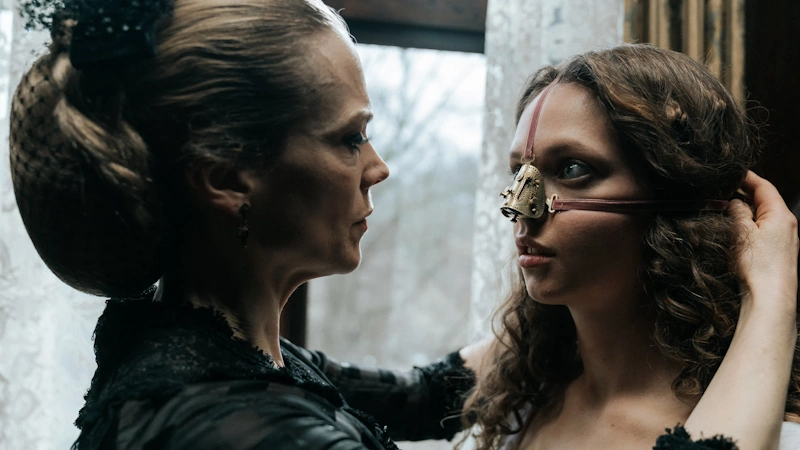
Despite the scenes that highlight the hideous realities of beauty, the film offers some entrancing moments. Blichfeldt and cinematographer Marcel Zyskind frame the interiors and exteriors with a fairy-tale wonder that allows the viewer to join Elvira as her dreams turn nightmarish. The costumes are also captivating, the blue dress worn by Agnes feeling like a visual echo of both Disney versions of the core story, and featuring prominently in the film’s most ambiguous sequence.
Despite the scenes that highlight the hideous realities of beauty, the film offers some entrancing moments.
CLICK THE IMAGE AT THE BOTTOM TO BUY THE UGLY STEPSISTER DIRECTLY FROM SECOND SIGHT FILMS.
Given the emphasis on the body there are moments of male and female nudity, but the film remains thoroughly grounded, with no singing, no talking animals and no fairy godmother. Elvira (and others), describes herself as fat, and the close-ups of her invite the viewer to question this opinion and the standards that Elvira strives for. There’s a crucial moment framed as a dream that serves as a remarkable counterpoint to the grotesquerie, and it’s a testament to the strength of the film that it doesn’t detract from the overall mood.
Elvira isn’t unattractive, and this thought may occupy viewers throughout the film even though she doesn’t reach the level of conventional beauty presented by Agnes. The extreme measures imposed by her mother and the alterations to her appearance over the course of the film force viewers to question the term “ugly” as it doesn’t seem like a fitting adjective. Blichfeldt addresses this in the final act, which results in an emotional and tragic climax that manages find a final moment of hope out of complete despair. The fairy-tale romance may be a fantasy and the hideous realities of beauty may be imposed and self-inflicted gruesomeness, but at the end The Ugly Stepsister is a story about love, and in a strange sense that makes it parallel with another Disney movie – Frozen.
Second Sight’s dual format edition of The Ugly Stepsister includes both UHD (featuring HDR with Dolby Vision), and Blu-ray versions, and the bonus features are as abundant as the winces induced by the film. The extras include two of Blichfeldt’s early short films, Sara’s Intimate Confessions (2018) and How Do You Like My Hair? (2013). The first is about a university student who struggles with the look of her body, and combines live action and animation with some body horror to tell a sometimes surreal and emotionally relatable story. The second short film is presented as a video diary, and takes a somewhat subjective approach to the topic of body discomfort.
The plethora of bonus features continues with multiple interviews, beginning with This is My Ball: An Interview with Director Emilie Blichfeldt, in which the director discusses the origins of The Ugly Stepsister and her studies at the Norwegian Film School, as well as the challenges of shooting, and her best and worst experiences during the production. After that comes Generational Trauma: An Interview with Actor Lea Myren, in which lead performer Myren highlights the attraction of the script’s feminist perspective on the Cinderella story and offers some insights into the process of casting through mutual understanding.
In the third interview, Take Up Space: an Interview with Actor Thea Sofie Loch Næss, she discusses her previous work with Blichfeldt, the challenge of learning Swedish, and how her childhood dream to be a Disney princess contrasted with her playing a very different Cinderella. Character and Gore: an Interview with Effects Artist Thomas Foldberg allows him to discuss how the influence of Rick Baker and Dick Smith made his work more character-driven and realistic. Foldberg praises Myren for her willingness to deal with so much gross stuff during production, and offers some great insights about the wide reach and acceptance of the film. Foldberg also offers a fascinating deep dive into how the truly horrific moments in the film were created (from blood colour to managing many metres of tapeworm), in The Beauty of Ugly: The Effects of The Ugly Stepsister. Filmed in his workshop and surrounded by models and casts from the film (which look even weirder out of context), this is a goldmine for those interested in effects and the practicalities of filmmaking.
There are two commentaries with the film, the first with Blichfeldt and fellow filmmaker Patrik Syversen, whose engaging chat provides great insights into the intentions and practicalities of the production, what worked, and alternatives that could have been. The second commentary is with film critic and journalist Meagan Navarro, who makes quick connections to other films (including Italian horror and a 1970s version of Cinderella), and David Cronenberg, and also highlights the musical blend of whimsy with synth and what this adds to the film’s tone .
Kat Hughes’ video essay A Cinderella Story provides critical insights into Agnes’ complexity while highlighting that Elvira is more of a Cinderella figure. The essay has expressive editing that helps the viewer understand how the film’s rejection of fairy tale romance, as well as its references to slasher films, constitutes an intriguing probe into genre history. Hughes summarises the film beautifully as a “wickedly entertaining deviation from tradition”. Hughes also mentions a particular scene that, although perhaps unfortunately being deleted from the film, is also included in the disc release. It features Elvira playing a piano piece with comical intensity, followed by Agnes singing, and while Blichfeldt had her reasons for omitting it, it does add to the dynamic of the young women so it’s good to see it on this release.
Second Sight’s dual format edition of The Ugly Stepsister comes in a rigid slipcase, with new artwork by Ann Bembi, six collectors’ art cards, a 120-page book featuring Cinderella’s Stepsister by Emelie Blichfeldt, storyboard comparisons, and new essays by BJ Colangelo, Michelle Kisner, Kimberly Leszak, Jolene Marie Richardson, Katie Rife and Amber T. All in all, this version does full justice to this remarkable film, and it’s a worthy addition to the feminist body horror genre.
THE UGLY STEPSISTER IS OUT NOW ON SECOND SIGHT FILMS 4K BLU-RAY