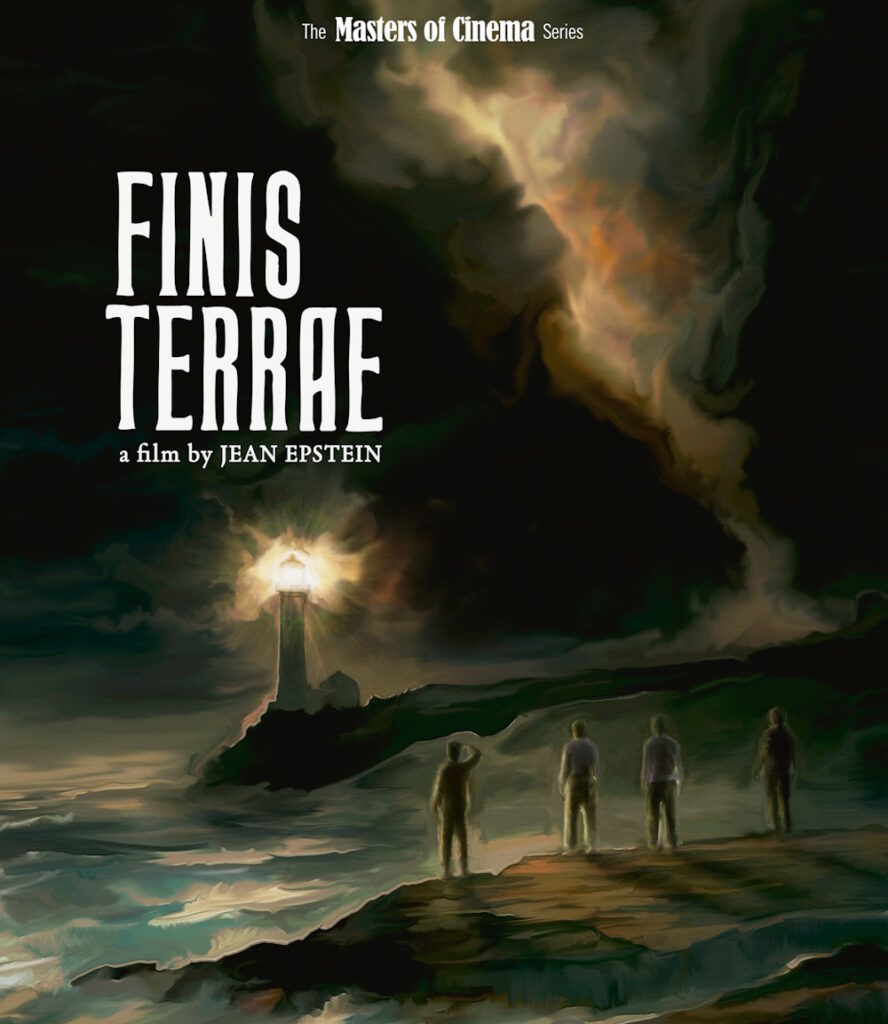
I admit that I’m not as well versed in silent cinema as I should be. I’ve seen the odd classics like Metropolis and The Cabinet of Dr. Caligari, but it’s mostly the out-there genre films and comedies are mostly what I’m aware of from the silent era. Out now on Eureka Masters of Cinema Blu-Ray, Finis Terrae (Finis Terræ (translating to End of the Earth)) is an example of a silent realist film, and film theorist Jean Epstein’s first studio-backed film after his adaptation of Poe’s The Fall of the House of Usher the year prior.
I was previously unaware of Epstein, yet, as a theorist, he was best known for developing the concept of photogénie – a theory that originated through the French impressionist cinema movement (which Epstein was a pioneer of), focusing on an actor’s facial expressions and body language. There are quite a few closeups in the film to illustrate this.
The film mainly focuses on four fishermen stationed on the island of Bannec, off the coast of Brittany, to burn seaweed to then sell the ashes for profit. Things becomes tense between the two younger fishermen, Ambroise and Jean-Marie, after the former breaks the latter’s only bottle of wine. This tension is exemplified through the closeups, said tension has often been described as homoerotic, but I found this to be minimal. The tension continues as Ambroise cuts his thumb and becomes infected on a piece of broken glass from the wine bottle, leading to a surrealist fever sequence. Yet the fishermen are unable to get to the doctor on the neighbouring island of Ushant, because of the dead calm on the seas.
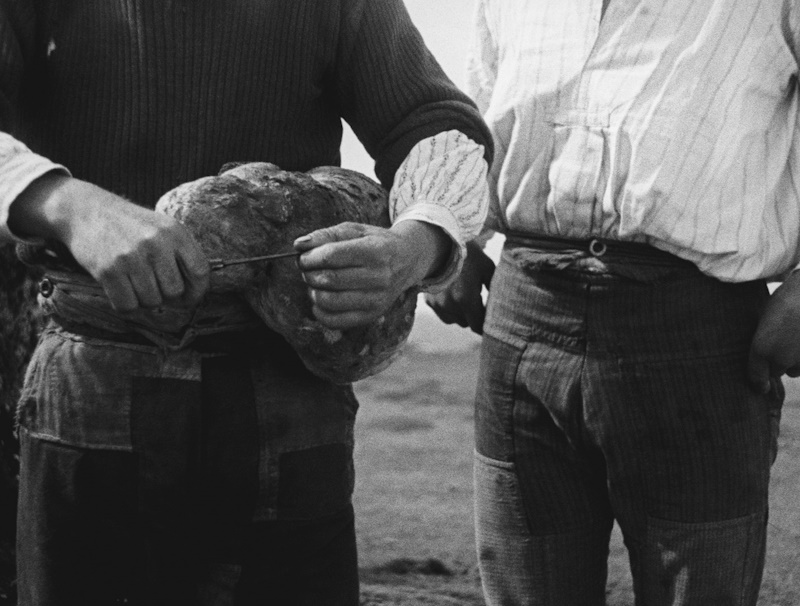
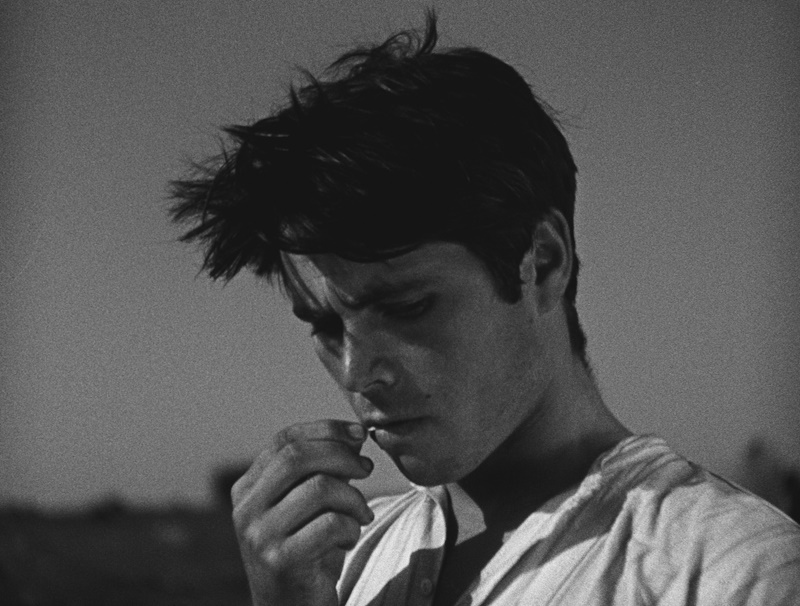
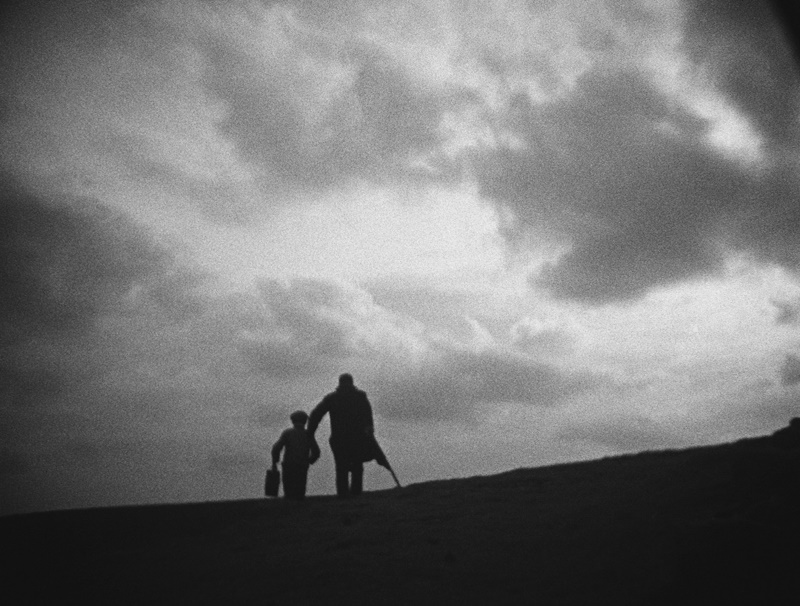
One thing that cannot be denied about Finis Terrae is that the visuals are gorgeous, often looking more like something from a 50s/60s French New Wave film than a French impressionist film from 1929. The restoration by Gaumont is tremendous, accompanied by a new score by Roch Havet – which is jazzy and sounds appropriately nauseating in the aforementioned fever scene. The way it is shot also gives it a fittingly isolated feel along with the tension bubbling underneath. Epstein made the decision to hire non-actors after becoming fascinated by the fishing community in Brittany, and shot the film on location in both Bannec and Ushant.
However, the beautiful visuals cannot carry the whole film despite the relatively short 80 minute runtime. The plot is rather thin and would probably work better as a short film. Yet the biggest issue is that it takes a detour from the tension between the fishermen on Bannec to instead focus on the villagers of Ushant, including the mothers of both Ambroise and Jean-Marie. There is a mention of discontent between the two mothers, yet this is limited to a brief intertitle – the intertitles in the film mainly provide contextual information rather than dialogue. This change of location makes the film almost feel like it stops halfway through. I was intrigued by the dynamic of Ambroise and Jean-Marie, and the speculated homoeroticism may have been more fascinating if it was more greatly explored.
As I was watching the film, and more so when I found out about director Epstein’s film theory background, I started getting flashbacks to the Art Cinema module that I took earlier this year. Especially when fellow French theorist André Bazin was mentioned in ‘Impressions on Jean Epstein’ – an otherwise informative retrospective on the filmmaker by film historian and critic Pamela Hutchinson. The other on-disc extras did little to grab me, although it must be said that they’re both in-depth looks at the film itself, and since I also struggled to engage with the film, they will be of interest to others.
Although I was ultimately dissatisfied with Finis Terrae, that doesn’t mean that I’m writing off other films of its kind. Some of the history behind it is fascinating, especially when viewing it as an early example of realist cinema. Plus the visuals are stunning and likely to impress. Eureka’s limited edition release for the Masters of Cinema range also includes a booklet featuring a new essay by Christophe Wall-Romana and a reprint of Epstein’s own essay ‘On Certain Characteristics of Photogénie’.
FINIS TERRAE IS OUT NOW ON EUREKA MASTERS OF CINEMA BLU-RAY