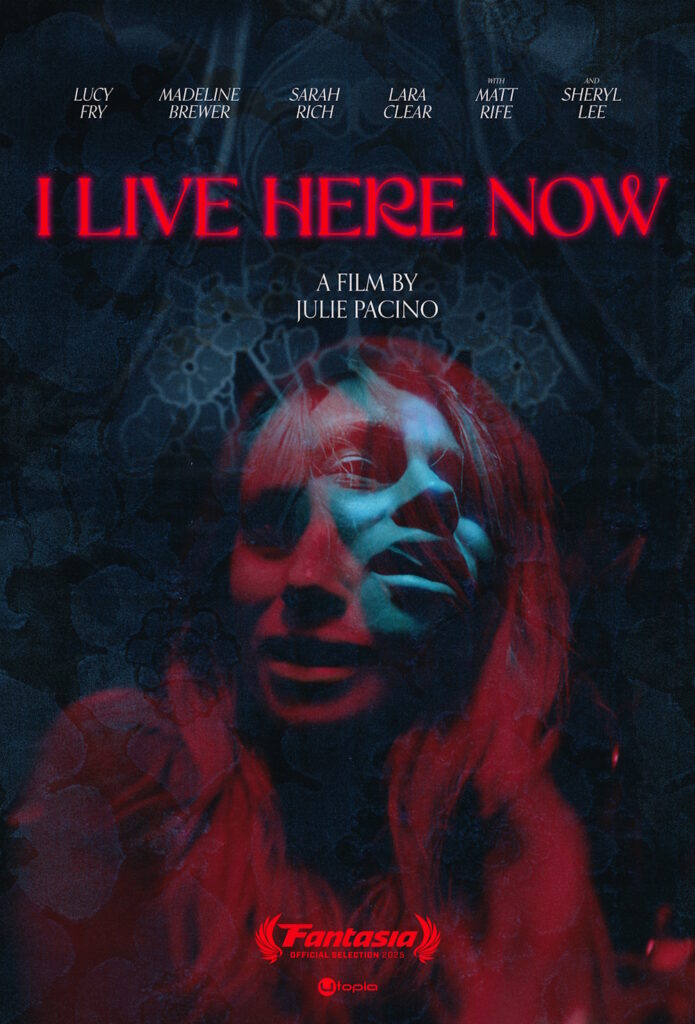
Since its premiere at Fantasia a few months ago, I Live Here Now has been gaining some traction among festival goers and horror fans. The directorial debut of Julie Pacino (yes, she’s related), is a surrealist and claustrophobic piece of horror where one budding actress’s stay in a hotel quickly turns strange and demented.
The idea is not super original but, then again, every creative knows how hard it is to think of a completely original idea, and Pacino is certainly being influenced by the greats: Argento, Lynch, De Palma are just three of the comparison points people have made so far. A modern comparison Pacino discussed herself is Jane Schoenbrun, whose symbolic and striking visual style has received lofty acclaim. I certainly saw Schoenbrun’s style in I Live Here Now, but throughout the entire film I couldn’t help but think how much I’d rather be watching I Saw The TV Glow, or indeed any film by any director that others have flagged up as influences. This isn’t to say I Live Here Now is terrible, far from it. I was just expecting more from it given the hype, and given what it’s inspired by, it can’t help but draw comparisons to superior films by more accomplished filmmakers.
Still, this is a directorial debut and Julie Pacino doesn’t do a bad job directing this. It’s got an interesting look and colour palette to it, one that I’m not sure fully gelled but certainly felt unique. The contrast between the warm and garish colours, and the somewhat cold and flat cinematography, stuck out a lot and really gave the film the dreamlike quality it was going for. There’s a lot of surreal sequences here, which Pacino helms really well, and the sound design is also really cool (at points). A scene involving food being served in a restaurant made me genuinely uncomfortable but in a good way, and that’s down to both the direction and the constantly increasing volume of the score, which almost feels atonal in places.
I also found myself quite captivated by the uneasy central performance of Lucy Fry. Her character Rose is on-edge almost immediately upon arriving at this hotel, and we see her grapple with the eccentricities of the hotel’s staff and guests, as well as her mental state as she’s directly confronted with deep-rooted trauma from her own past. Fry makes the character of Rose feel relatable right from the start, which is good since it doesn’t take long for the film to go down some freakish and uncompromisingly weird corners.
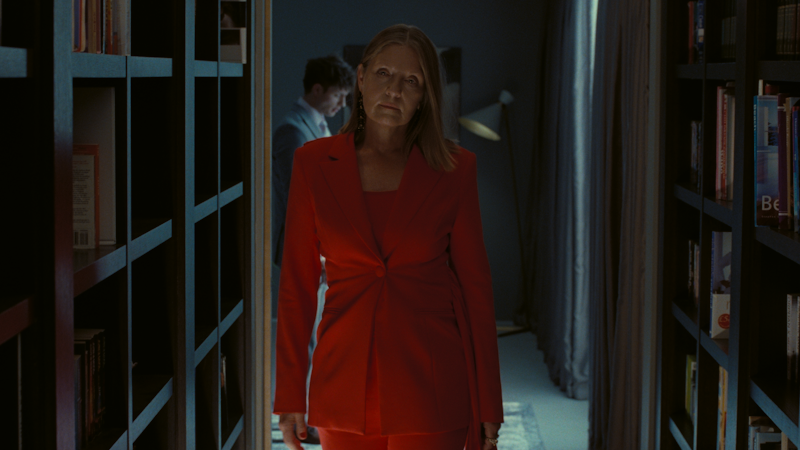
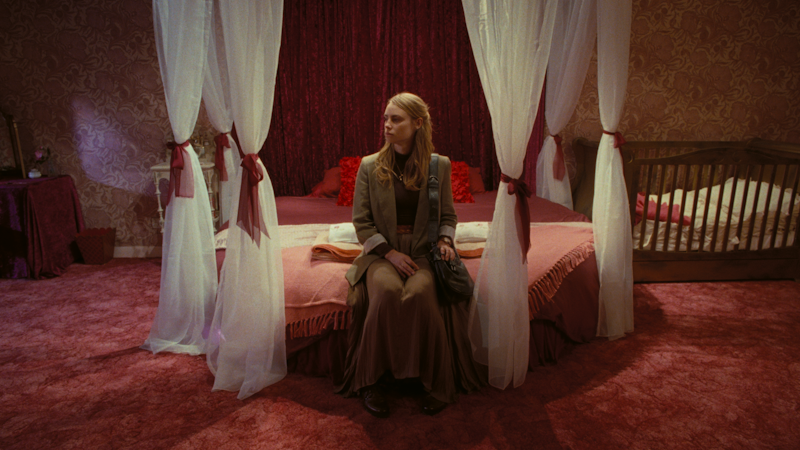
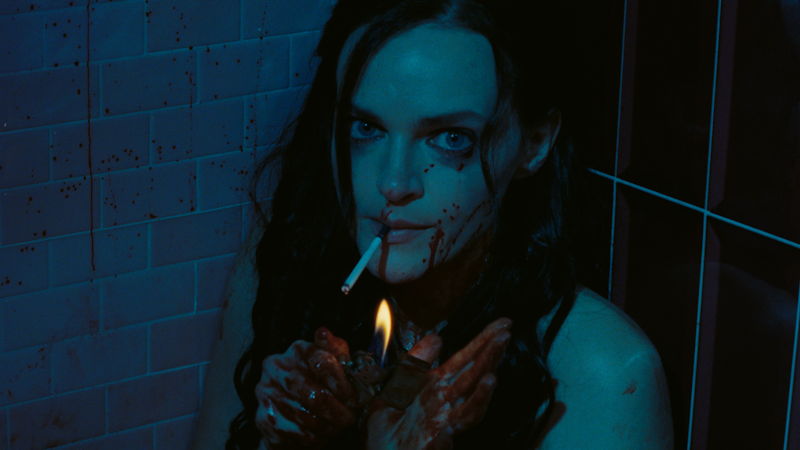
Another thing worth commending from a visual standpoint is the production design. The hotel is a really cool set that is exploited for all its worth, and the lavish but garish suites and facilities feel suitably stuck in a past era of cinema. The David Lynch comparisons return with a vengeance upon seeing this place (I’m almost positive the shade of red for the carpet is just called ‘Twin Peaks’), but it doesn’t feel like a rip-off. The production design gives the film a lot of character and personality, which is good because I have very little idea what the plot’s actually trying to say.
Naturally, having a plot that’s hard to grasp is par for the course when it comes to surrealism, and Pacino is not short on ideas for audacious visuals. I’m not sure how much they all connect together though. There needs to be certain throughlines working their way throughout, and I Live Here Now eventually just became a big blob of surrealist imagery to me. When there’s so much that you’re chucking at me, the deeper meaning of what you’re actually trying to convey is going to fall through the cracks eventually.
Occasionally I Live Here Now reminds the audience that it is indeed set in the real world, and while these moments should be good for breaking up all the surrealism, they end up muddying the narrative and making the film a bit stop-start. I did feel the pace begin to drag around the halfway mark, and that’s maybe because these interruptions by Rose’s real life are almost too jarring – you’ve got so accustomed to the world inside the hotel that Rose’s present situation isn’t on your mind, and the odd phone call from a disgruntled agent or family member only serves to snap the viewer out of the narrative. Of course, that may have been intentional, but it was still a problem for me.
It is mainly the storyline that I had an issue with. Tone-wise the film gets things spot on. There’s a lot of deliberately awkward and obtuse conversations with hotel guests that put Rose on edge, and those work wonders to get the audience feeling uneasy enough so that the surrealism can take hold. But annoyingly, if you remove all these nightmarish elements then the screenplay just feels clunky and not particularly engaging. As a result the ending, which should provide a lot of catharsis, fell a bit flat.
Hey, I could be on my own in not loving I Live Here Now, and there is a lot to like about it. The visual makeup of the film, and Fry’s performance, do most of the heavy lifting, and they feel like they should be serving a stronger and tighter screenplay. Maybe there’s a rewatch in my not-too-distant future that helps the film gel together but, as it stands, this was very much a case of style over substance for me.
I LIVE HERE NOW PLAYED AT AMSTERDAM’S IMAGINE FANTASTIC FILM FESTIVAL (2025)